


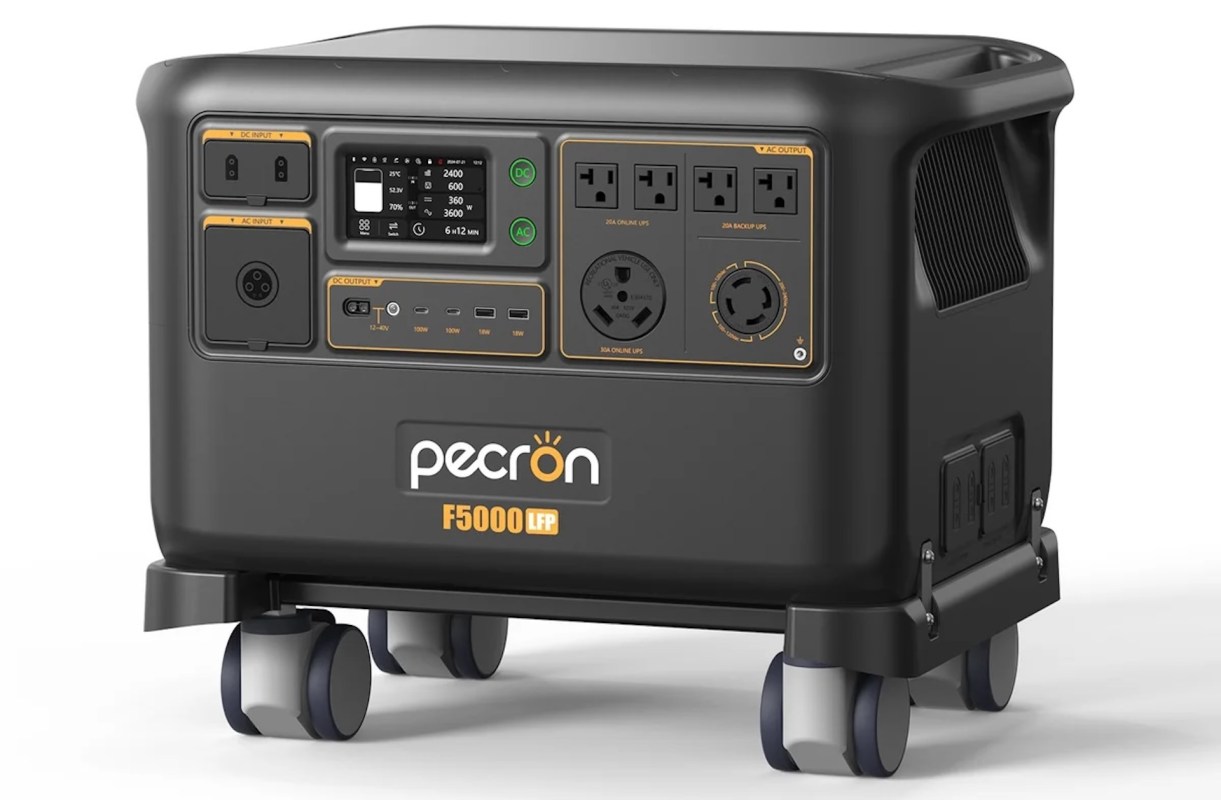
A homeowner exploring a DIY solar setup turned to Reddit with a simple question: Could a 5-kilowatt-hour "plug-and-play" power station realistically help run an entire house?
The ensuing discussion reflects America's growing interest in smaller solar-and-battery systems that promise lower electric bills without the cost and complexity of a full rooftop installation.
Here's what to know
The home in question does not use much heat or air conditioning, and the original poster said the household uses about 9 kilowatt-hours each day on average.
In the thread posted to Reddit's r/DIYSolar community, OP wrote, "I'd like to use a plug and play system to power the home with a generator transfer switch" and added, "I average about 9kWh per day consumption." They then said that they were looking at a Pecron F5000lfp paired with about 1.2 kilowatts of solar panels.
Rather than zeroing in on the battery brand alone, many replies pointed to broader design issues. One commenter bluntly wrote that OP's suggested setup, "Looks like an RV toy, not something for running a house on." Other commenters were more encouraging, with one adding, "This sounds like a no brainer for you. Plus, battery will cover your whole house. Sounds like you can have net 0 without the expensive setup."
A third suggested that OP "Pick your panels and build the strings to match the inverter you end up going with. You have to look at max potential voltage and current… Start with your complete list of goals, then you can start doing the math from there to determine the size of everything you need. If you can afford it, I would recommend oversizing everything by a bit so you can add on in the future as your needs change."
More background
A big part of the discussion centered on voltage. Panels have to be arranged so their combined electrical characteristics fit within the accepted range of an inverter or charge controller.
And whether a setup can serve as "whole-home" power is about more than the battery's size. It also depends on the inverter and on whether the system is designed only to charge from the grid or to keep the home running by itself during an outage.
Save $10,000 on solar panels without even sharing your phone number Want to go solar but not sure who to trust? EnergySage has your back with free and transparent quotes from fully vetted providers that can help you save as much as $10k on installation. To get started, just answer a few questions about your home — no phone number required. Within a day or two, EnergySage will email you the best local options for your needs, and their expert advisers can help you compare quotes and pick a winner. |

Still, going solar is one of the best ways to save money on home energy, especially for households with predictable daily usage like this one. If you're thinking about making the switch, you can explore EnergySage to get free solar installation estimates and compare quotes.
With EnergySage's help, the average person can save up to $10,000 on solar purchases and installations. EnergySage's solar map also shows the average cost of a home solar panel system on a state-by-state level, along with solar incentives for each state.
Adding battery storage to a solar setup is one of the best ways to protect your home during outages, save money on energy, and go off grid. If that's part of your plan, you can explore EnergySage for information about home battery storage options too, including estimates.
Where can I learn more?
That Reddit thread underscored a basic point, that sizing a home solar system takes more than matching a battery to daily energy use. These articles add more context to conversations about solar installations.
More From EnergySage
💡Go deep on the latest news and trends shaping the residential solar landscape


• Through EnergySage, homeowners saw how interconnected factors shape solar costs beyond panel counts alone.
• Across the industry, insiders warned fraudsters can cost homeowners tens of thousands of dollars.
• On Reddit, homeowners were urged to educate and protect themselves before signing solar contracts.

Get TCD's free newsletters for easy tips, smart advice, and a chance to earn $5,000 toward home upgrades. To see more stories like this one, change your Google preferences here.






