


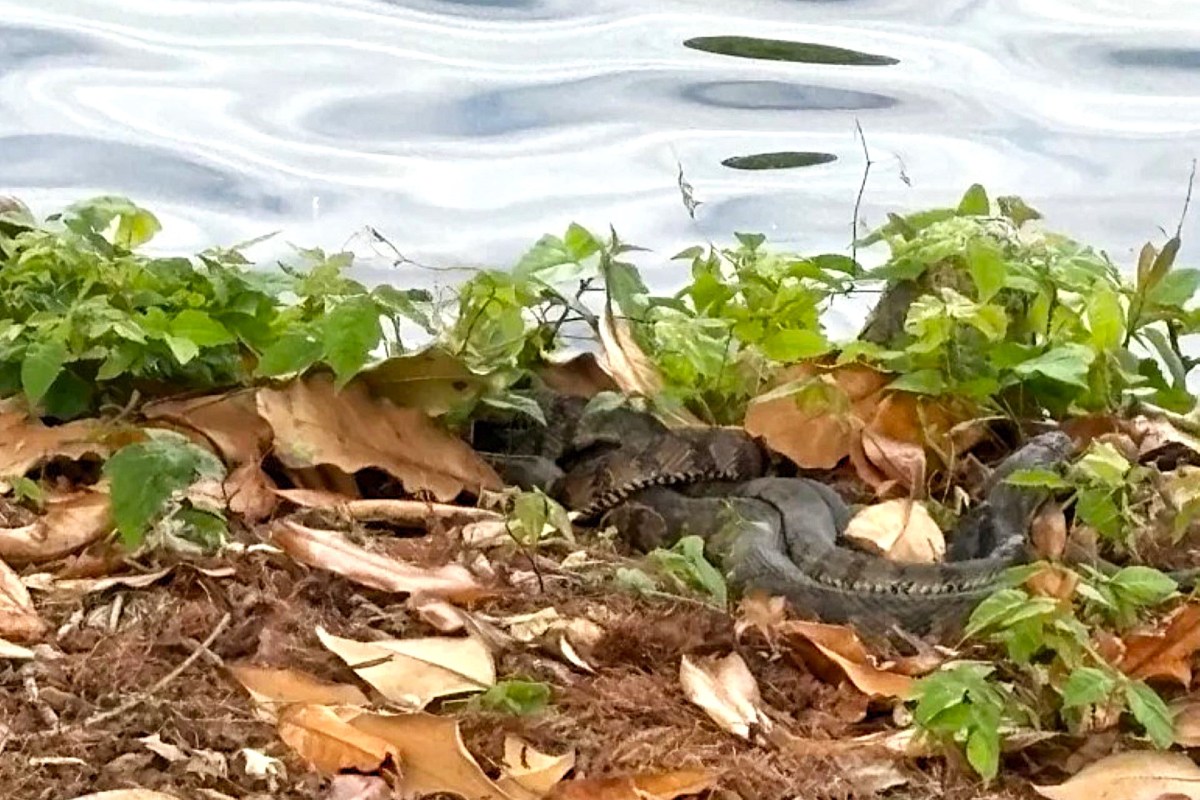
At Arkansas' Lake No. 1, a diamondback water snake known locally as "Ivan" turned out to be Ivy, a female at the center of a spring mating ball.
Experts say the scene offered a normal glimpse of snake behavior, one shaped in part by how often human and wildlife spaces overlap.
What happened?
At Lake No. 1 in North Little Rock, a visitor recently saw a larger diamondback water snake bundled together with several smaller snakes, the group so tightly packed that it looked almost still.
The Arkansas Times first reported that the scene was a classic snake breeding aggregation.
Amanda Bryant, a herpetologist at the Arkansas Game and Fish Commission, told the Times, "What you're seeing is one female snake, which is your big one, and then a bunch of smaller male snakes, sort of like wrapped around her, and they're all fighting and competing to mate with this female snake."
These gatherings are common among snakes, though most people never have a chance to see one. In water snakes, a breeding ball may involve "a handful, maybe five or ten" animals," according to Bryant.
TCD Picks » Quince Spotlight
💡These best-sellers from Quince deliver affordable, sustainable luxury for all




The female's pheromones attract the males, and cool spring weather can make the cluster seem almost frozen in place.
If the mating was successful, Bryant said, the female could give birth to live young in July or August. Those babies are "about the size of a pencil," and a mother water snake may have anywhere from five to 50.
Why does it matter?
Bryant said these nonvenomous water snakes were far more focused on reproduction than on any nearby person.
"They've got bigger fish to fry," she said.
The scene unfolded at a lake, where human-made spaces regularly overlap with animal habitat. Similar overlap has led to closer encounters elsewhere, including a recent case where a man nearly got bitten by a water snake he'd pulled from lake jetties.
Seasonal timing also plays a role. Bryant noted that spring rain and cooler temperatures mean "people might just be outside less often when these kinds of things are usually done."
Wild animals tend to react to habitat pressure or proximity rather than seek out conflict, as explored in this BBC Future report.
In this case, the result was wildlife carrying on despite human presence.
What can I do?
If you come across a snake aggregation, experts say the best response is simple: keep your distance, stay calm, and do not interfere.
Water snakes are generally harmless to humans, and Bryant said a breeding ball can be "a cool opportunity to just sit and watch them" if you remain quiet and move slowly.
It can also help to learn which snakes are common in your area, especially around lakes, creeks, and stormwater ponds near homes and parks. Knowing the difference between venomous and nonvenomous species can reduce fear and help prevent unnecessary harm to wildlife.
"If you don't know, and you just come upon a pile of snakes … I can totally understand why somebody who doesn't know what they're looking at would be like, 'What is happening?'" Bryant said.
But in this case, "They're not doing anything except trying to make babies."

Get TCD's free newsletters for easy tips, smart advice, and a chance to earn $5,000 toward home upgrades. To see more stories like this one, change your Google preferences here.






