


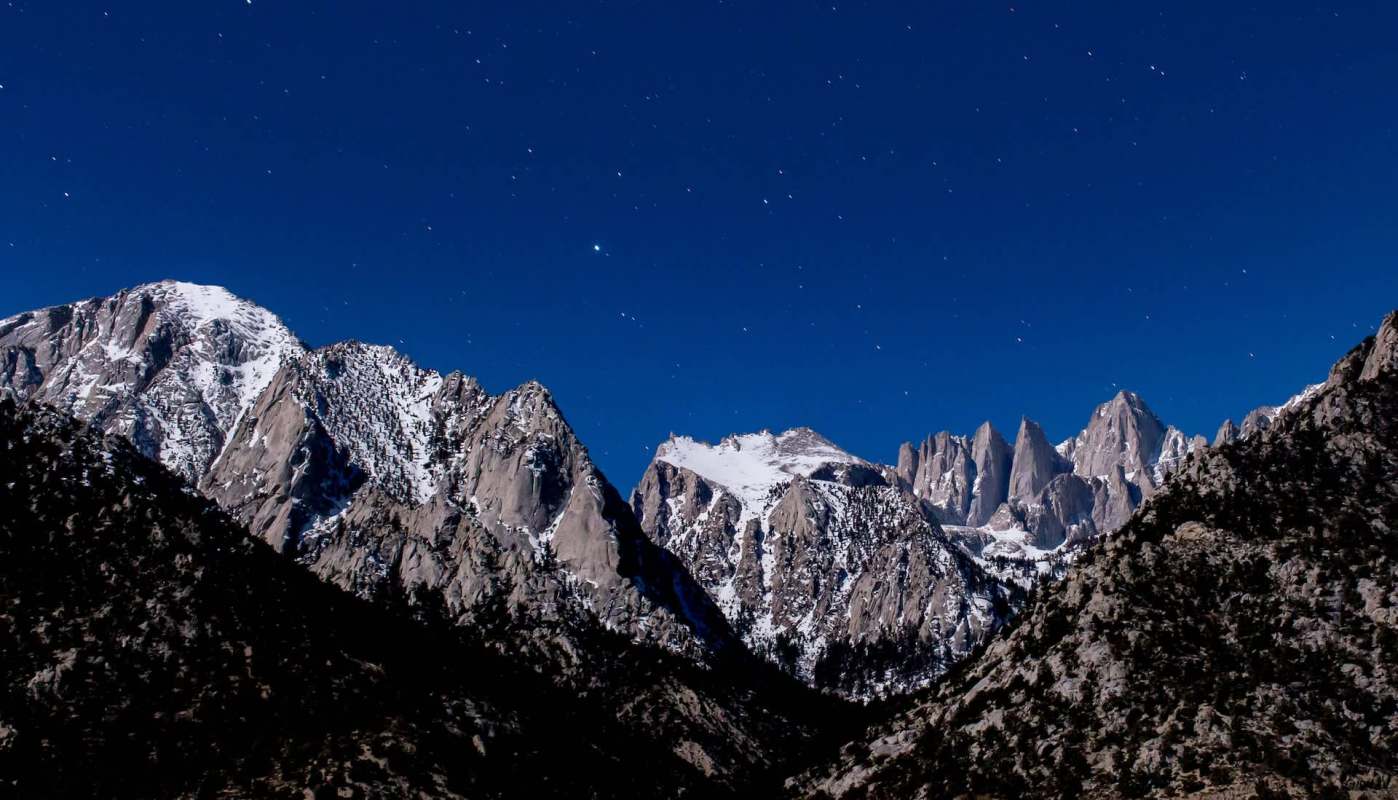
In Lone Pine, California, Cayden Thompson and another local saw what he called "incredibly bright" beams streaming from the Mount Whitney slopes into the desert below.
The lights were reportedly part of a technology test that may someday allow focused illumination for rescuers at night, among other ambitions.
Here's what to know
According to the San Francisco Chronicle, Los Angeles startup Reflect Orbital used generator-powered spotlights on Horseshoe Meadows Road during a demonstration in the Eastern Sierra to mimic how satellite-mounted mirrors could send sunlight to the ground after dark.
"They were blinding," Thompson said. "It was pretty evident then that this is not headlights or anything like that."
The company launched in 2024 and has a goal to place 50,000 reflector satellites in orbit within 10 years. It has Federal Communications Commission approval for its first satellite launch, which could happen next year.
"We expect our first customers to be search-and-rescue teams, so this was [a] hands-on test in a real search-and-rescue setting, coordinated with the people who would use our service," a spokesperson said, per the Chronicle.
TCD Picks » Quince Spotlight
💡These best-sellers from Quince deliver affordable, sustainable luxury for all




Better visibility for responders could support faster searches, safer movement across rough terrain, and quicker help for people stranded or injured at night.
But there could also be unintended consequences. The newspaper shared a video from Thompson on Instagram, and commenters had strong feelings about the technology.
"No. This will be incredibly detrimental to wildlife. Just no," one wrote.
Another said: "So an experiment conducted without county/city notification? Was it in a national or state forest? Doesn't that require a permit or permission?"
"This should be alarming," someone else said. "I climb in these mountains. We do not want this tech experiment s*** here. We like our dark starry skies."
More background
At first, Thompson and his friend thought the light could be from a vehicle that had gone off the road, so they headed toward it. Once they were about 1,000 feet away, they realized it was something else, the Chronicle reported.
A technician told them not to get too near the equipment. "They put out so much energy that you can't stand in front of them or you'd get burned," Thompson said.
Reflect Orbital's pitch extends beyond backcountry emergencies. On its website, per the Chronicle, the company says "sunlight on demand" could help cities light streets "without carbon emissions," help farmers "extend seasons" and "boost yields," and allow construction projects to be completed in "half the time."
What's being done?
China Lake Mountain Rescue, a volunteer nonprofit based in Ridgecrest, took part in the exercise alongside another mountain search-and-rescue team. According to the Chronicle, crews first performed standard rescue drills at night by headlamp, then again under the company's lights.
Phillip Cash, the operations leader for China Lake Mountain Rescue, said the lighting was a bit brighter than a full moon, and Reflect Orbital said that's what its satellites could eventually provide.
"The general consensus was psychologically it's nice to be able to see around and walk through the terrain well. It's easier to operate overall," Cash told the Chronicle.
He said the setup could prove most useful during large disasters. Though search-and-rescue teams already operate effectively at night, Cash said broad-area lighting could help crews reach more victims in rubble more quickly after earthquakes or similar disasters.
"There's no light, and then suddenly you can see 3 miles around you in every direction," Cash said.

Get TCD's free newsletters for easy tips, smart advice, and a chance to earn $5,000 toward home upgrades. To see more stories like this one, change your Google preferences here.






