


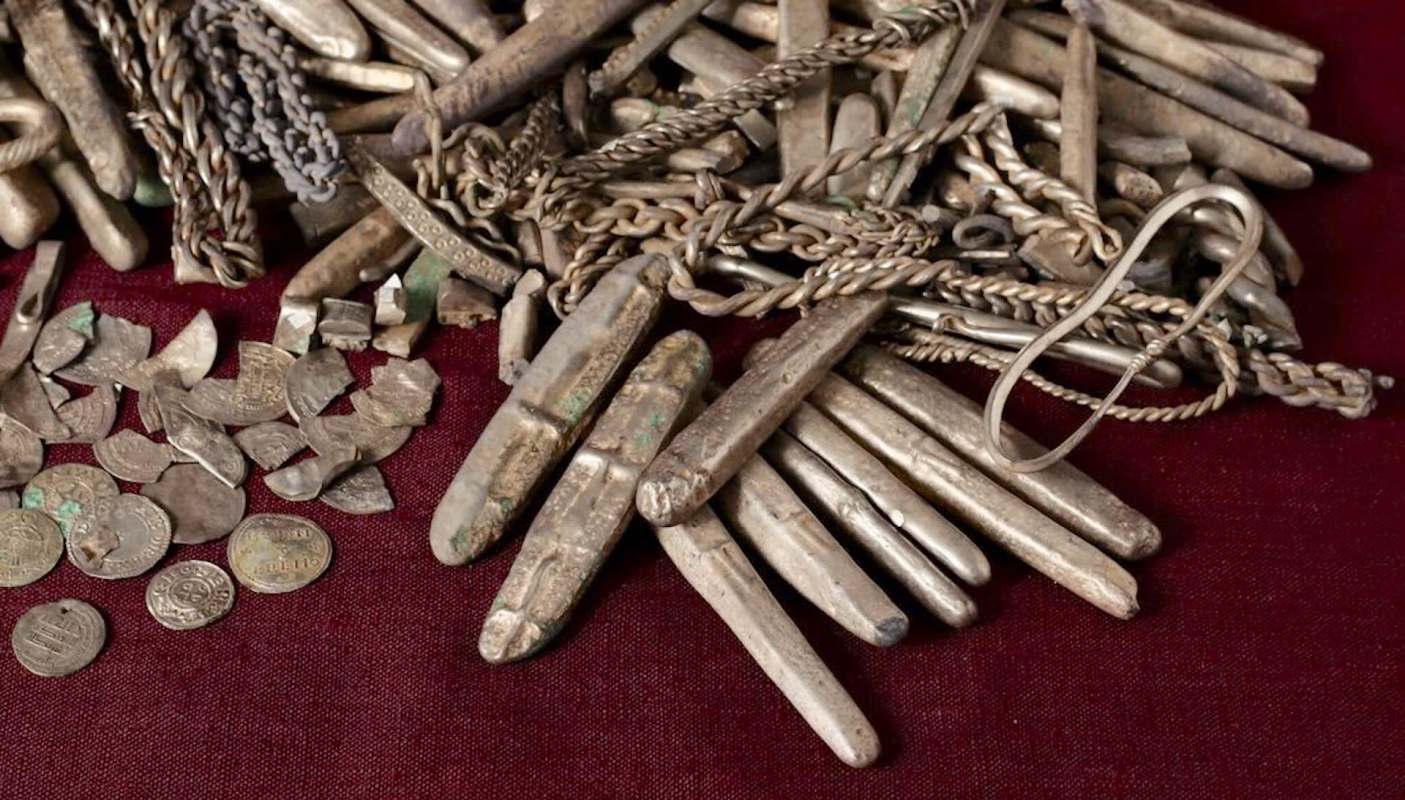
According to Smithsonian Magazine, a homeowner in northern Denmark set out to clear a backyard for a new terrace and expected a routine afternoon of digging. About 30 minutes later, the project turned into a major archaeological discovery when the yard in Rebild yielded what experts said is the largest Viking silver hoard ever found in Denmark.
Archaeologists said the cache includes around 700 objects weighing more than 40 pounds. They believe the silver was buried in the 10th century; roughly 320 pieces were inside a pottery vessel, while the remainder lay nearby.
Among the finds are 47 coins and coin fragments, as well as bracelets, silver bars, and a small object shaped like Thor's hammer, linked to Thor, the Norse god of thunder. Two of the coins are silver pennies minted in England during the rule of King Edward the Elder, who reigned from 899 to 924, while others are Arabic-inscribed dirhams.
Their presence suggests Vikings maintained connections extending eastward.
During the Viking Age, which lasted from about 800 to 1050, people commonly weighed silver bars and ornaments and used them in transactions. The National Museum of Denmark has called silver "the most important precious metal of the Viking Age."
In The Conversation in 2025, University of Oxford archaeologist Jane Kershaw wrote that the period is "often described as an 'age of silver.'" She added, "This form of wealth was so desired that its acquisition was a primary driver of the expansion out of Scandinavia that the Vikings are most famed for. To acquire it, they were prepared to risk their own lives — and take those of many others."
TCD Picks » Quince Spotlight
💡These best-sellers from Quince deliver affordable, sustainable luxury for all




A rune-inscribed silver bar may bear the word "hutu," which could be a personal name or a mark of ownership. The miniature hammer points to Thor, the Norse god of thunder, and such Thor's-hammer amulets were known to be made and worn by Vikings.
Torben Sarauw, the head of cultural heritage at North Jutland Museums, underscored the find's significance in comments to the Art Newspaper's Hadani Ditmars: "This is an exceptionally important Viking Age silver hoard. It provides a rare insight into the Viking Age silver economy, where silver functioned not only as coinage but also as weighed bullion used for trade, payments and storing wealth."
Where can I learn more?
The Rebild hoard is part of a larger stream of discoveries across Scandinavia that show how Viking wealth moved between regions — and how easily traces of that world can surface in unexpected places. Other finds from Norway, Denmark, and elsewhere in Europe shed light on buried treasure, ancient infrastructure, and preserved landscapes that help archaeologists piece together the past.
• In Norway, hobbyists spotted 19 silver pieces and uncovered the country's largest Viking coin hoard.
• Pipeline crews in Europe unearthed one of Europe's largest prehistoric gold hoards buried in linen.
• In Denmark, archaeologists have recreated baffling Iron Age hole belts to test a long-standing mystery.
Discoveries like these help put Denmark's record silver cache in context, showing how objects and landscapes can hold onto evidence for centuries.

Get TCD's free newsletters for easy tips, smart advice, and a chance to earn $5,000 toward home upgrades. To see more stories like this one, change your Google preferences here.






