


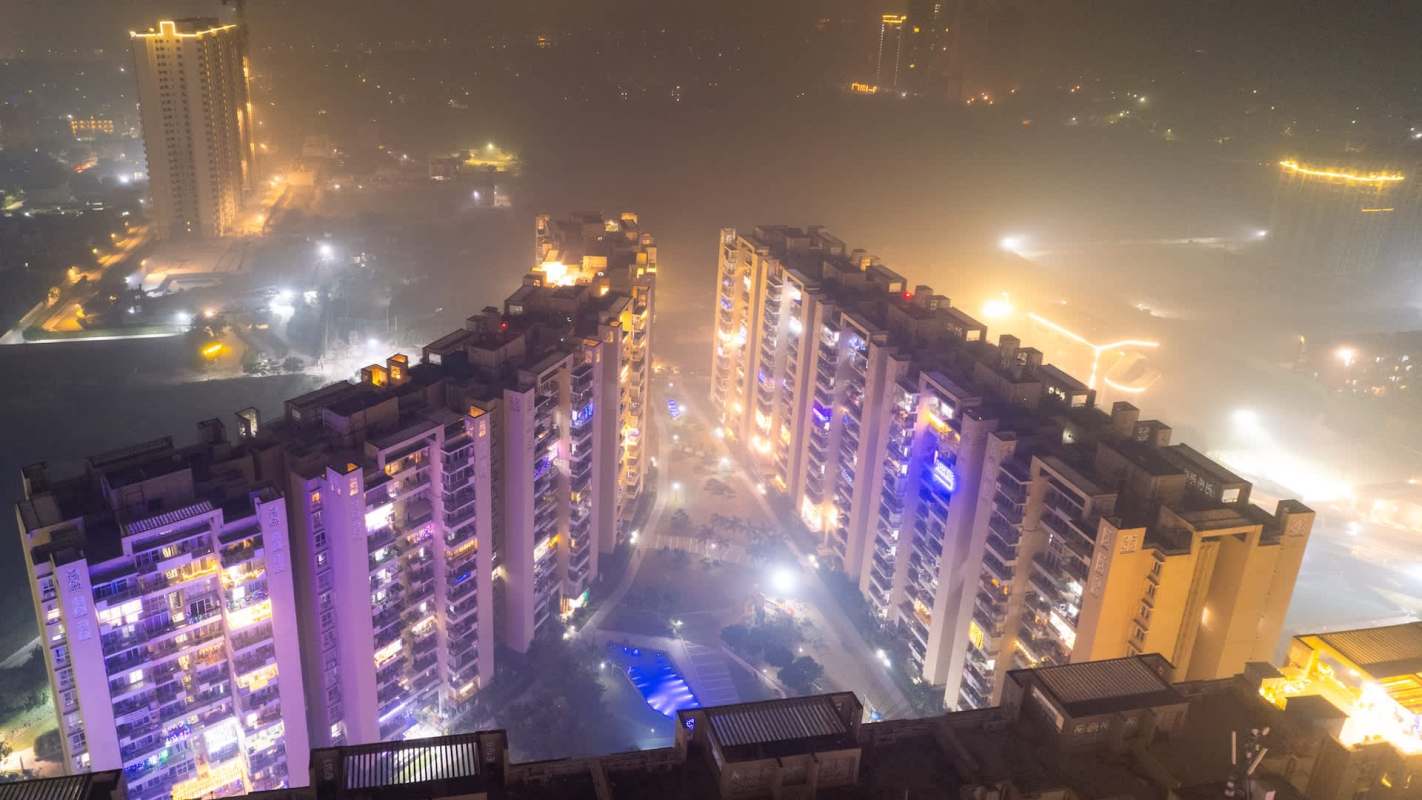
Toxic nitrogen dioxide lingered until midnight amid Delhi's evening gridlock, which emergency traffic restrictions did little to relieve, a Centre for Science and Environment air pollution analysis found.
Here's what to know
An analysis by the Centre for Science and Environment put Delhi's average concentration of fine particulate matter (PM2.5) at about 0.000000236 ounces per cubic foot (236 micrograms per cubic meter) for the week before Deepavali in 2026, The Hindu reported.
In the comparable periods of 2025 and 2024, concentrations were approximately 0.000000120 ounces per cubic foot (120 micrograms per cubic meter) and 0.000000179 ounces per cubic foot (179 micrograms per cubic meter), respectively.
The CSE said the latest reading was a three-year high — 97% above the 2025 level and 32% above the 2024 level.
For the analysis, the CSE combined traffic information with agricultural fire data supplied by the Indian Agricultural Research Institute.
It also used hourly pollution-source estimates from the Indian Institute of Tropical Meteorology and air quality records from the Central Pollution Control Board.
TCD Picks » Quince Spotlight
💡These best-sellers from Quince deliver affordable, sustainable luxury for all




The CSE attributed 52% of Delhi's locally generated pollution to transport, more than to any other local source.
More background
In the analysis, smoke from stubble burning accounted for 11.5% of Delhi's PM2.5 on Nov. 1.
That share fell to 8.6% on Nov. 2, even as the city's air quality entered the "very poor" category.
Farm fire smoke's contribution reached its seasonal peak of 16.2% on Nov. 4. By Nov. 6, its share had dropped to around 8%, yet Delhi's air quality index worsened to 382.
Beyond vehicle emissions, residential activities accounted for 13% of locally generated pollution, followed by peripheral industries at 11% and construction at 7%, per the CSE.
Energy consumption and waste burning were each responsible for 5%, the CSE determined.
Pollution continued to build well after the evening commute as congestion kept nitrogen dioxide, a toxic pollutant associated with vehicles, in the air until midnight.
What's being done?
According to the CSE, authorities stepped up emergency measures under the Graded Response Action Plan, invoking Stage II after Nov. 1 and Stage III on Nov. 6.
The restrictions included barring pre-BS VI vehicles. The measures, however, had not significantly reduced traffic volumes.
Anumita Roychowdhury, the CSE's executive director for research and advocacy, said pollution had built up before seasonal weather changes worsened conditions.
She maintained that year-round emissions controls for major polluters remained inadequate.
"Had air quality been cleaner leading into winter, and episodic spikes from farm fires and firecrackers kept in check, seasonal weather shifts would not have triggered such severe pollution," Roychowdhury explained.
"Deepavali pollution is an annual tipping point, but elevated particulate levels before the festival this year show that baseline pollution is higher than in previous years."
Where can I learn more?
Delhi's smog is part of a wider air pollution problem across India. These stories examine winter restrictions in Delhi, Mumbai's worsening air, and embassy monitor shutdowns.
• New Delhi doubled parking fees and banned construction for six weeks amid winter smog.
• In India, Mumbai's pollution overtook Delhi's as judges questioned officials over worsening air.
• After American embassy monitors were shut down, researchers reported pollution increases of 24% to 33%.

Get TCD's free newsletters for easy tips, smart advice, and a chance to earn $5,000 toward home upgrades. To see more stories like this one, change your Google preferences here.






