


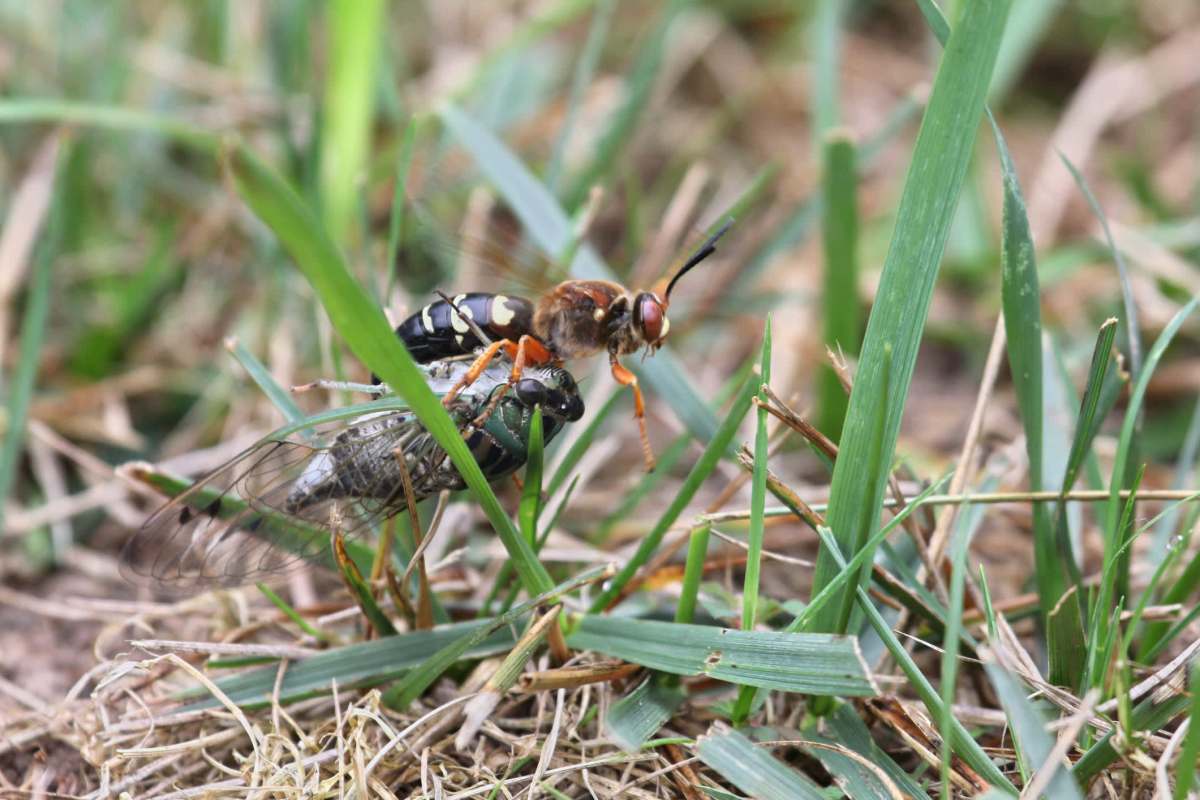
When a giant wasp starts circling a pond, most people's first instinct is to back away. But Delaware's Mt. Cuba Center is encouraging visitors to do the opposite: take a closer look at cicada killer wasps and see them as helpful neighbors rather than backyard villains.
What's happening?
In a recent Instagram post from Mt. Cuba Center (@mtcubacenter), the native-plant garden highlighted its resident cicada killer wasps, which visitors can spot flying near the ponds.
The garden also directed curious readers to a blog post that explains more about beneficial wasps.
Rather than emphasizing fear, Mt. Cuba Center framed the insects as wildlife already established on the property and worth watching. Their large size and ominous name often shape public opinion before people learn much else about them.
Why does it matter?
Species that look alarming are often killed before people recognize the useful roles they play in local ecosystems.
Cicada killer wasps help keep natural food webs functioning. As their name suggests, they hunt cicadas, meaning they are part of the natural checks and balances that shape outdoor environments. They are also generally solitary rather than swarm-based, which can make them less dangerous than many people assume.
TCD Picks » Quince Spotlight
💡These best-sellers from Quince deliver affordable, sustainable luxury for all




By sharing information like this, places such as Mt. Cuba Center can help visitors better understand which species are beneficial, native, or simply misunderstood.
The Mt. Cuba Center blog says: "Male wasps cannot sting and the females rarely sting unless handled roughly."
What can I do?
A good first step is to identify before reacting. If you see a large wasp hovering low over soil or carrying prey, it may be worth checking whether it is a cicada killer rather than assuming it is an aggressive pest.
Giving solitary wasps space is often enough. If they are not in a high-risk spot, leaving them alone can allow them to continue their role in the landscape without conflict. Watching from a distance can also be a way to learn more about local wildlife behavior.
People who want fewer problem insects can also support native plants and reduce broad-spectrum pesticide use, which often harms beneficial insects alongside the ones homeowners want to avoid.
And if a nest is in a place where people or pets frequently pass, local extension services or wildlife experts may offer more targeted advice than just spraying immediately.

Get TCD's free newsletters for easy tips, smart advice, and a chance to earn $5,000 toward home upgrades. To see more stories like this one, change your Google preferences here.






