


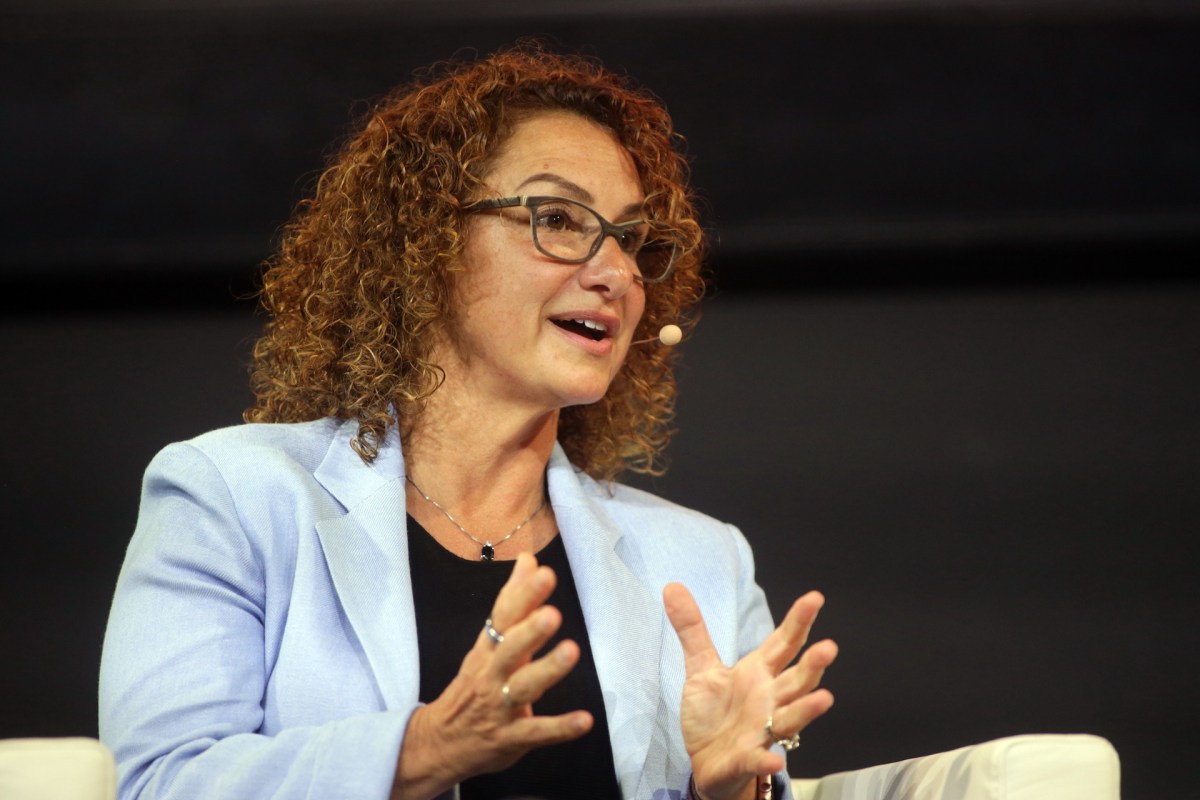
Lila Ibrahim, the Chief AI Readiness Officer for Google's DeepMind, is raising alarm bells online for an interview where she revealed that the odds AI could eventually contribute to human extinction are "not zero."
While the tech executive pushed back on both catastrophe denial and techno-utopian hype, she did not outright deny major risks tied to the technology.
What's happening?
In an interview with Fortune, when asked whether AI could one day play a role in human extinction, Ibrahim said the possibility is "not zero."
Pressed to put a percentage on that risk, she declined, telling the outlet, "Anything beyond that is just me guessing … That's the engineer in me."
Fortune noted that Ibrahim signed the Center for AI Safety's 2023 statement, which treated AI extinction risk with the same seriousness as nuclear war. She noted in the interview that it would be "irresponsible of us not to talk about existential risk."
That caution contrasts with the more optimistic future envisioned by Tesla CEO Elon Musk, who has imagined an abundant world in which robots could make work optional.
TCD Picks » Quince Spotlight
💡These best-sellers from Quince deliver affordable, sustainable luxury for all




Fortune noted that other AI leaders, including Geoffrey Hinton, the so-called godfather of AI, and Anthropic CEO Dario Amodei, have publicly offered grim views of humanity's future. Ibrahim said, "I don't think we can really predict what a future state looks like."
Why does it matter?
AI is no longer a far-off idea. It is already shaping hiring, education, health care, online information, and energy use.
The stakes go beyond science-fiction scenarios. They also include biased decisions, scams, security failures, job disruption, and questions about who receives the economic benefits from increasingly powerful tools.
AI is also becoming more tightly linked to the energy grid. Training and operating large AI models can require massive amounts of electricity and water for cooling, which can strain local infrastructure and, in some places, raise energy costs.
At the same time, AI can help utilities forecast demand, improve battery performance, and better integrate wind and solar power. The technology could help build a cleaner, more efficient grid, but it can also intensify pressure on resources if growth outpaces planning.
Ibrahim said a fixation on either a gleaming, AI-powered future or total societal collapse can distract from the decisions being made right now. Those decisions could determine whether AI improves daily life or worsens problems that already exist.
What's being done?
Her priority, Ibrahim said, is to use AI on immediate problems such as severe weather and industrial waste while, as Fortune described it, ensuring the gains do not flow only to a small group of AI-company leaders.
She also suggested the tech industry is trying to correct an older mistake. Looking back at earlier waves such as the internet and social media, Ibrahim said to Fortune, companies did not spend enough time discussing what might go wrong before the downsides became widespread.
"The two things that keep me up at night are: Are we doing everything we can to mitigate the risks? And are we doing everything we can to maximize the opportunity?" Ibrahim said to the outlet. "I think a lot about how we get to a future versus what the future is."

Get TCD's free newsletters for easy tips, smart advice, and a chance to earn $5,000 toward home upgrades. To see more stories like this one, change your Google preferences here.






