


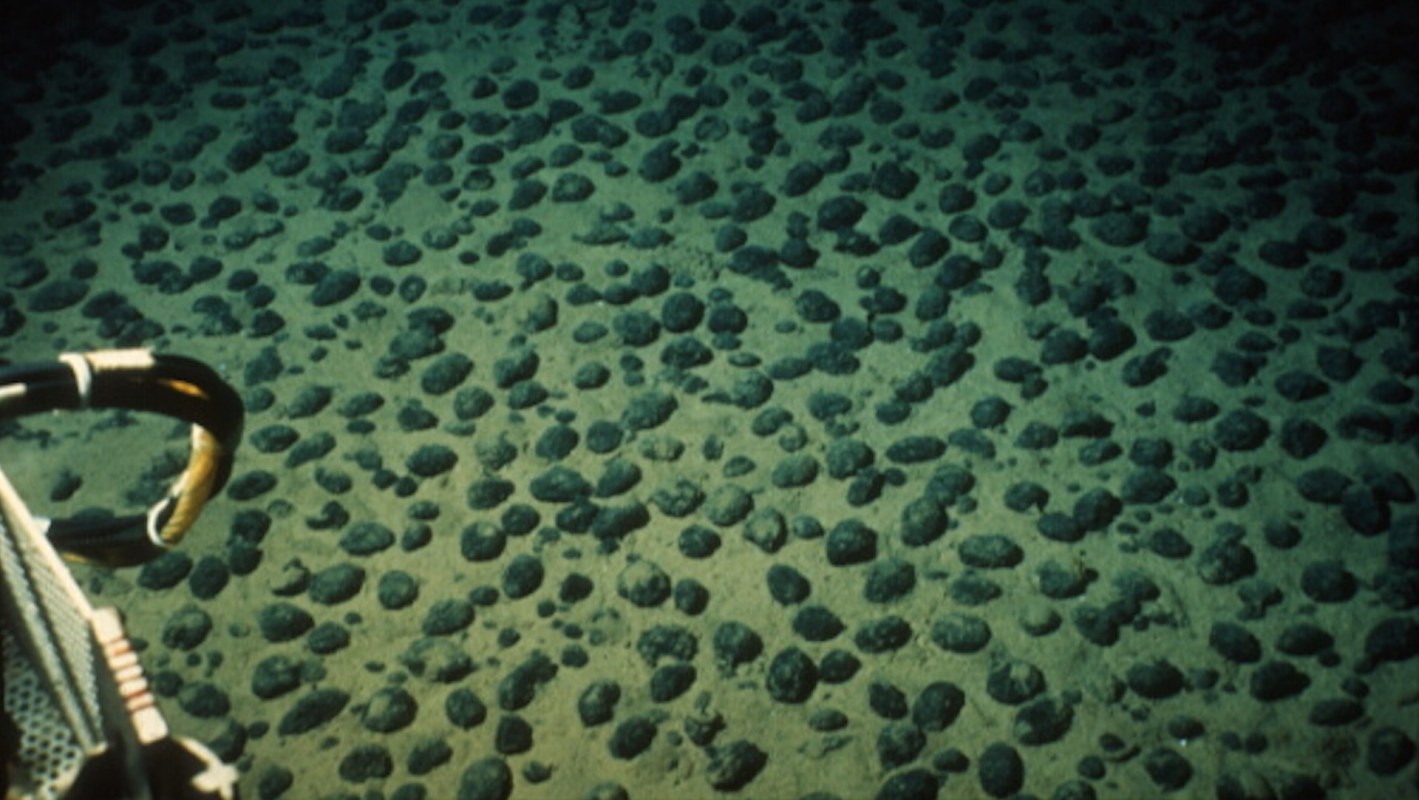
Scientists warn that mining on the deep Pacific seafloor could eliminate distinctive animal habitats before researchers understand their inhabitants.
Here's what to know
Metal-rich rocks scattered on the Pacific floor host tiny animal communities that differ from those in the surrounding mud.
Researchers found microscopic animals occupying cracks and pores in polymetallic nodules from the Clarion-Clipperton Zone, according to ScienceAlert. They examined 244 of the rocks.
Scientists used a box corer to retrieve sediment and embedded nodules from roughly four to six kilometers (2.5 to 3.7 miles) below the surface. They collected the samples in 2019 aboard Germany's RV Sonne during the JPI Oceans Mining Impact II expedition.
Roundworms and crustaceans were the most frequently found animals, though researchers also found bristleworms, mud dragons, and tardigrades in a few of the rocks.
"What surprised us most was how different the communities living inside nodules were from those in nearby sediments. Remarkably, nodule communities collected from areas separated by approximately 1,000 kilometers were more similar to one another than to the surrounding sediment communities," marine genomicist Coral Diaz-Recio Lorenzo told ScienceAlert.
TCD Picks » Quince Spotlight
💡These best-sellers from Quince deliver affordable, sustainable luxury for all




More background
The rocks give animals a firm place to attach on an otherwise muddy deep seafloor. Removing them takes only minutes, even though they need millions of years to form.
Mining companies see the nodules as a source of nickel, cobalt, copper, iron, and manganese as demand for metals grows. Extracting them, however, could destroy a home for tiny animals before the ecosystems' wider roles are understood.
Germany's BGR agency holds the International Seabed Authority exploration contract for the area that yielded 153 of the nodules. Researchers collected the other 91 in an exploration area held by Global Sea Mineral Resources.
What's being done?
The JPI Oceans Mining Impact II expedition is helping scientists document these habitats before potential commercial mining begins. Researchers sent the frozen nodules and their inhabitants to a laboratory for examination.
Under the microscope, researchers also found fossil remains from diatoms, radiolarians, and sea sponges within the nodules' ancient layers.
Decisions by the International Seabed Authority on commercial mining would determine whether companies can remove the rocks en masse.
"Because their communities differ from those in the surrounding sediments, protecting sediment habitats alone would not preserve this biodiversity," Diaz-Recio Lorenzo told ScienceAlert. "Large-scale nodule removal could therefore result in irreversible losses of unique species and ecological communities that we are only beginning to understand."
"Our findings point out that commercial mining may result in an irreversible loss of undescribed and unique biodiversity associated to nodules," said Sabine Gollner, a deep-sea biologist at the Royal Netherlands Institute for Sea Research. "This needs to be considered in environmental management of deep-sea mining."

Get TCD's free newsletters for easy tips, smart advice, and a chance to earn $5,000 toward home upgrades. To see more stories like this one, change your Google preferences here.







