


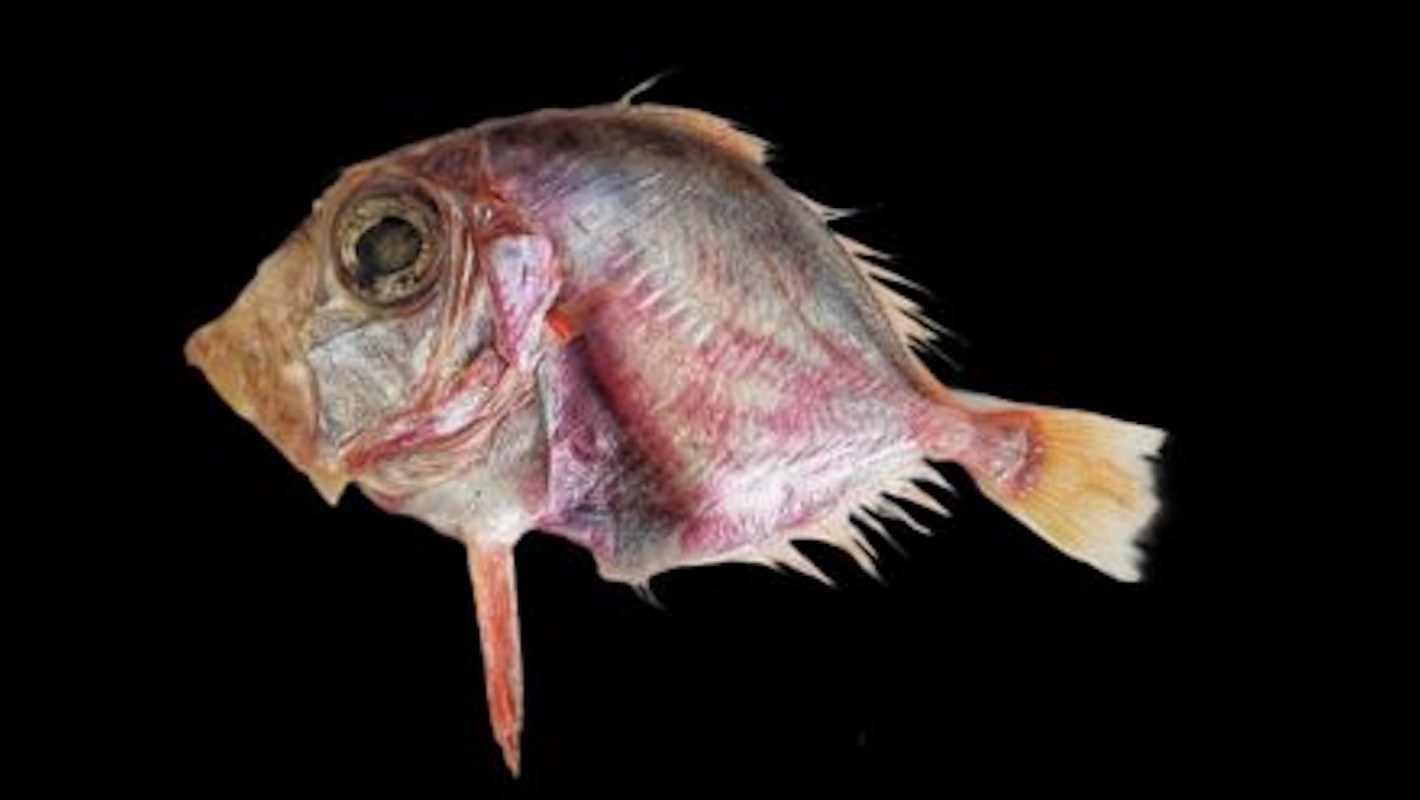
A newly identified deep-sea fish surfaced off India's southwest coast, giving scientists a clearer picture of what lives deep in the Arabian Sea while resolving a scientific mix-up that persisted for years.
The species, named Cyttopsis indica, or the Indian dory, shows how modern DNA tools are reshaping what researchers know about ocean life.
What happened?
According to The New Indian Express, the discovery came off southern Kerala, along the continental slope of the eastern Lakshadweep Sea, where the fish was found around a depth of 1,148 to 1,640 feet.
The genus Cyttopsis is a primitive line of fish known as dories. Scientists studied six specimens obtained from deep-sea trawl landings at Sakthikulangara fishing harbor in Kollam.
The research team, led by the Central Marine Fisheries Research Institute's Ratheesh Kumar R., determined that the specimens represented a new species by combining traditional taxonomy with molecular testing. The genetic analysis proved especially important to that conclusion.
Indian Ocean members of this genus had previously been identified as Cyttopsis rosea. New DNA evidence overturned that assumption, showing the Indian Ocean fish was distinct from all known species in the group and indicating that Cyttopsis rosea is actually limited to the Atlantic Ocean.
TCD Picks » Quince Spotlight
💡These best-sellers from Quince deliver affordable, sustainable luxury for all




Why does it matter?
The finding adds to the biodiversity record in a part of the ocean that remains relatively underexplored, especially at great depths, where ecosystems can be difficult and expensive to study.
Accurate species identification is a basic part of marine management. Incomplete or incorrect records make it hard to track marine life, understand food webs, and plan for sustainability.
The correction also underscores the value of pairing classic field biology with modern genetics. Species can look deceptively similar, and DNA can reveal hidden differences that change how scientists map their distributions across oceans.
What's being done?
Researchers updated the scientific record to reflect the change. Recognizing Cyttopsis indica as a separate species fixes a long-standing taxonomic error and expands scientific understanding of marine biodiversity in the Indian Ocean.
Work such as this can also strengthen future monitoring. Specimens gathered from fishing harbors can provide valuable clues about deep-sea life, especially when paired with lab analysis.
That can help researchers spot changes in species ranges, identify overlooked animals, and build data for policymakers and marine managers.
By separating Cyttopsis indica from another species, the discovery adds a new fish to India's marine record and clarifies that the related species' range lies elsewhere. It is a small but meaningful step toward a clearer, more complete picture of the deep sea.

Get TCD's free newsletters for easy tips, smart advice, and a chance to earn $5,000 toward home upgrades. To see more stories like this one, change your Google preferences here.






