


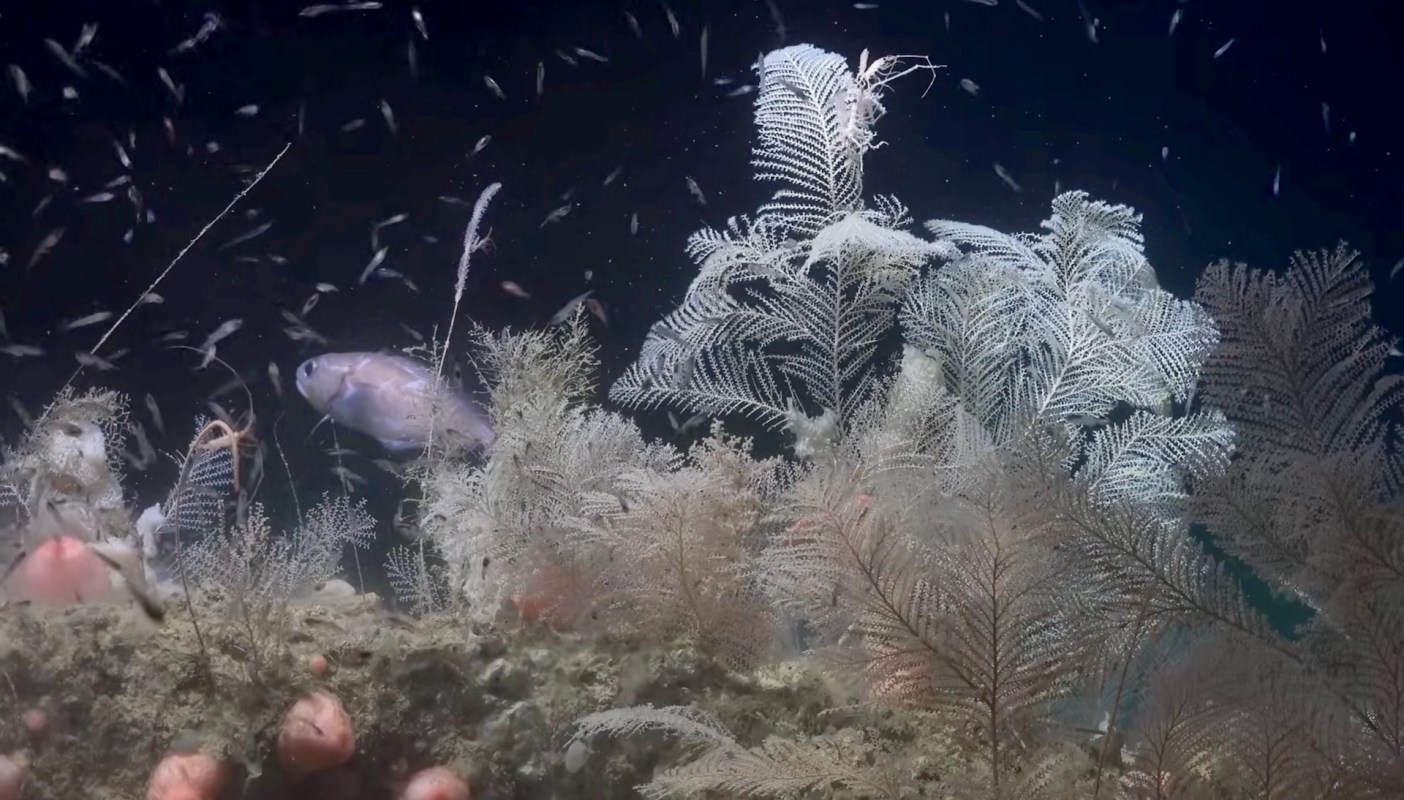
An expedition in the South Atlantic went looking for cold seeps and wound up mapping a vast deep-sea coral habitat about the size of Vatican City.
The reef supports jellyfish, fish, octopuses, and crabs, and includes the largest known reef formed by the rarely seen coral Bathelia candida.
What happened?
The find came off Argentina, where scientists were using a remotely operated vehicle to investigate chemical-rich cold seeps.
Instead, they encountered an expansive reef built by the cold-water coral Bathelia candida.
ScienceAlert reported that the newly mapped reef covers about 0.4 square kilometers, making it the biggest Bathelia candida reef yet discovered.
The mission was carried out from Schmidt Ocean Institute's research vessel Falkor (too).
TCD Picks » Quince Spotlight
💡These best-sellers from Quince deliver affordable, sustainable luxury for all




Along with the reef, the team documented a nearby active cold seep, a deep-water whale fall, and the giant phantom jellyfish, which is one of the least-seen jellyfish on Earth.
Dive footage starts in darkness before revealing a busy seafloor scene, with branching coral, basket stars feeding in the current, crabs crossing the reef, and fish moving through the structure.
Across the broader survey area, researchers collected 28 species that they suspect are new to science.
Why does it matter?
Deep-sea coral reefs create habitat for entire ecosystems, and understanding where they are can help governments and communities make more informed decisions about fishing, seabed disturbance, and ocean conservation.
The reef lies beneath one of Argentina's productive fishing regions, and scientists believe the abundance of life above may help sustain the rich ecosystem below.
Protecting ocean biodiversity can support healthier marine food webs, ultimately benefiting coastal economies and food supplies.
At a time of warming oceans and increasing industrial pressure, identifying biodiversity hotspots before they are damaged gives researchers and policymakers a better chance to protect them.
What are people saying?
The scientists involved said they were stunned by what they saw.
"I would say that it is one of the most vibrant and lush environments in the deep sea that I've ever seen," said deep-sea biologist Santiago Herrera of Lehigh University, per ScienceAlert.
He added: "So it's a big surprise when you suddenly find large amounts of animals all together, clearly interacting in a very vibrant and dynamic ecosystem."
Marine scientist María Emilia Bravo said, "We were not expecting to see this level of biodiversity in the Argentine deep sea, and are so excited to see it teeming with life."
She also described the moment as something bigger than a single discovery: "We opened a window into our country's biodiversity only to find there are so many more windows left to be opened."

Get TCD's free newsletters for easy tips, smart advice, and a chance to earn $5,000 toward home upgrades. To see more stories like this one, change your Google preferences here.






