


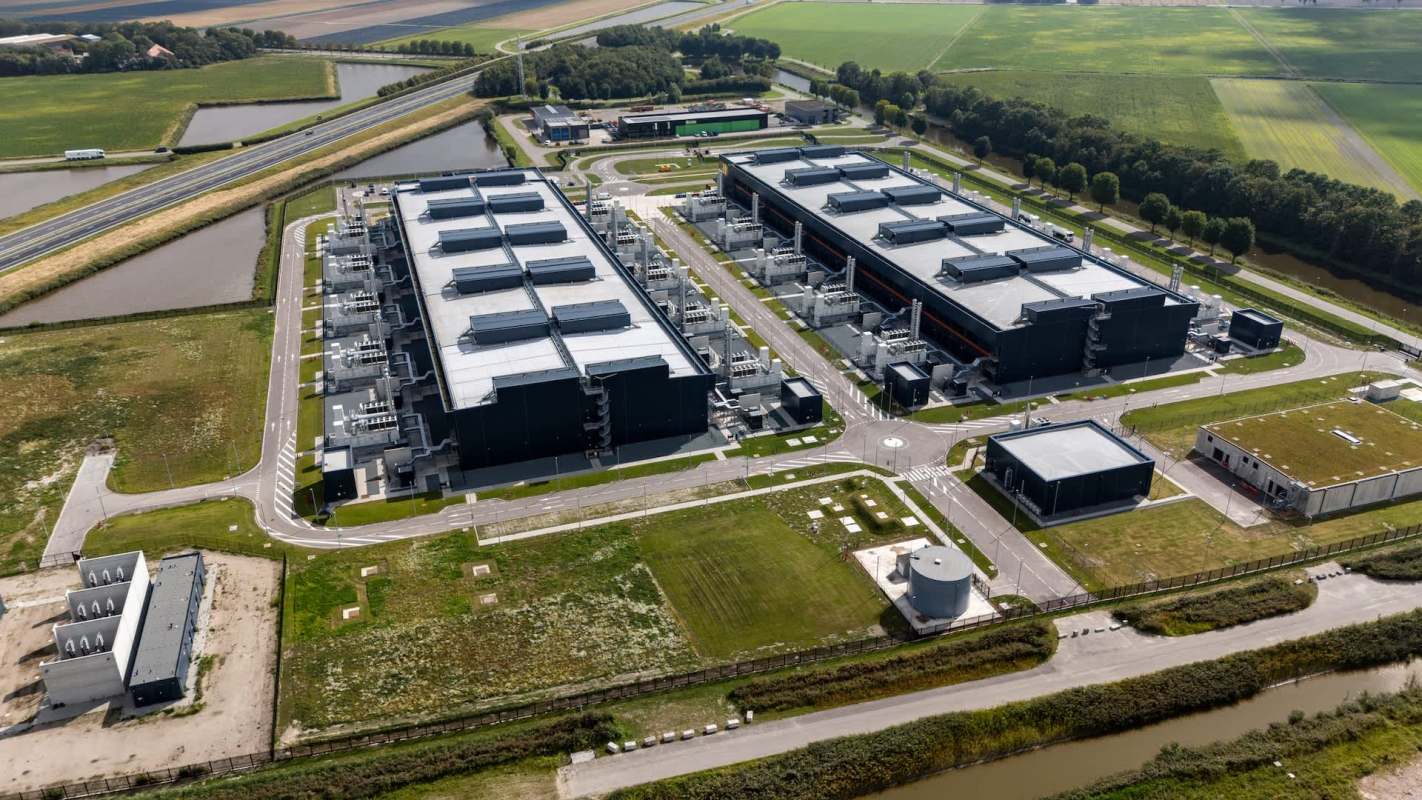
In Pima County, the conversation around data centers is shifting from utility demands alone to the health conditions around the sites themselves. A new county review said neighboring areas may also have to contend with added heat, air pollution, and noise.
Here's what to know
Pima County, working with researchers from the Johns Hopkins Bloomberg School of Public Health, released a 20-page review on the potential human-health effects of large data centers and the major questions that remain unanswered, the Arizona Daily Star reported.
Officials said the uncertainty itself is part of the problem.
Dr. Theresa Cullen, director of the Pima County Health Department, said she asked other large local health departments in the Big City Health Coalition how they assess data center projects, but found almost no established guidance.
"I thought this was going to be easy ... I was a little taken aback," Cullen said.
Possible air-quality problems could arise at several stages of a project, including construction dust, emissions from backup generators, and pollution from the power plants that supply the electricity the facilities use.
TCD Picks » Quince Spotlight
💡These best-sellers from Quince deliver affordable, sustainable luxury for all




Those concerns carry extra weight in a county where respiratory and cardiovascular illness is already common: 15% of adults have asthma, and almost 36% have been diagnosed with high blood pressure.
More background
Public disputes over data centers often focus on resource strain, particularly in dry, fast-growing regions. Pima County's report examines how those facilities could affect the day-to-day health of people living closest to them.
A major obstacle is the lack of long-term epidemiological research tracking health outcomes in neighborhoods near data centers. Experts believe there could be impacts, but communities still lack sufficient evidence to measure them clearly.
Officials said any effects would probably be concentrated near individual sites rather than spread evenly across the county. That means countywide numbers may miss what nearby residents experience, making census-tract analysis and neighborhood air-quality monitoring more important.
The issue is also tied to artificial intelligence, as the AI boom is helping drive demand for massive computing facilities.
While AI can provide real benefits, including helping utilities forecast demand and optimize clean energy systems, the infrastructure supporting it can consume vast amounts of power and water, raising concerns about grid strain, higher energy bills, security risks, and other unintended consequences.
What's being done?
Cullen said the review is intended to help the county assess future proposals and determine what should be monitored if projects move ahead. Rather than making claims about any one facility, she said, the effort was meant to identify broad areas of concern before more development proceeds.
"We're very clear that we don't know specific data about specific data centers . . . What we did with this framework was really look at are there areas of concern just in general, if data centers are proposed," she said.
The Health Department does not directly regulate projects, but the county's Board of Health could request an evaluation if concerns arise. The board could then pass a resolution objecting to a project and send it to the Board of Supervisors.
On Aug. 12, the Board of Supervisors voted 3-2 to begin drafting a temporary, three-month halt on data center development.
If a facility is ultimately built, Cullen said the county could start tracking respiratory impacts as soon as it goes live and could recommend additional air-monitoring units in the area.
"Say a data center goes live, and we believe that there will be a respiratory impact. It's hard for me to believe there won't be, to tell you the truth. Then we would start monitoring that right away ... and we would recommend additional air monitor units," she said.
Where can I learn more?
Pima County is not alone in wrestling with these questions. Similar fights are playing out across the Southwest and beyond, as AI-driven data center growth runs up against limits on water, air quality, electricity demand, and local infrastructure.
• In New Mexico, officials urged a data center moratorium as AI growth threatened water and air quality.
• In Texas, residents warned AI data centers could drain water supplies and raise local power bills.
• In Ohio, gas plants are being approved for AI data centers before neighbors get a say.
• Nationwide, data centers devour 6 percent of U.S. electricity as AI demand accelerates.
When data center development accelerates, concerns about nearby health effects can quickly spill into broader battles over water, power, and pollution — and that helps explain why some counties are trying to respond before proposals become construction.

Get TCD's free newsletters for easy tips, smart advice, and a chance to earn $5,000 toward home upgrades. To see more stories like this one, change your Google preferences here.






