


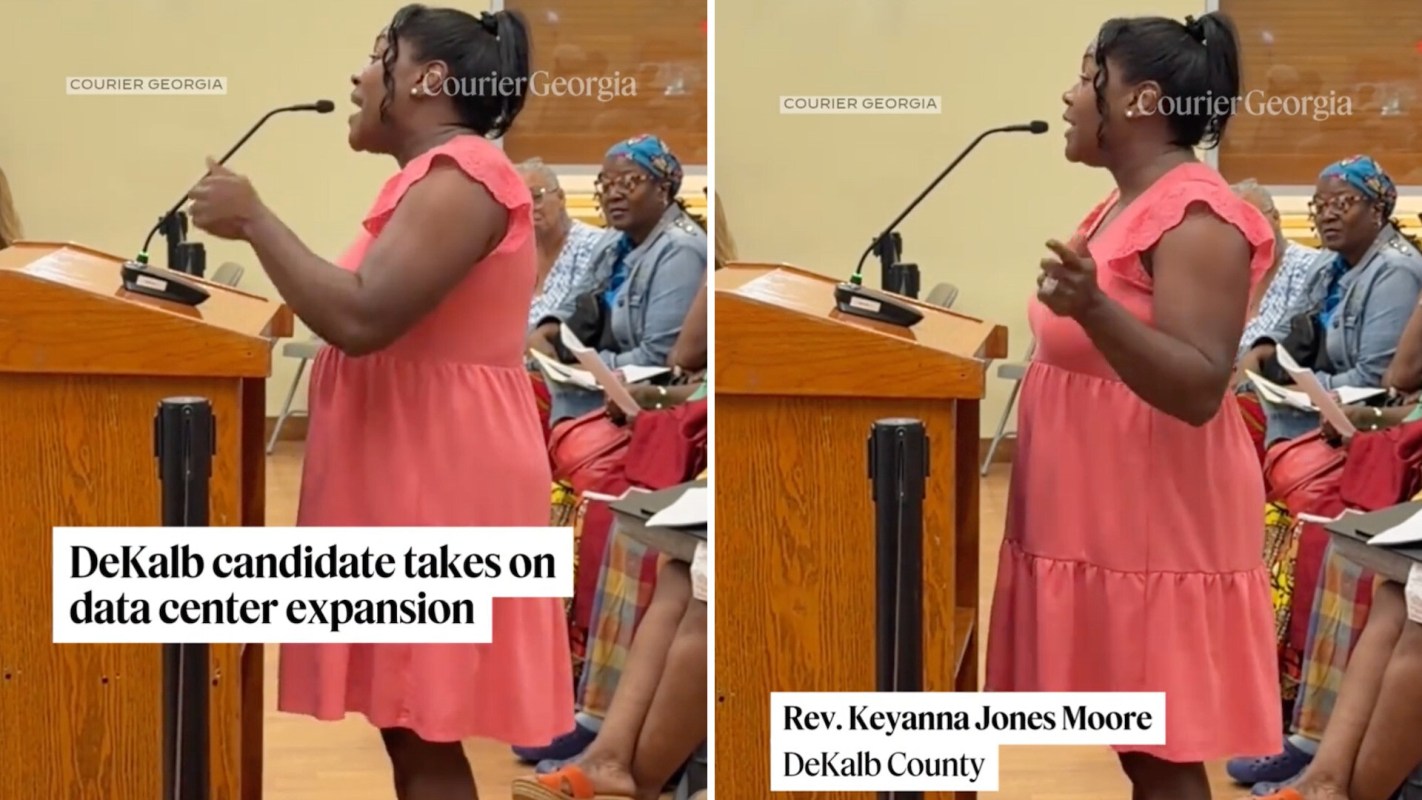
A proposed data center expansion in DeKalb County, Georgia, is facing mounting opposition after a resident used a public meeting to accuse officials of disregarding known concerns about data centers and environmental racism.
The confrontation, captured in a local-news TikTok clip, has helped turn a local land-use conflict into a broader debate over pollution, power demand, and who bears the burden of digital infrastructure.
What happened?
Courier Georgia highlighted the dispute in a TikTok video which shows County Commission candidate Rev. Keyanna Jones Moore expressing concern and frustration over the proposed data center expansion in her community.
@couriergeorgia DeKalb County Commission candidate Rev. Keyanna Jones Moore didn't hold back at Tuesday's meeting, fighting against a proposed data center expansion. Moore argued that residents—who are already dealing with the fallout from the controversial "Cop City" project—shouldn't have their community disrupted by massive data centers. What do you think? Should community voices have the final say on these massive industrial projects? ✏️: Colleen Hamilton
♬ original sound - COURIER Georgia
"You have the facts about data centers, and you want to ignore them," Moore said in a scathing statement at a DeKalb County Commission meeting.
Moore's argument went further, explaining that the data center expansion is an example of environmental racism.
"People understand we are being disenfranchised simply because we look a certain way," Moore said.
TCD Picks » Quince Spotlight
💡These best-sellers from Quince deliver affordable, sustainable luxury for all




Why does it matter?
Data centers are often presented as necessary infrastructure for the modern economy, supporting everything from cloud storage and streaming to artificial intelligence. For nearby residents, a large data center can deplete local water sources and make energy prices rise.
The concern outlined by Moore is representative of a larger issue where communities that already feel overlooked are once again being asked to absorb the harms of development without meaningful protections.
Data centers are essential to AI systems, and AI can offer real benefits, including helping utilities forecast demand, improve grid efficiency, and better integrate clean energy.
At the same time, AI-related computing can require enormous amounts of electricity and water, and rapid expansion can strain the grid, increase costs, and create new security and misuse risks if it outpaces safeguards.
The debate in DeKalb reflects a broader national question: Who benefits from the digital economy, and who pays for the infrastructure behind it?
What are people saying?
In the comment section of the video, users were overwhelmingly supportive of Moore's statements.
"I wholeheartedly support her commentary," one user wrote.
"Every word you say is true!" another said.
Others went a step further, using the comment section to voice support for Moore's bid for county commissioner.
"Please, if you live in DeKalb vote for her. I wish she were in Atlanta. I know her, she's been fighting the good fight tooth and nail," one user said.

Get TCD's free newsletters for easy tips, smart advice, and a chance to earn $5,000 toward home upgrades. To see more stories like this one, change your Google preferences here.






