


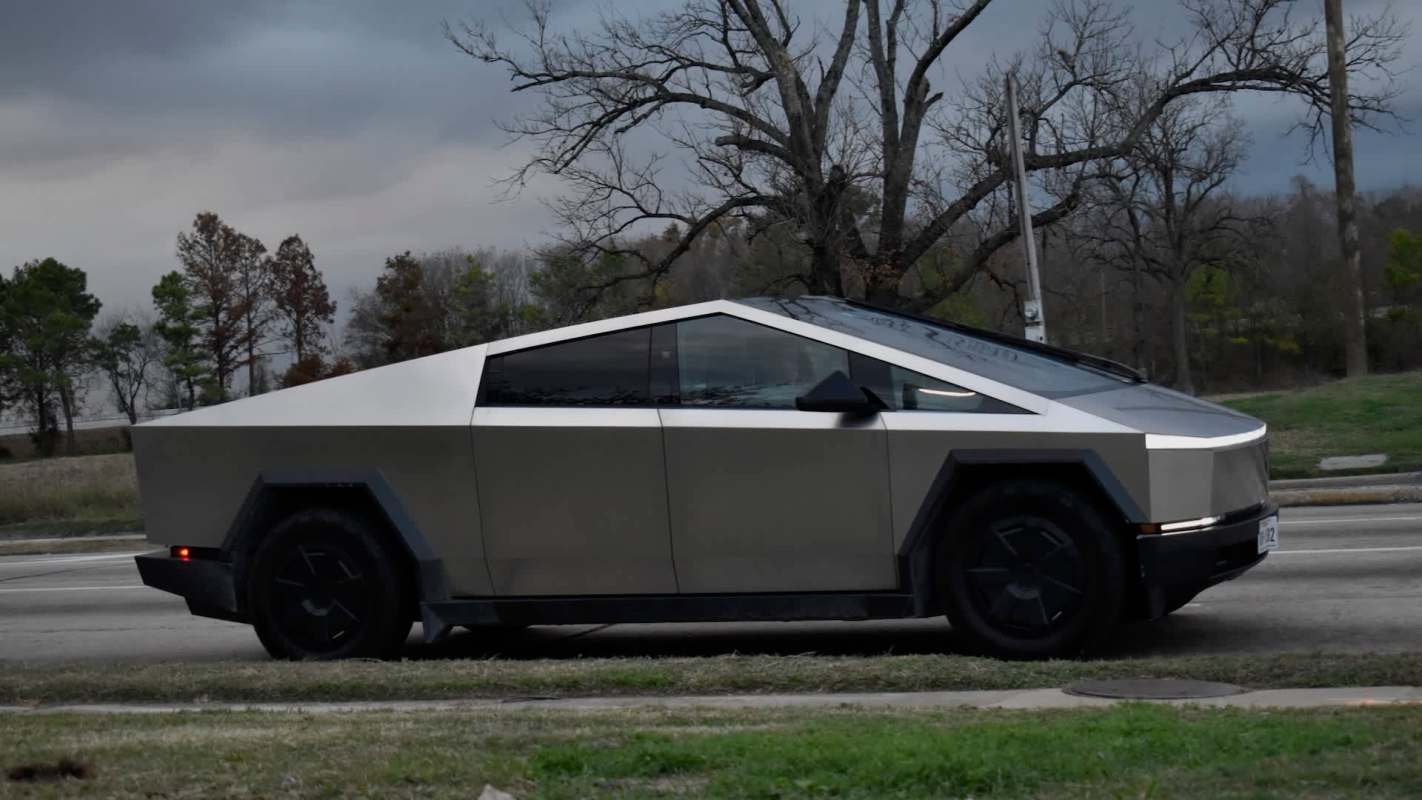
Police in Bavaria stopped a Tesla Cybertruck during a trip through Germany because the angular electric pickup is generally not cleared for road use there.
The incident is the latest reminder that importing or driving the vehicle in Europe can bring legal and practical complications for owners, including licensing issues and interrupted travel.
Here's what to know
According to Electrek, Der Münchner Merkur reported that the Swedish driver was pulled over near the Bavarian town of Vaterstetten and was not allowed to continue.
Police said the driver had a standard Class B license, while the Cybertruck requires a C1 license because of its permitted maximum weight.
Germany has also not granted the Cybertruck "type approval," Electrek reported. Authorities have turned down individual exemption requests as well, saying the vehicle "deviates significantly" from requirements.
European rules are strict on vehicle shapes and front-end design, and the Cybertruck's body has drawn scrutiny for years. "Because of that look, it also breaks several European rules, particularly those related to pedestrian protection (which was called out immediately upon reveal by many observers, including this author)," Electrek stated.
TCD Picks » Quince Spotlight
💡These best-sellers from Quince deliver affordable, sustainable luxury for all




More background
The licensing issue centers on gross vehicle weight. While Class B drivers can pilot 3,500-kilogram automobiles, all Cybertruck trims exceed that threshold when the maximum allowed load of passengers and cargo is included.
For many drivers, the issue may not be obvious at the time of purchase, but it can be a problem during a roadside stop.
This instance was not the first enforcement action involving the Cybertruck in Europe. Electrek also referenced a U.K. seizure of an imported Cybertruck along with another incident involving two Cybertrucks headed through Lithuania to Russia.
The truck's highly recognizable design can make it attractive for business use. Electrek noted that companies sometimes use Cybertrucks for rolling advertisements because they stand out, which could make cross-border compliance important for commercial operators.
What's being done?
German authorities enforced road-use and licensing rules and have also signaled that there is limited flexibility.
Elsewhere, authorities have stepped in when Cybertrucks appeared on European roads or at borders, and the U.S. Army has warned servicemembers against bringing the vehicle into Germany, per Electrek.
Buyers or importers should confirm whether a vehicle is approved, and drivers should check if their license class matches the vehicle's permitted weight before attempting cross-border travel.
Where can I learn more?
Tesla's unusual vehicle designs and software have drawn scrutiny from regulators.
• In Belgium, Tesla's Full Self-Driving sped through 30 km/h zones and attempted illegal cyclist passes.
• In Texas, videos showed Tesla robotaxis appearing to speed in school zones, prompting a federal review.
• The NHTSA demanded sworn answers for the Tesla Cybercab's lack of pedals and a steering wheel.
• In Texas, Tesla drew a federal audit soon after launching Cybercabs on public roads.

Get TCD's free newsletters for easy tips, smart advice, and a chance to earn $5,000 toward home upgrades. To see more stories like this one, change your Google preferences here.






