


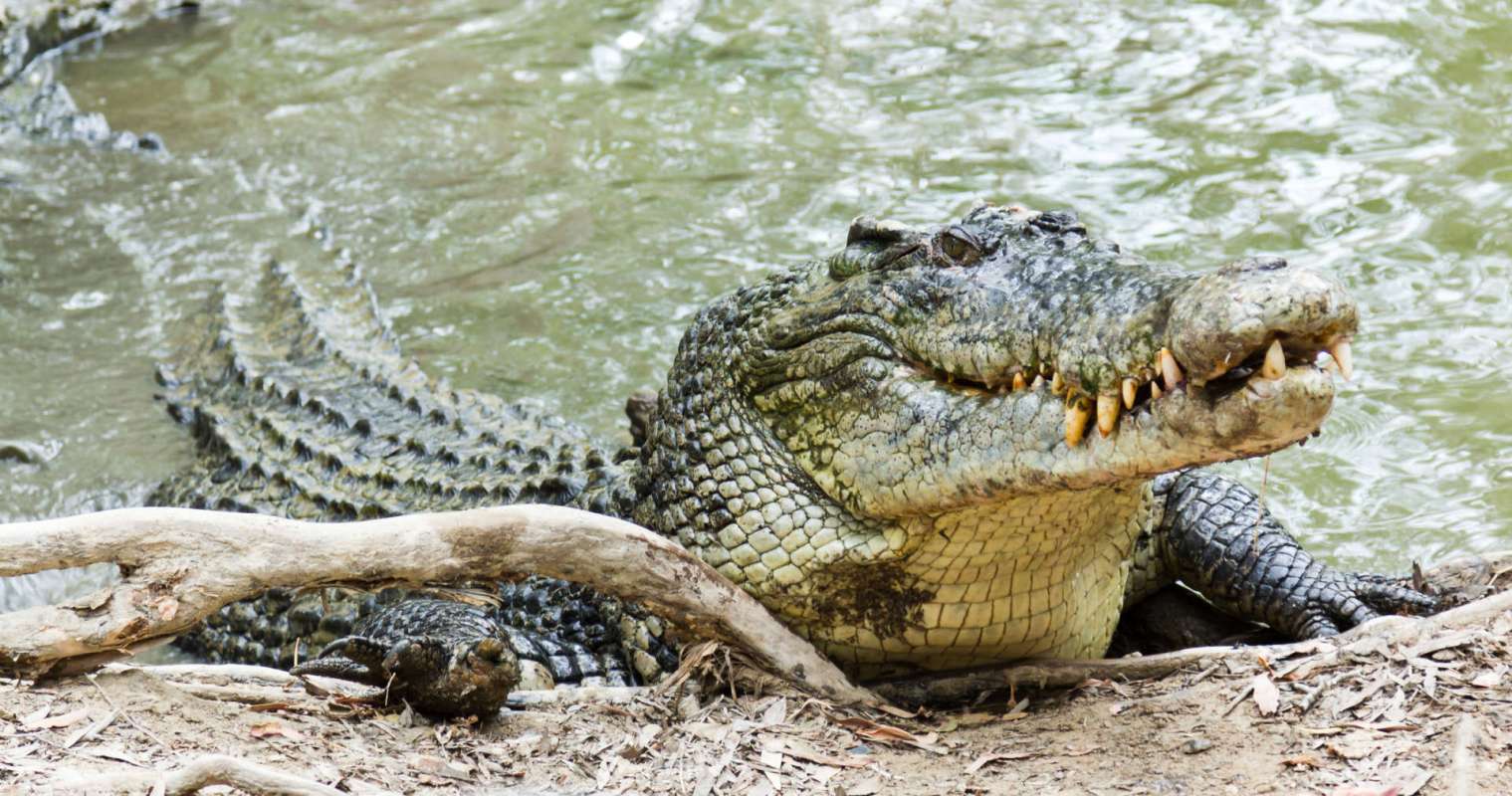
Modern crocodiles are often seen as models of cold-blooded endurance, but new research points to a much more high-energy past for their ancestors.
Researchers say the branch that led to today's crocodiles may have stayed warm-blooded until close to the Chicxulub asteroid impact about 66 million years ago.
Here's what to know
The result upends a long-standing view of how birds and crocodiles split from their shared archosaur ancestry after the Permian-Triassic extinction roughly 250 million years ago.
As Gizmodo reported, a new analysis of fossil bones from 81 archosaur species indicates the crocodile branch was not simply the cold-blooded side of a divide in which bird ancestors alone became warm-blooded.
Instead, the researchers argue that earlier members of the crocodile lineage were likely warm-blooded for a significant period before later shifting back to a cold-blooded metabolism.
Roger Seymour, an emeritus professor of physiology at Adelaide University in Australia, wrote in an essay for The Conversation, "Scientists have assumed that warm-blooded animals evolved from cold-blooded ones, not the reverse."
TCD Picks » Quince Spotlight
💡These best-sellers from Quince deliver affordable, sustainable luxury for all




The study focused on tiny openings in fossilized leg bones that once carried blood vessels. Because those passageways tend to be larger in warm-blooded animals, the researchers used their diameters to estimate blood-flow rates in extinct species.
The results placed ancient archosaurs closer to mammals and high-metabolism reptiles such as Komodo dragons rather than modern crocodiles and other cold-blooded reptiles.
Why is this significant?
Contrary to what many scientists believe, new findings indicate that living crocodiles carry signs of a more active past, starting with their four-chambered heart.
The same type of heart that is also found in birds and mammals, supporting high-energy activity that separates blood flow to help meet greater metabolic demands. Seymour summed up the advantage in birds, explaining, "Birds don't fatigue and fall out of the sky."
Modern crocodiles, however, live very differently. They are ambush predators that conserve energy, stay still for long periods, and burst into action only when prey comes close.
The researchers argue that shifting back to a cold-blooded metabolism may have helped their ancestors survive the toxic aftermath of the asteroid impact, when lower energy demands and the ability to stay submerged longer could have offered major survival advantages.
There is still some uncertainty around the findings. Some paleontologists have suggested that high blood flow in certain ancient reptiles may reflect their large size rather than full warm-bloodedness — a concept known as gigantothermy. Even so, the team said bone microfractures point to more active lifestyles.
What's being done?
Researchers are using fossils, physiology, and comparisons with living animals to refine our understanding of how species survived mass extinction events.
Studies like this help explain why some lineages vanished while others endured. They also reinforce the idea that evolution is not a straight path toward one "better" body plan. In some environments, slowing metabolism and using less energy can be a winning survival strategy.
Nature's resilience often comes from flexibility. Animals can survive planetary upheaval not only by becoming faster or stronger, but also by changing how their bodies function. Species alive today may still hold physiological clues to deep evolutionary histories that scientists are only beginning to understand.
As Seymour put it, "As warm-blooded creatures ourselves, we have had a habit of thinking warm-blooded animals are physiologically superior to cold-blooded ones." He also argued that "reversion to a cold-blooded metabolism may have saved the crocodile lineage from extinction 66 million years ago."

Get TCD's free newsletters for easy tips, smart advice, and a chance to earn $5,000 toward home upgrades. To see more stories like this one, change your Google preferences here.







