


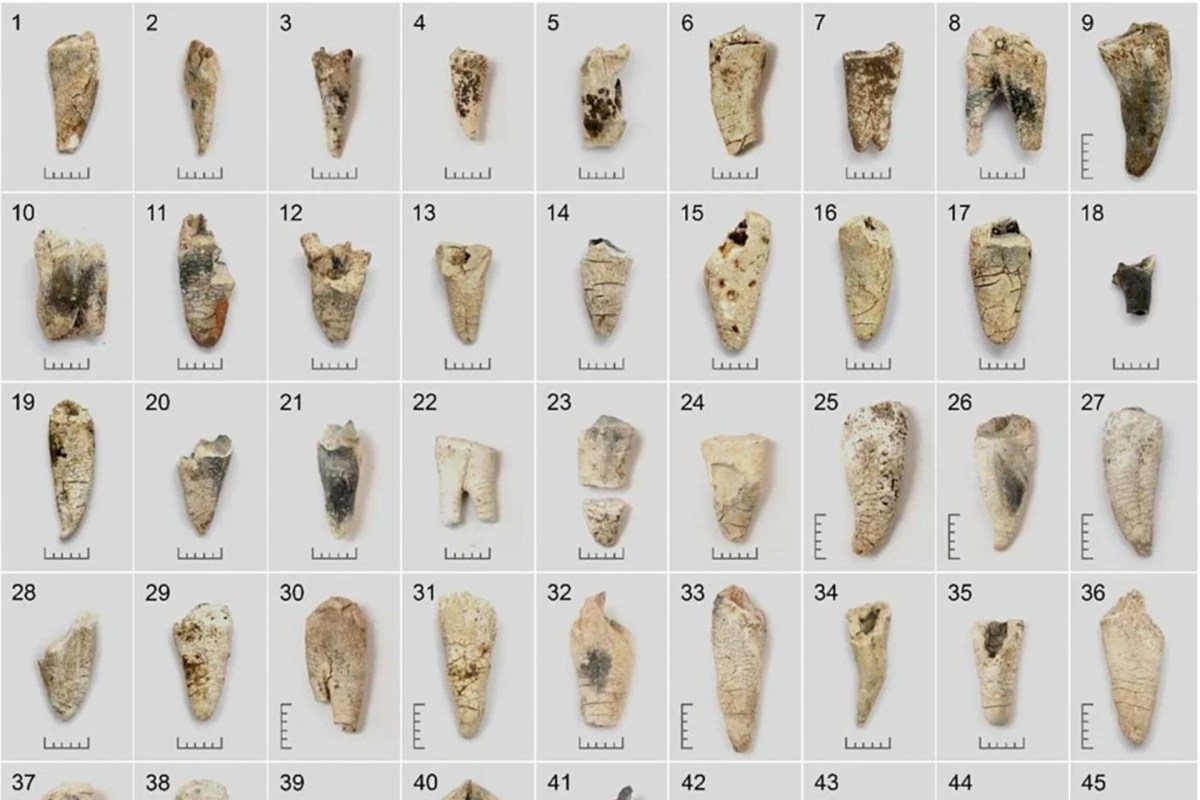
For archaeologists, cremation has long limited what they can learn about a person's age at death. Intense heat can alter bones and teeth so extensively that the standard methods for estimating age often no longer work.
Findings from urn burials more than 3,000 years old now suggest that burned remains may preserve far more information than researchers once thought.
What's happening?
A study published in Scientific Reports found that tiny structures inside cremated teeth can still help estimate age at death. The result could be especially valuable for archaeologists studying burial traditions centered on cremation rather than intact skeletons.
According to Archaeology News, the team analyzed 62 tooth roots from eight cemeteries associated with the Lusatian Urnfield culture in what is now Poland. That culture existed from about 1300 to 500 BCE, during the Late Bronze Age and Early Iron Age, and it commonly cremated the dead before placing the ashes in ceramic urns.
Their focus was cementum, the tissue that coats tooth roots. As a person gets older, this tissue builds up microscopic growth lines known as lines of Salter, and counting those lines alongside a tooth's known eruption age can be used to estimate age at death.
Why does it matter?
Cremation was widely practiced in many ancient societies, but burned burials have usually offered fewer biological clues than unburned ones. When fire heavily changes bones and teeth, archaeologists can lose access to one of the most basic details they want to know: age at death.
TCD Picks » Quince Spotlight
💡These best-sellers from Quince deliver affordable, sustainable luxury for all




In this study, both cementum thickness and growth-line counts were linked to age, allowing researchers to narrow age ranges more than traditional skeletal analysis alone could.
More precise age estimates can help scholars better understand ancient communities, including their population makeup, health patterns, and burial customs. The researchers also found that growth-line width varied between cemeteries, which points to local influences such as diet, environment, or health that affected how the tissue formed.
What's being done?
The researchers are improving a technique that could allow archaeologists to study entire cremation cemeteries in greater detail. Their study showed that cremation preserved more of the cementum's microscopic record than expected, and separate observers still produced similar counts.
For an archaeological tool to be useful, it has to deliver workable results across different analysts, not only in one lab or for one observer. This study indicates that tooth-root cementum may be among the more dependable options when better-preserved skeletal evidence is absent.
It also suggests a practical next step: revisiting cremated remains that may previously have been written off as too damaged for detailed age analysis. Museum collections and long-examined burial sites may still produce new findings when newer techniques are applied.
By closely examining something as small as a burned tooth root, archaeologists are recovering details from lives lived more than 3,000 years ago. In places where fire once appeared to erase the evidence, they may now have a way to read some of it again.

Get TCD's free newsletters for easy tips, smart advice, and a chance to earn $5,000 toward home upgrades. To see more stories like this one, change your Google preferences here.






