


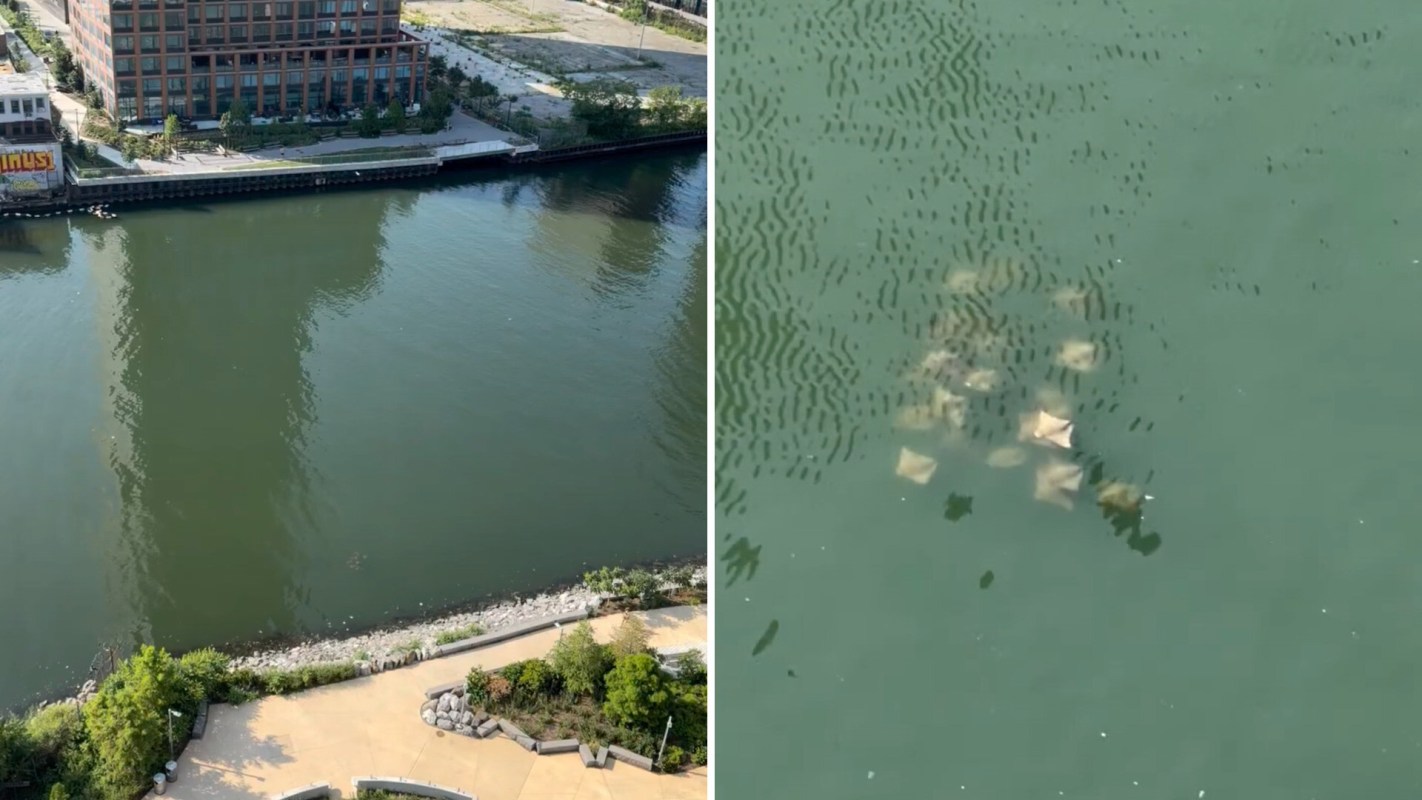
A fever of rays gliding through Newtown Creek isn't anything New Yorkers expected they would see. The unusual sighting has sparked hope that the heavily contaminated estuary between Brooklyn and Queens may be slowly healing.
What's happening?
Several rays were seen in Newtown Creek, the heavily contaminated estuary that separates Brooklyn and Queens.
After the Newtown Creek Alliance first shared the footage on Instagram, residents and advocates began asking whether long-running cleanup work might finally be producing visible results, according to the New York Post.
According to the New York Post, the animals seem to be cownose rays, a species commonly found along the U.S. East Coast and across parts of the western Atlantic.
Gothamist quoted Newtown Creek Alliance executive director Willis Elkins, who described the sighting as unusual.
"Most of the time, especially if it's a [group], they're coming because there's food," he said.
TCD Picks » Quince Spotlight
💡These best-sellers from Quince deliver affordable, sustainable luxury for all




The video wasn't only an encouraging sign of possible improvements in water quality — it also inspired some local humor. While rays are formally known as a "fever," one commenter suggested a more fitting name for the moment: "rave." Another user joked, "Ocean raviolis comin thru!!!"
One Instagrammer also playfully called them "majestic sea flap flaps."
Why does it matter?
In New York City, Newtown Creek has long stood as a symbol of industrial pollution.
Beginning in the mid-1800s, refineries and other businesses used the creek as a dumping ground, helping turn it into one of the most contaminated waterways in the country.
Its legacy includes the Greenpoint oil spill, identified in September 1978, which released an estimated 17 million to 30 million gallons of petroleum-related material over several decades, according to the New York Post.
Even after many major pollution sources were removed, heavy rain has continued to overwhelm nearby wastewater systems, sending raw sewage into the creek.
Cleaner water can support safer shorelines, stronger local biodiversity, and a better quality of life for people living along the creek.
What's being done?
A major shift came in 2010, when the EPA designated the creek a Superfund site and formally set cleanup efforts in motion, as the New York Post reported.
Advocates have also worked to bring oyster populations back to the creek and nearby waters — a natural way to clean the water since oysters filter water to eat, contributing to a broader recovery strategy for damaged urban waterways, even if they are not a cure-all.
In 2022, the EPA pushed its cleanup deadline from 2023 to 2032, underscoring how difficult and slow environmental repair can be after more than a century of abuse.
Elkins also told Gothamist that 2026 has already produced encouraging wildlife signs, including horseshoe crabs and eels.
"I have not heard of anybody seeing rays in the creek before," Elkins told Gothamist.
And for those who did catch the moment, Elkins said, "The whole group swimming as one was really awesome to witness."

Get TCD's free newsletters for easy tips, smart advice, and a chance to earn $5,000 toward home upgrades. To see more stories like this one, change your Google preferences here.






