


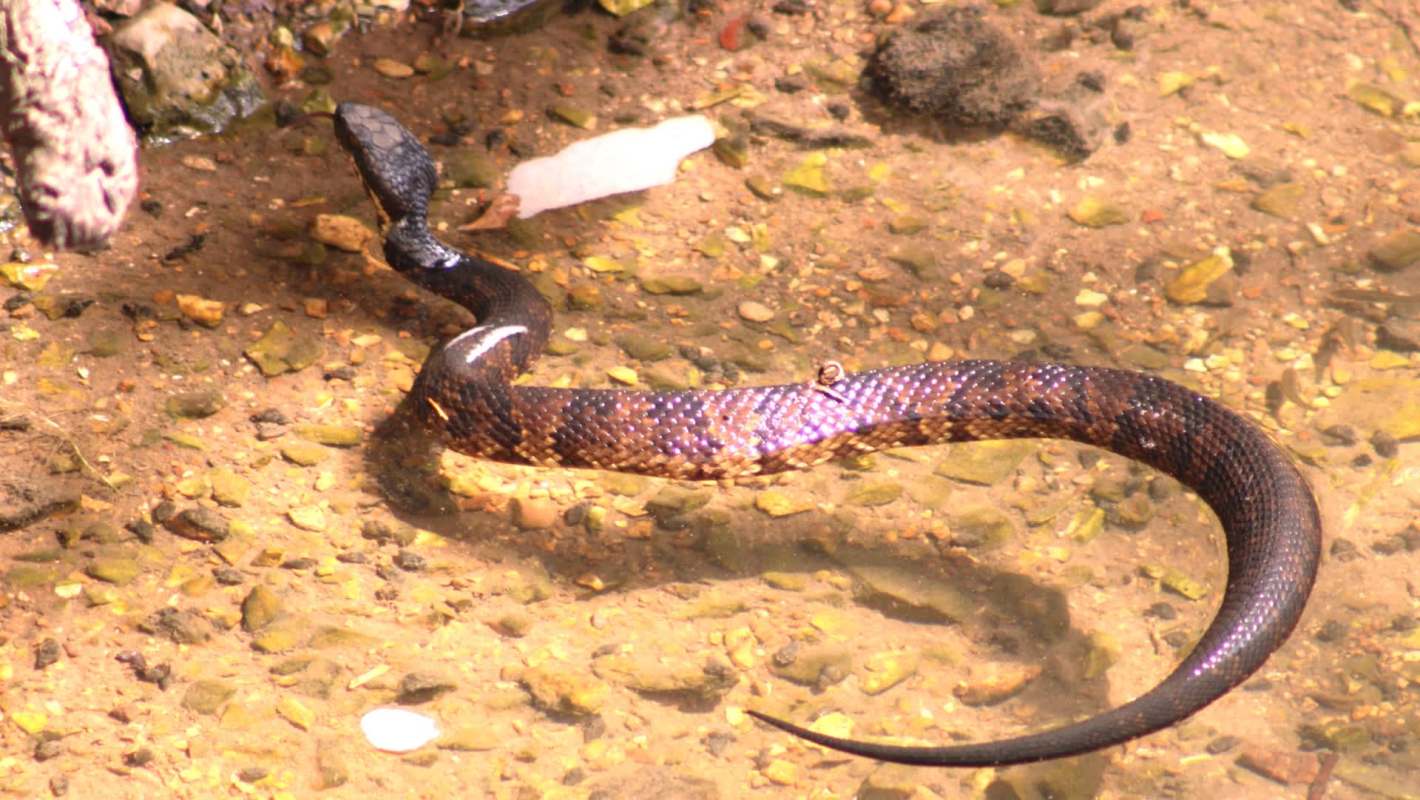
At Tall Timbers Research Station & Land Conservancy, a 4,000-acre research station in north Florida, scientists are checking wooden trap boxes each morning to see how native snake populations have changed since a 2005 survey.
This comparison could show how land-management changes have reshaped habitat over time.
Early findings suggest cottonmouths are being caught more often in upland habitat, not only in the wetter bottomlands commonly linked with the species.
Here's what to know
To create a direct comparison with the past, Tall Timbers Research Station & Land Conservancy, long known as the "home of the study of fire ecology," is repeating a snake survey first carried out in 2005. The Tallahassee Democrat reported that the team is using 21 traps placed in the same locations and built to match the earlier study.
Master's student Ashlynn Canode is helping lead the survey with Tall Timbers' biological monitoring coordinator Kim Sash and other staff members. During a 19-day sampling period between March and October, biologists begin as early as 7 a.m. to inspect traps spread across thousands of acres.
The setup relies on no bait. Instead, fences steer snakes toward funnel openings that lead into a central wooden box, where researchers can collect them safely before releasing them after data is recorded.
TCD Picks » Quince Spotlight
💡These best-sellers from Quince deliver affordable, sustainable luxury for all




One of the strongest differences identified involves cottonmouths, both in capture numbers and in habitat. Sash said, "I caught them significantly more in the bottomlands where you expect them to be, and where you think, like, this is their habitat type. And, I think Ashlynn's actually catching them significantly more in the uplands than the bottom one, so it's been like a whole transition of habitat."
More background
The study area has changed since the 2005 survey.
The Tallahassee Democrat reported that the station has removed some hardwoods, a shift that could mean less habitat for species that depend on those areas. Prescribed-fire practices have also changed, with burns allowed to move into wetter low-lying places and go out naturally instead of being stopped by artificial firebreaks.
Canode said snakes are an important part of the food web because they are eaten by larger animals and also help keep rodent populations down.
The traps have also captured animals other than snakes, including skinks, mice, frogs, birds, rabbits, opossums, flying squirrels, and turtles.
What's being done?
For every snake they catch, researchers log its measurements and weight, add a tag, and collect oral and body swabs so scientists can examine diet, disease, and overall population health.
Those samples are sent to the Wildlife Epidemiology Lab at the University of Illinois and the University of Florida for analysis related to emerging pathogens and invasive lungworms. Canode said the parasite has been documented in 35 Florida counties, with Madison County the closest known county to the study site.
A 2023 Tall Timbers article cited by the Tallahassee Democrat said the lungworms entered Florida through the pet trade via non-native Burmese pythons. Canode said the spread has been rapid and damaging to native snakes in some parts of the state.
Even with those concerns, Sash said, as the Tallahassee Democrat reported, that the researchers have more information to follow population changes and make better land-management decisions to conserve these species.
As Canode put it, "They're important whether you know people like them or not. That's kind of why we're doing the study."
Where can I learn more?
These articles look at invasive python removal in Florida, pine snake restoration in Louisiana, snake encounters during Delhi's monsoon, and the spread of invasive lizards in central Florida.
• In Florida, scientists are using critical new data to help eradicate invasive Burmese pythons.
• In the Everglades, officials are preparing the annual removal event with a $10,000 prize.
• In Louisiana, conservationists released a rare batch of hatchlings to bolster the pine snake population.
• In Delhi, monsoon flooding is driving snakes into local communities and alarming residents.
• In central Florida, officials warn curly-tailed lizards spread north and threaten native anoles.

Get TCD's free newsletters for easy tips, smart advice, and a chance to earn $5,000 toward home upgrades. To see more stories like this one, change your Google preferences here.






