


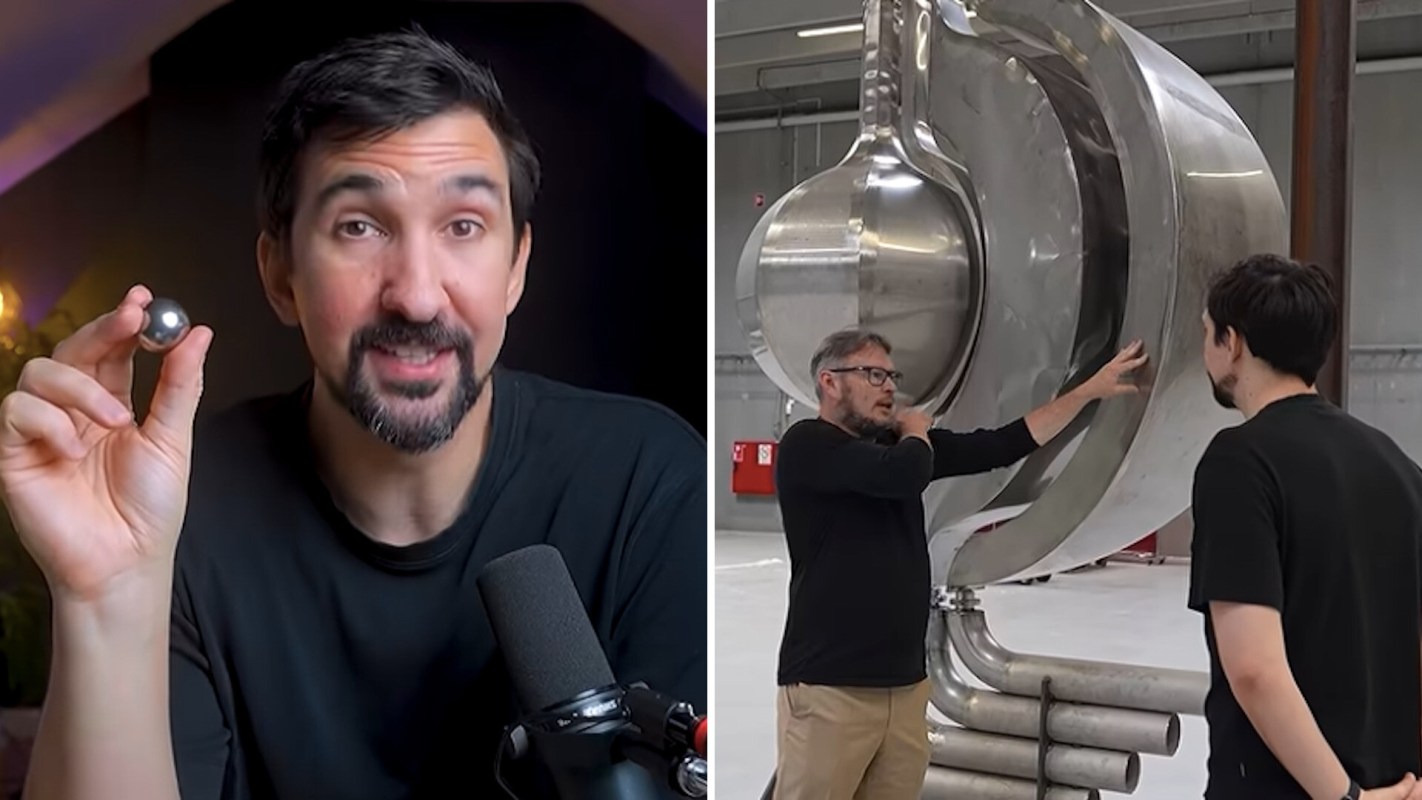
A Danish company is designing a nuclear reactor small enough to fit inside a standard shipping container, with a thorium supply it says could sustain more than a century of operation.
Here's what to know
Copenhagen Atomics' design would produce 100 megawatts of heat in an assembly about 8 feet across. Content creator Dr. Ben Miles (@DrBenMiles) toured the company's facilities with CEO Thomas Jam Pedersen and chief technology officer Aslak Stubsgaard in a recent YouTube video.
"Copenhagen Atomics are building what they believe will be the world's first commercial thorium reactor," Miles wrote in the video's description. They call it "The Onion" because of its shape and four layers of fluid.
The company plans to replenish the outer layer, which they call the thorium blanket, every 10 years, even though the team says its 10-ton supply could last more than a century. Uranium formed in that blanket would provide a continuous supply to the reactor's fuel channel.
Thorium becomes fissile uranium-233 through neutron absorption followed by radioactive decay; it cannot sustain fission directly. The reactor would take roughly two to three years to move away from the uranium-235 in its enriched-uranium startup fuel.
More background
Miles described thorium as a resource found on every continent, roughly three times as abundant as uranium. The roughly 5,000 tons of thorium extracted each year come from rare-earth mining, where the element is generally treated as an unwanted byproduct.
TCD Picks » Quince Spotlight
💡These best-sellers from Quince deliver affordable, sustainable luxury for all




Nuclear power can produce large amounts of low-carbon electricity. This design, however, depends on maintaining a delicate neutron balance. Some neutrons inevitably escape or are absorbed by reactor materials. The remaining supply must be sufficient both to sustain fission and to convert thorium into replacement fuel.
Safely containing the molten fluoride salts poses a separate challenge for the company. Moisture impurities can trigger reactions that remove metal from the vessel and weaken it internally. The salts leave the steel vulnerable by dissolving its protective oxide coating.
Equipment holding radioactive liquid faces a serious concern from this corrosion. Miles cited Copenhagen Atomics measurements showing that commercially available lithium salts can remove more than 0.04 inches (1 millimeter) of steel per year.
What's being done?
Copenhagen Atomics projects that only about 2% of neutrons would escape its layered reactor. The design uses heavy water to slow neutrons, increasing their likelihood of participating in further reactions.
That approach presents another engineering challenge: keeping the heavy water at about 176 degrees Fahrenheit while it sits beside molten salt at roughly 1,112 degrees Fahrenheit. The water moderates neutrons and does not generate steam for electricity production.
Fine carbon fibers in graphite felt impede conduction and repeatedly absorb and re-emit infrared radiation. Copenhagen Atomics places the material between the hot and cool layers to limit heat transfer.
For the proposed 100-megawatt reactor, Miles put the heat leakage across that gap at about 35 kilowatts. The video identifies moisture contamination as the driver of damaging corrosion, while pure lithium fluoride can coexist with exposed steel. The company is also focusing on salt chemistry.
Where can I learn more?
Copenhagen Atomics' compact design is one approach to adapting nuclear power to different energy needs. These stories cover advancements in nuclear power happening across the U.S., including a planned Navy installation.
• Bill Gates's molten-sodium reactor could provide backup for wind and solar power.
• The U.S. Army is backing transportable nuclear microreactors small enough for trucks, boats, or planes.
• America's small reactor industry could see renewed momentum in 2026 after NuScale's setbacks.
• Small reactors could be better suited to factories and hydrogen plants than grid electricity.
• An Indiana Navy base is set to get the state's first nuclear reactor.

Get TCD's free newsletters for easy tips, smart advice, and a chance to earn $5,000 toward home upgrades. To see more stories like this one, change your Google preferences here.






