


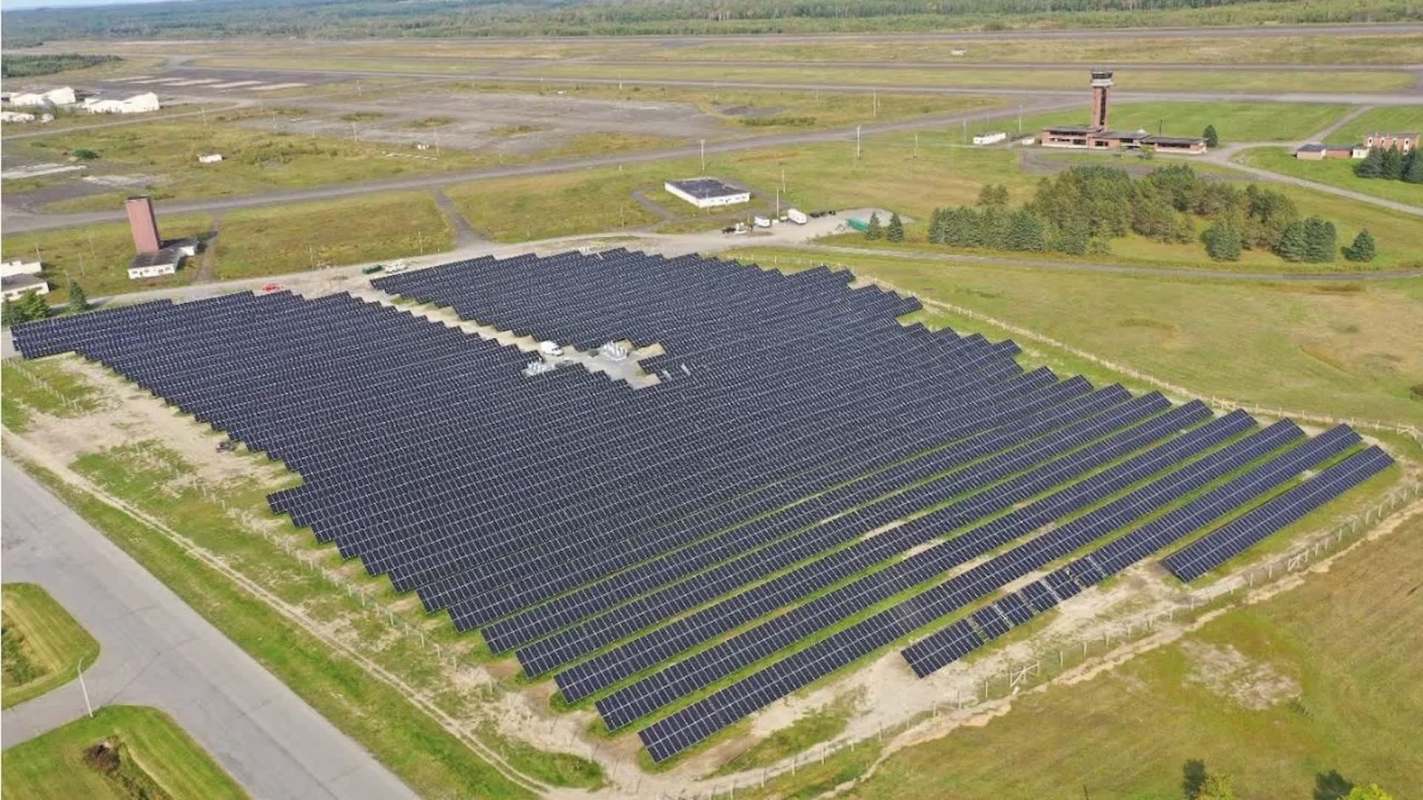
A huge solar proposal in the Canadian province of New Brunswick is turning heads after developers unveiled plans for the 150-megawatt project — 15 times larger than a solar farm announced in the area last summer.
If it moves forward, the Cookville Solar Project would become one of the largest solar installations in Canada, underscoring how quickly clean energy is scaling up across North America.
What's happening?
According to CBC, the proposed Cookville Solar Project would be built on roughly 400 hectares (almost 1,000 acres) north of Sackville. The project is being developed through a joint venture involving the North Shore Mi'kmaq Tribal Council and BNRG Renewables of Ireland, and it's expected to contribute as much as 150 megawatts to the regional grid when the sun is shining. That's enough yearly power for about 12,500 homes, all without adding heat-trapping pollution.
The project plans to use 340,000 panels, along with supporting infrastructure such as a communications tower and power substation, according to CBC. The project is expected to take 18 to 24 months, wrapping in 2029 and ideally operating for the next 40 years.
Part of what's drawing so much attention is the project's size. Phil McKay, senior director at the Canadian Renewable Energy Association, said the project would rank as Canada's second-largest solar farm if it were up and running right now. Even as larger projects are being developed elsewhere, he said the Cookville solar project would still qualify as "a proper utility-scale power plant."
Why does this project matter?
Solar projects like this can help make daily life more affordable by expanding access to local, renewable electricity that is less exposed to swings in fuel prices. Cleaner electricity can also contribute to better air quality and healthier communities.
TCD Picks » Quince Spotlight
💡These best-sellers from Quince deliver affordable, sustainable luxury for all




Plus, the land around each solar panel can have multiple uses. The Acton family, which owns most of the land in question, is expected to continue using it for blueberry and honey production, as well as for sheep grazing, once the panels are in place, according to CBC. That's another example of how solar can sometimes work alongside agriculture rather than replace it altogether.
What are people saying?
McKay summed up the reactions: "It's big."
He said that while some larger solar farms can raise concerns about visibility, Cookville still reflects a broader shift toward serious grid-scale clean energy.
McKay added that solar is increasingly being seen as "essentially a crop" — a productive use of land that generates energy for everyday use.

Get TCD's free newsletters for easy tips, smart advice, and a chance to earn $5,000 toward home upgrades. To see more stories like this one, change your Google preferences here.






