


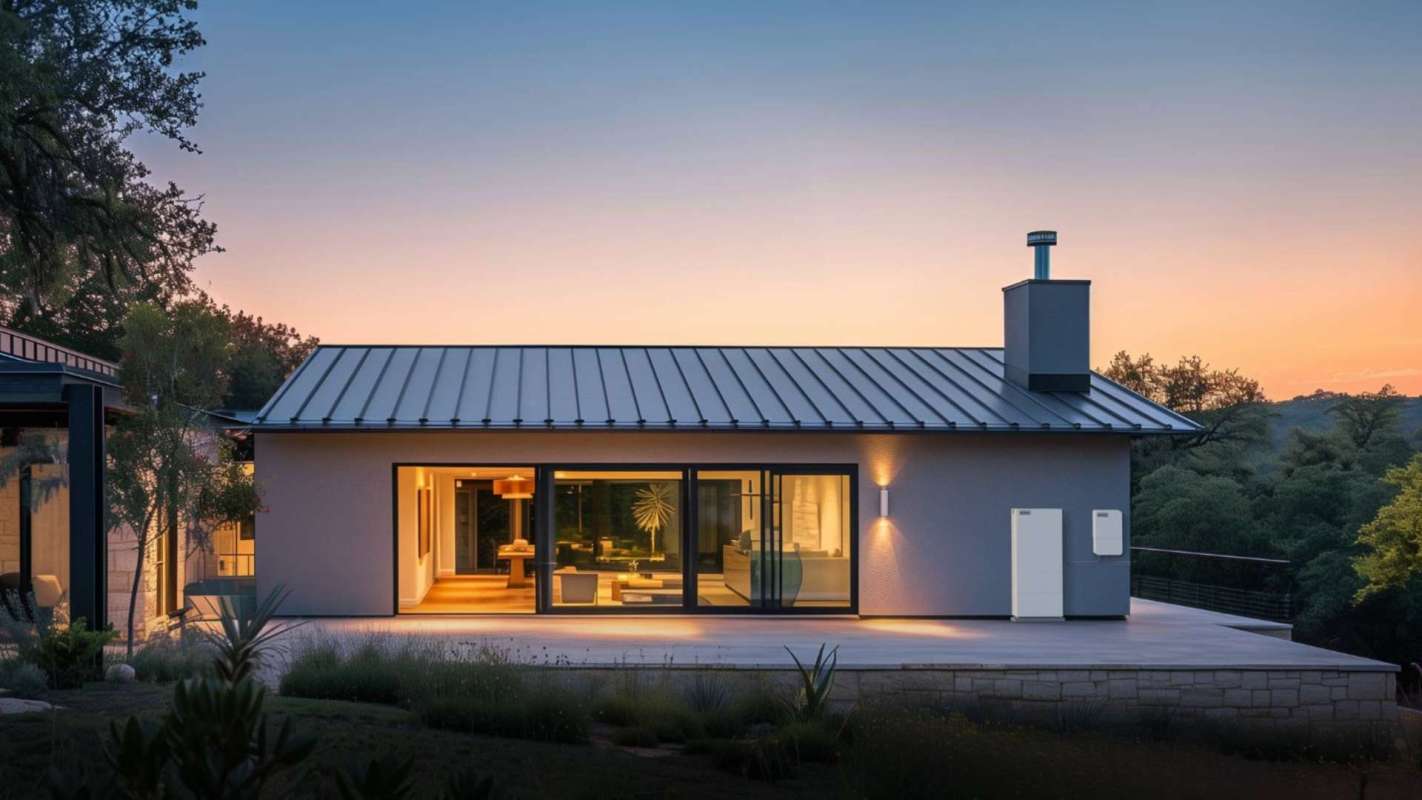
In Illinois, climbing electricity costs and storm-related blackouts are prompting some households to reconsider how they power their homes.
For certain ComEd customers, that now includes a large outdoor battery intended to trim electric bills and provide backup power during outages.
What's happening?
Base Power, a startup based in Austin, Texas, has entered the Chicago market with a 40-kilowatt-hour battery for eligible homeowners that the Chicago Tribune said can keep an entire house running for as long as 36 hours while cutting electricity supply costs.
According to Base Power co-founder and CEO Zach Dell, the unit stores electricity overnight, when rates are lower, and relies on that energy later as demand climbs. "We're basically making your home run on 4 a.m. power versus 6 p.m. power," Dell said.
For the first 2,000 Illinois customers, Base says installation is $95, and there is no separate equipment fee because the company owns and operates the battery. Customers must, however, enter a 12-year agreement that carries a $500 fee for canceling early.
The company also says monthly electricity supply charges can be 25% lower during the first two years.
TCD Picks » Quince Spotlight
💡These best-sellers from Quince deliver affordable, sustainable luxury for all




South Elgin information technology executive Omar Bashqawi, one of the company's early customers in Illinois, told the Tribune that his summer ComEd bill fell by about $100 after the battery was installed, dropping from the mid-$300s a month to around $250.
The savings are great, but it's about more than that for Bashqawi. "Even if I was paying the same amount (for electricity), I'd still do it because I want a battery backup for my house," he explained.
Why does it matter?
When storms or grid problems knock out power, a whole-home battery can keep essentials such as refrigeration, internet service, air conditioning, and medical devices running without the fuel needs and noise associated with a generator.
One reason the offer may appeal to homeowners is that ComEd customers have faced unusually steep supply charges in recent years, which the Tribune said were driven in part by demand from data centers. Those charges make up about half of a typical monthly electric bill.
Battery storage can also help the broader grid by shifting demand away from expensive peak periods. That can ease strain during the hottest parts of the day, when extreme weather often pushes electricity systems to their limits.
What's being done?
In March, the Illinois Commerce Commission approved Base Power to operate as an Alternative Retail Electric Supplier, allowing it to sell electricity to customers through utilities in the state. As it grows in the region, the company is opening a warehouse in Bloomingdale and says it plans to hire in Illinois.
Gov. JB Pritzker said the move reflects state support for distributed energy storage. "Base Power chose to expand in Illinois over other states because of the Clean and Reliable Grid Affordability Act, historic legislation that encourages distributed energy storage and virtual power plants that will lower electric bills for working families," Pritzker said.
Base is currently serving only parts of ComEd territory because some municipalities have not yet permitted the installations.
Sarah Moskowitz, executive director of Citizens Utility Board, said, "CUB will continue to monitor these offers to make sure they live up to their promises to customers."
While the company looks to expand in the Chicago area, Dell's vision is even broader: "America's power company is the goal."

Get TCD's free newsletters for easy tips, smart advice, and a chance to earn $5,000 toward home upgrades. To see more stories like this one, change your Google preferences here.






