


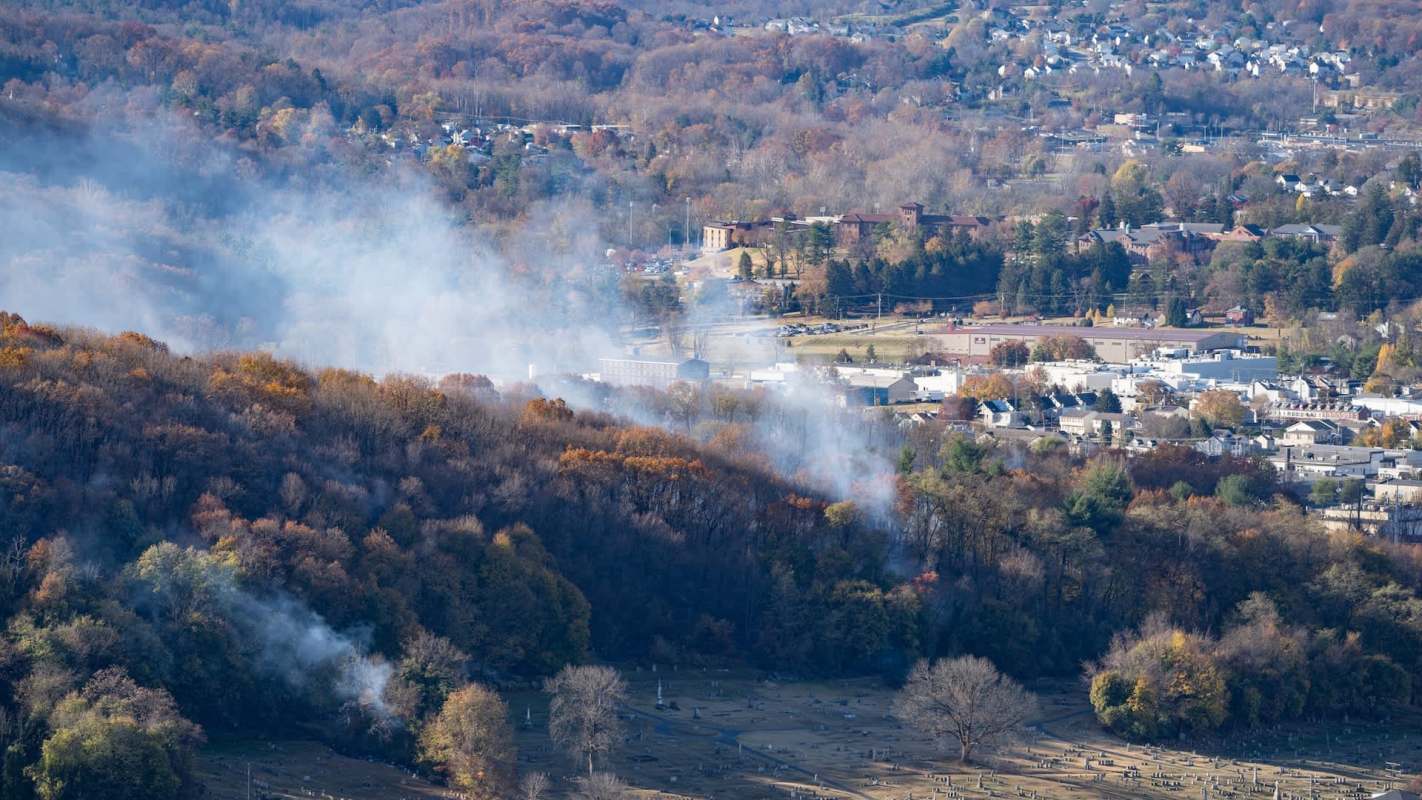
A home that catches fire can threaten nearby buildings. Colorado communities are using advanced wildfire modeling to identify the properties most likely to pass flames to their neighbors.
Here's what to know
Few communities worldwide had completed the modeling before Snowmass Village and Marble, Aspen Journalism reported.
Property information, topography, vegetation, and wind supply the basis for AGNI-NAR's assessment of how fire could move through a community. Vanderbilt University researcher Hussam Mahmoud developed the model.
Mahmoud runs 1,000 ignition simulations, giving each building ratings for vulnerability and "transmissibility" — its potential to spread fire to other structures.
According to the Wildfire Collaborative Roaring Fork's website, fortifying only 10% of homes identified as "super spreaders" outperforms treating 30% of homes selected randomly.
According to the collaborative, modeling classified 1,531 homes, or 63%, in Snowmass Village as highly or very highly vulnerable before mitigation. Of those, 84 fell into the "likely destroyed" category.
TCD Picks » Quince Spotlight
💡These best-sellers from Quince deliver affordable, sustainable luxury for all




Homeowner privacy and the cost of making properties safer raise questions about how to apply the findings. Officials hope that concentrating improvements on those properties will protect more homes with fewer fixes.
More background
Snowmass Village has shared maps showing overall vulnerability but has not individually notified homeowners in the highest-risk categories, according to Aspen Journalism. The town's sustainability coordinator, Elyse Hottell, said deciding how to approach those homeowners is on the 2027 agenda.
Angie Davlyn, the collaborative's executive director, explained that a property's risk can stem from its location, making those conversations sensitive. Davlyn said the collaborative has begun contacting high-risk homeowners in Marble.
According to Aspen Journalism, Snowmass Village offers a $1,000 rebate, but homeowners must complete all qualifying work before receiving payment. Removing large evergreens alone can cost thousands of dollars per tree.
By the end of October, the collaborative's director of community resilience, Nick Sparling, said he had completed 25 site visits, with 15 approved for rebates. Sparling said overhanging limbs and the cost of tree removal were common barriers.
What's being done?
According to Aspen Journalism, Snowmass Village has committed to landscape-level mitigation through an $850,000 grant paid over three years, alongside $150,000 annually in town matching funds.
According to the collaborative, treating about 9,000 surrounding acres, combined with home hardening and vegetation removal, could reduce the number of homes modeled as "likely destroyed" to zero.
At Fairway Three Townhomes, residents cleared vegetation within 5 feet of six buildings. At the same time, contractors trimmed limbs and covered potential ember-entry points with wire mesh, according to homeowners association board member Andy Fisher. Fisher said the homeowners association spent about $9,800 and received $6,000 in town rebates.
Marble has roughly 150 year-round residents and a single paved route in and out. Town Administrator Ron Leach said the town is focusing on early warnings and evacuation planning.
Davlyn said the collaborative is seeking funding for a refuge with smoke filtration. According to Sparling, a donor also provided $56,000 for vegetation mitigation around some of the highest-risk buildings, including Marble Charter School.
For Davlyn, encouraging more homeowners to participate means reconsidering how much work they must complete to qualify for assistance.
"I am very interested in catalyzing action, and I'm not sure that having a bar that is so high is catalyzing action in the way we want," she said, according to Aspen Journalism. "I think we could get more people to do more if we made it easier for them."
Where can I learn more?
Understanding a home's wildfire risk is only part of the challenge when safety upgrades can cost thousands of dollars.
• In Colorado, wildfire-ready new homes may cost 0.6% to 10.8% more to build.
• California is offering low-interest wildfire loans to homeowners who cannot afford home hardening.
• British Columbia's wildfire models still run on 1992 data because today's fires are too dangerous.

Get TCD's free newsletters for easy tips, smart advice, and a chance to earn $5,000 toward home upgrades. To see more stories like this one, change your Google preferences here.
Cool Picks






