


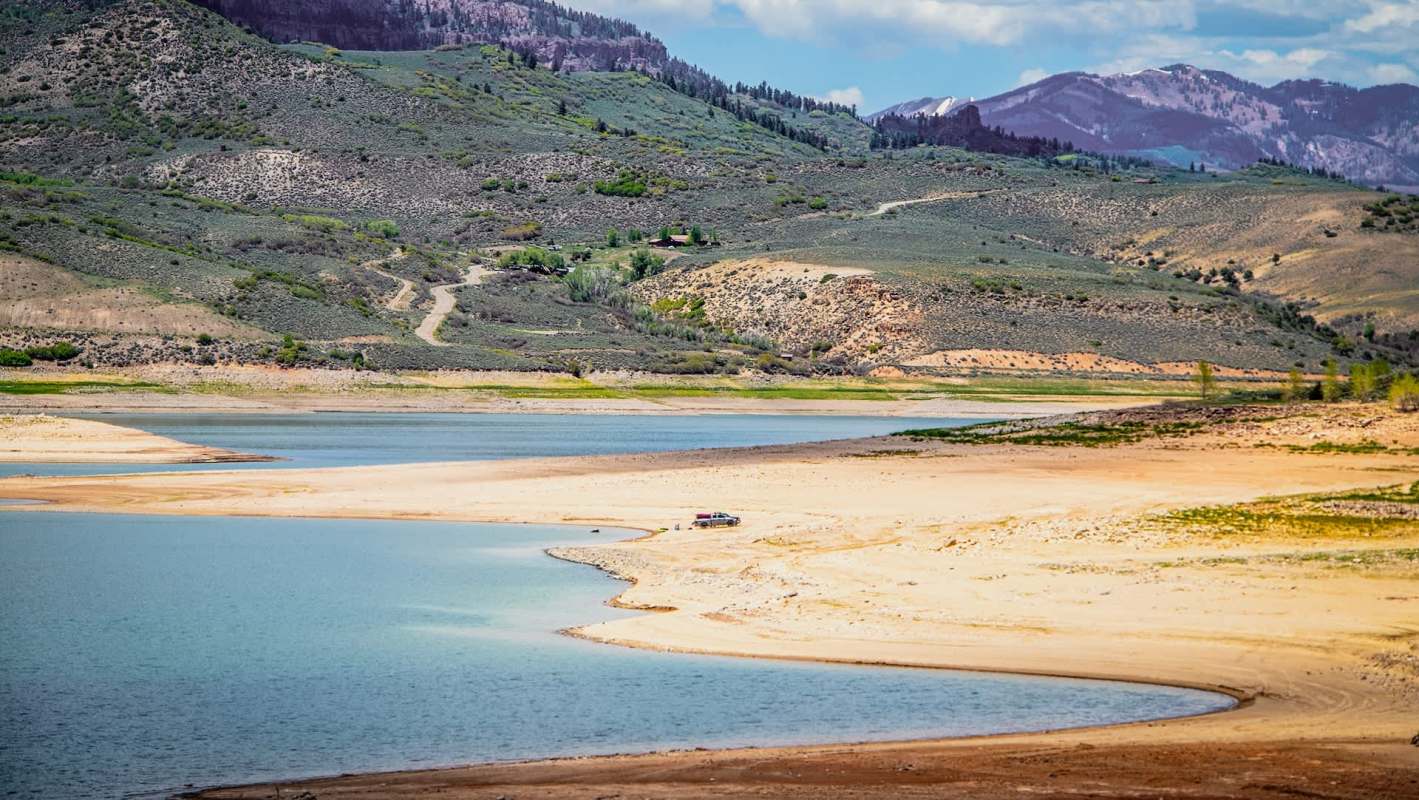
With mountain communities facing a summer in which some taps could run low, streams could shrink, and ranch operations could come up dangerously short, Colorado is reworking how emergency water is distributed.
Officials say a nearly snowless winter followed by an unusually warm spring has turned this season into a glimpse of what a hotter future may bring.
What's happening?
Backed by nearly $1 million from the Colorado River District and support from the Colorado Water Conservation Board, state officials have approved an emergency plan for Western Slope towns and ranch operations seen as most likely to lose water, The Colorado Sun reported.
The district, which covers 15 counties on the Western Slope, is coordinating the response to help communities secure drinking water if it becomes necessary.
Rather than leasing water from Ruedi and Wolford Mountain reservoirs on a first-come, first-served basis, the district is reserving it for essential needs. "We had a number of requests to lease that water out," river district manager Andy Mueller told the newspaper, "but a lot of it would have gone to wealthy gentlemen ranchers, but it wouldn't have been for the common good."
The state engineer granted emergency flexibility through the end of August after the district requested permission to use its supplies differently from what normal water law allows. The decision comes as the backup "historic users pool" in Green Mountain Reservoir is not expected to fill this year for the first time since the 1960s.
TCD Picks » Quince Spotlight
💡These best-sellers from Quince deliver affordable, sustainable luxury for all




Why does this matter?
When snowpack disappears, communities can lose reliable drinking water, farms and ranches can struggle to produce food, and local economies built around tourism and outdoor recreation can suffer. Shortages can also create public health and safety concerns, especially in towns that rely on a single creek or stream system.
The vulnerability is already showing in Eagle and Aspen, where officials have cut outdoor watering to two days a week and restricted pool and hot tub filling, according to the Sun. "We are really wholly dependent on the stream flow and the water that is in the creek," Eagle utilities manager Tom Gosiorowski told the paper.
For Colorado resort communities, the drought is also damaging the scenery that helps drive the local economy. Kathy Chandler-Henry, a former Eagle County commissioner who now serves on the river district's board, described "the brown hillsides and dusty streambeds" as deeply unsettling.
What's being done?
Water managers are working to stretch limited supplies while trying to avoid cutoffs later in the summer.
As the Sun reported, some of the Grand Valley's largest agricultural water users have agreed to scale back use to ease pressure on the Colorado River and help protect smaller towns and ranchers that might otherwise lose access.
Some local districts moved early. After March temperatures reached 80 degrees and snow melted far earlier than normal, Siri Roman, who leads the Eagle River Water and Sanitation District as CEO, told the newspaper, "The writing was on the wall."
Grand Lake officials are monitoring lake levels, while Eagle is considering tighter limits for golf courses if conditions worsen.
Recent rain and cooler weather have pushed the historic users pool back above 33,000 acre-feet, but officials still see this summer as less of a one-time crisis than a sign of the more frequent pressure climate change could bring.
Chandler-Henry put the shift in stark terms: "Before it was never a question. There was always snowfall, there was always water. … Nothing like this year, when it was 80 degrees in March in Vail."

Get TCD's free newsletters for easy tips, smart advice, and a chance to earn $5,000 toward home upgrades. To see more stories like this one, change your Google preferences here.







