


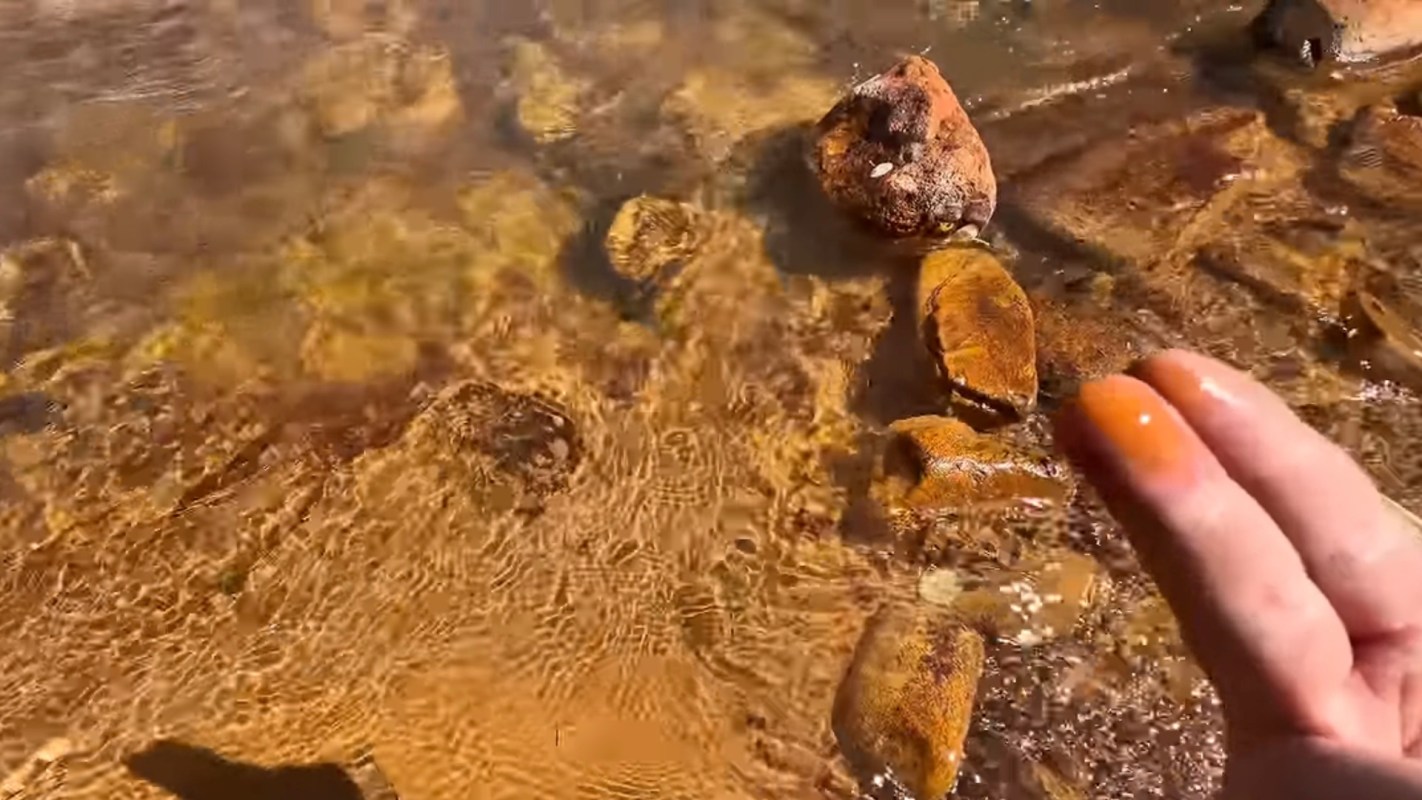
A 2015 blowout at Colorado's Gold King Mine sent about three million gallons of acidic wastewater into the Animas River, turning it orange. After the Aug. 5, 2015 accident, the same polluted water moved through the Southwest and reached Lake Powell in about seven days.
Here's what to know
A Southwest explorer's YouTube explainer follows the river route from Silverton to Lake Powell and revisits the Aug. 5, 2015 accident, when an Environmental Protection Agency crew investigating the Gold King Mine released water trapped behind the old mine opening.
The video said about three million gallons of polluted mine water surged through Cement Creek and into the Animas River, carrying an estimated one million pounds of dissolved material and particles.
EPA estimates cited in the video say the plume reached Lake Powell in about seven days, after moving south past Durango and then Farmington, where the Animas joins the San Juan River.
Peter Butler, co-coordinator for the Animas River Stakeholders Group, said the spill set back progress in an area with roughly 200 abandoned mines.
"We had the water quality getting a lot better. Yeah. And now it's gotten worse since then," Butler said.
TCD Picks » Quince Spotlight
💡These best-sellers from Quince deliver affordable, sustainable luxury for all




More background
The video stresses that the vivid orange scenes showed only a brief snapshot of the river.
"The river didn't stay that way. And the 2015 spill isn't the only problem up here," he said, pointing to the broader issue of abandoned mine drainage in the San Juan Mountains.
The explainer presents the spill as part of a much older problem: water can keep flowing through abandoned tunnels long after mining stops, picking up acidity and metals. Because the Animas and San Juan feed into the wider Colorado River watershed that supplies Lake Powell, the issue also connects mountain snowpack, drought, and downstream water quality.
A Farmington resident described in the comments how much the contamination disrupted daily life.
"No one could use water from the river, and people with wells a certain distance from it couldn't drink their water either," the user said.
That user also said people on the Navajo reservation depended on the river for drinking water, crops, and animals.
The video's summary of EPA's biological review said some fish showed metals immediately after the spill, but later readings returned to background conditions, with no measurable change in fish populations or bottom-dwelling organisms tied to the event. By the time the plume got to Lake Powell, it had been diluted over hundreds of miles of river.
What's being done?
Cleanup is still continuing. The video said the EPA remains active in the Bonita Peak Mining District and that it completed work at 23 mine source areas by March 2026.
Butler said local efforts to reduce polluted drainage around Silverton were already in place before the Aug. 5, 2015 spill. He said the Animas River Stakeholders Group had spent 20 years working on the region's abandoned-mine problem, underscoring that the contamination was never confined to one mine.
The video said New Mexico reached a settlement with the United States and EPA over the spill, while the Navajo Nation received $31 million from the EPA for cleanup efforts and ecosystem improvements in the affected region.
Tracing the river from the San Juan Mountains to Lake Powell links long-term remediation along that corridor to water security for downstream communities.
"What happens upstream matters downstream," the creator said. Along this river route, communities use the water for drinking, field irrigation, and livestock.
Where can I learn more?
For a broader look at the water pressures tied to Lake Powell and the Colorado River, these stories track similar issues across the Southwest. They cover falling reservoir levels, contested water rights, contamination concerns, and shortages hitting communities across Colorado and the region.
• At Lake Powell, Glen Canyon is staging a major comeback as water recedes.
• In Arizona, a 'nightmare' water sale could reshape Colorado River access for millions.
• In northern Colorado, uranium is found in dam rocks at Chimney Hollow Reservoir.
• Colorado is reviewing Xcel Energy's cleanup as a second dump may be tainting groundwater.

Get TCD's free newsletters for easy tips, smart advice, and a chance to earn $5,000 toward home upgrades. To see more stories like this one, change your Google preferences here.






