


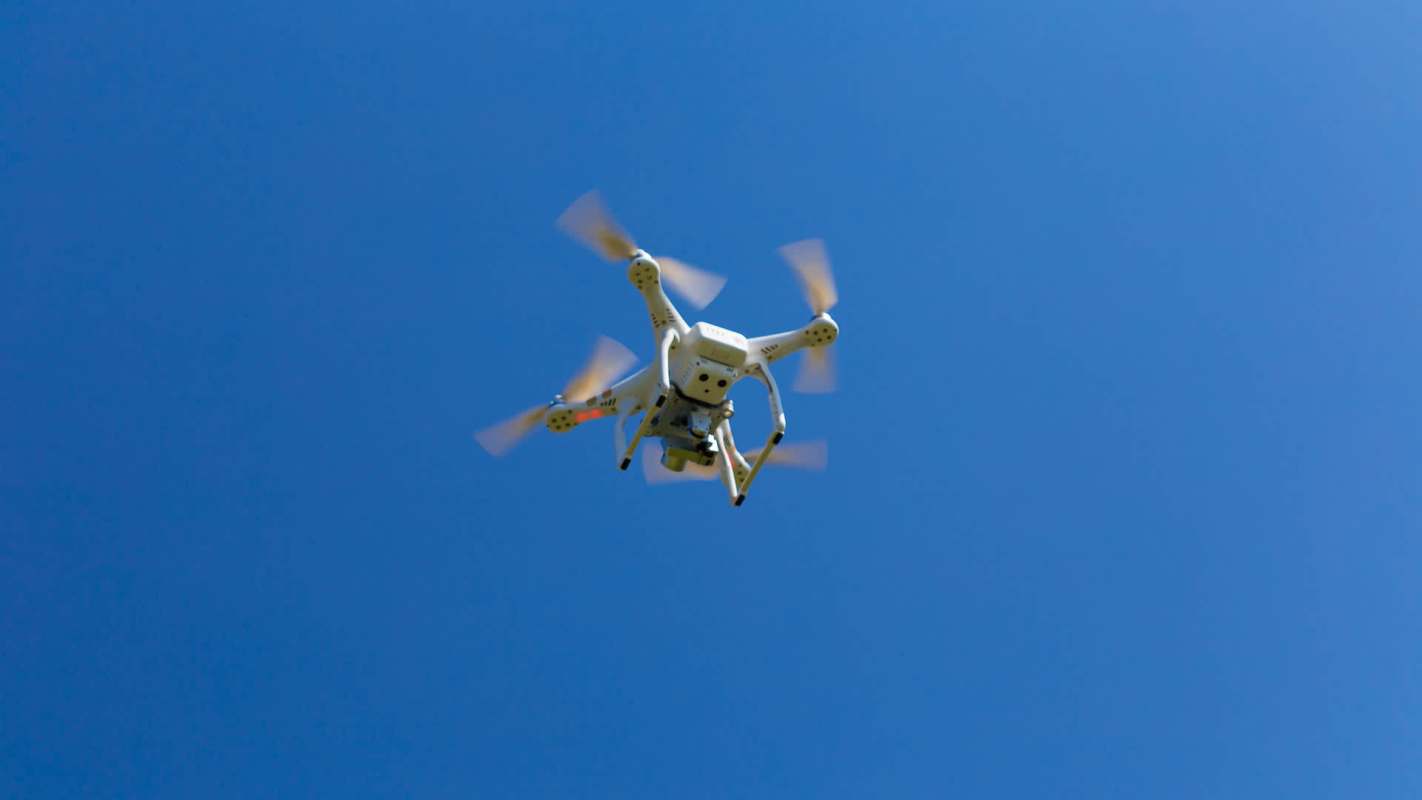
Scientists have now tested a new way to study airborne microplastics by collecting them with a drone. In Colorado, researchers gathered the tiny plastic particles found about 330 feet above the ground.
Here's what to know
A study published in the peer-reviewed journal Scientific Reports demonstrated how an unmanned aerial system could collect atmospheric microplastics.
Researchers had to plan carefully to collect enough material because airborne microplastic concentrations were low and the flight time of their drones was limited. At an altitude of 328 feet, they captured particles measuring between 0.000039 and 0.00039 inches in length. The drones used to collect the samples were in the air for roughly 25 minutes.
In the study itself, the authors explained its significance, writing, "This proof of concept demonstrates the feasibility of uncrewed aerial system-based atmospheric microplastic particle sampling and establishes a framework adaptable for ocean-surface, high-altitude, and remote environment monitoring."
According to Noticias Ambientales, this drone sampling could be particularly useful in inaccessible areas where standard collection techniques are prohibitively expensive or impractical.
Radiance Calmer, the study's lead author, told the outlet that the research shows it is possible to "sample atmospheric microplastics through flights of unmanned aerial systems at a specific height."
TCD Picks » Quince Spotlight
💡These best-sellers from Quince deliver affordable, sustainable luxury for all




Understanding the environmental impact of plastic particles, even in remote locations, is critical to addressing the growing plastic waste problem. Study after study has found that no area of our planet is free of these microplastics, even where few humans live nearby.
Where can I learn more?
Collecting microplastics by drone could help researchers track how these particles move through the air and reach remote places.
• On Mount Everest, microplastics rain down year-round, highlighting their reach into remote environments.
• Microplastics may trigger harmful molecules in blood, raising questions about their potential health effects.
• Three Indian teens turned discarded tamarind seeds into microplastic magnets, winning the 2026 Earth Prize.

Get TCD's free newsletters for easy tips, smart advice, and a chance to earn $5,000 toward home upgrades. To see more stories like this one, change your Google preferences here.






