


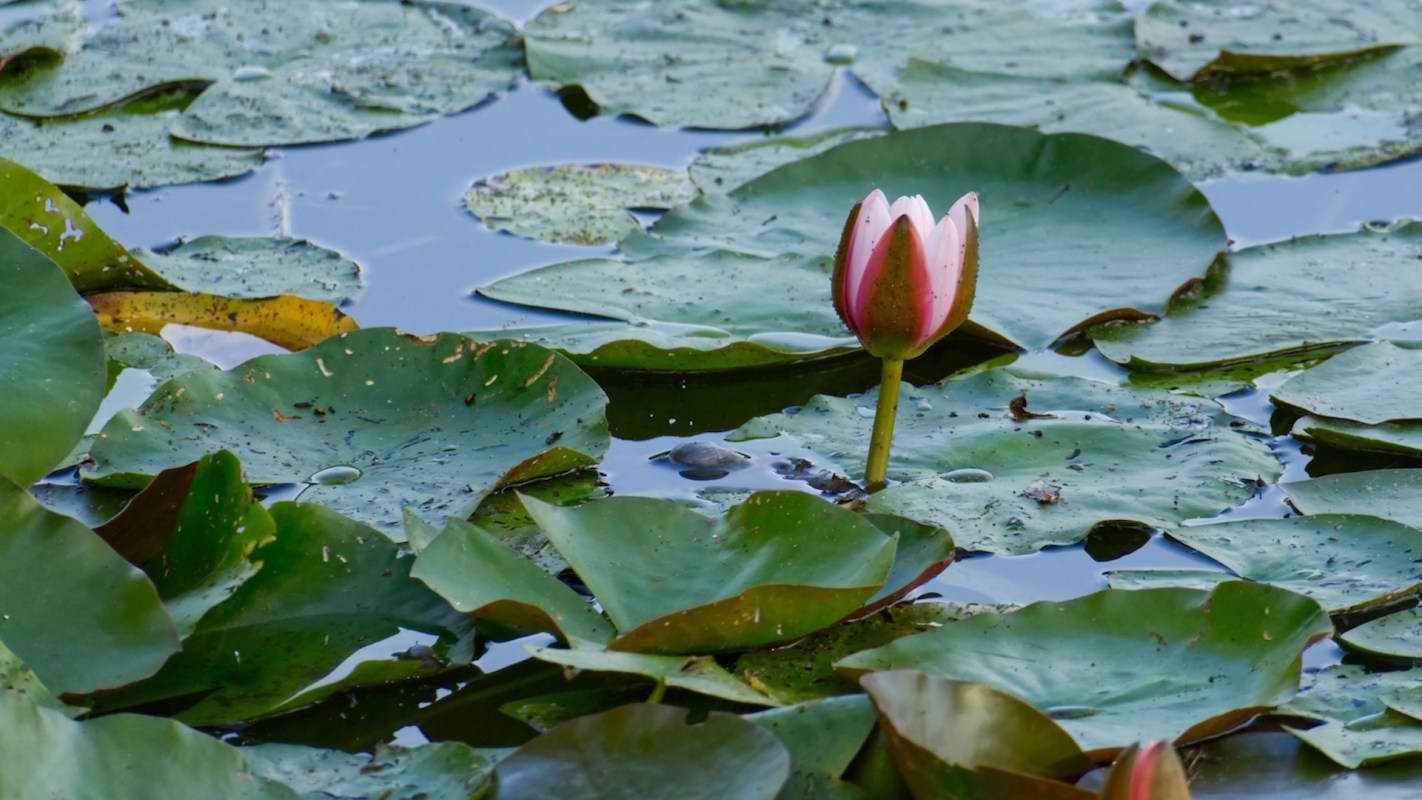
The discovery of a new giant waterlily in Colombia did not begin with a formal survey, but with Instagram photos that caught a botanist's attention. And this newly identified plant may already be in serious danger.
Here's what to know
Researchers formally described the plant in a Phytotaxa study, "Discovery of a new species of Victoria (Nymphaeaceae) in the Orinoco watershed of Colombia," after documenting it in isolated lakes in Colombia's Guainía department, Earth.com reported.
With Victoria colombiana, the giant waterlily genus Victoria now has four known members, and researchers estimate that only 30 to 50 of these plants remain in the wild.
Instagram photos shared by Jeremiah Harris (@jeremiahsplants), a U.S. plant nursery owner, supplied the first lead.
Harris thought the plants were Victoria amazonica, but Carlos Magdalena, a waterlily expert at the Royal Botanic Gardens, Kew, questioned that identification because the photos came from the Inírida River in Colombia, outside the group's recognized natural range.
Magdalena then used satellite imagery to examine the river and nearby lakes. In those images, he found several huge pads that appeared to belong to a single Victoria plant, and a later review pointed to the same kind of plant in a third lake, giving the team enough reason to organize a field expedition.
TCD Picks » Quince Spotlight
💡These best-sellers from Quince deliver affordable, sustainable luxury for all




Planning that expedition took nearly two years. When the team finally reached Guainía, they spent five days traveling by boat through flooded forest, and Magdalena told Kew, "We can only reach the plants when the water levels are high."
By the end of the trip, the researchers had documented seven plants across two lakes; five were found in a small lake on the final night, including one in flower.
More background
Among aquatic plants, giant waterlilies are some of the most recognizable in the world.
Kew presented the genus's latest addition, Victoria boliviana, in 2022 as the first new giant waterlily species in 177 years. Maarten Christenhusz of the Botanical Society of Britain and Ireland, who supported the taxonomic work, said, "New species are found all the time, but few are as large, spectacular and emblematic as this one."
Christenhusz added, "This new giant waterlily can even be seen from space." Its enormous size makes the delay in formally describing it even more surprising.
Scientists cannot formally assess or protect species effectively until they know exactly what they are dealing with.
The expedition also relied on people with firsthand knowledge of the area. Nilo Rodríguez, Jaime Hernández, and Gustavo Melo, from the Atabapo, Caranacoa-Yurí-Laguna Morocoto, and Puinave-Piapoco el Paujil Indigenous reserves, joined the effort.
Rodríguez remembered seeing the waterlilies as a child, and Melo, a river guide from the Tucano community, knew where to look for more plants after the first search failed to turn up flowers.
In remote parts of the Orinoco watershed, that knowledge is not secondary to science; it makes discoveries like this, and any future protection efforts, possible.
What's being done?
Researchers are working on an IUCN Red List assessment and hope to have Victoria colombiana classified as Critically Endangered.
Such a designation would give the species formal conservation status and highlight how little room for error remains.
The current count may not be the whole picture. Satellite image comparisons suggest more pads could become visible in the dry season, when lower water exposes more of the lakes, even though those same conditions also make the area harder to reach.
The team, which included botanist Mauricio Bernal, preserved physical specimens at the herbarium of the Jardín Botánico de Bogotá José Celestino Mutis.
Researchers in the region are using tools such as climate-refuge maps for harlequin frogs and rainfall tests that might warn of Amazon droughts.
Here, Instagram photos sparked the search, much as citizen observations have supported other species discoveries elsewhere.
Magdalena said, "Now that we know this waterlily exists, our responsibility is to understand it better and protect it. With so many plants in the wild threatened with extinction, we simply cannot wait any longer to take action."
Where can I learn more?
These articles explore the same mix of species discovery and conservation urgency.
• In Ecuador and Colombia, a common frog long overlooked is finally recognized as its own species.
• Brazil's isolated highland rainforests have yielded a newly recognized antthrush species found nowhere else.
• Off Costa Rica, scientists found bright yellow deep-sea coral so unusual it required a new family.
• In Australia, conservationists are racing to protect a hand-walking fish with fewer than 250 left.
• In Ecuador, a massive tree frog turned out to be an Amazonian milk frog.

Get TCD's free newsletters for easy tips, smart advice, and a chance to earn $5,000 toward home upgrades. To see more stories like this one, change your Google preferences here.






