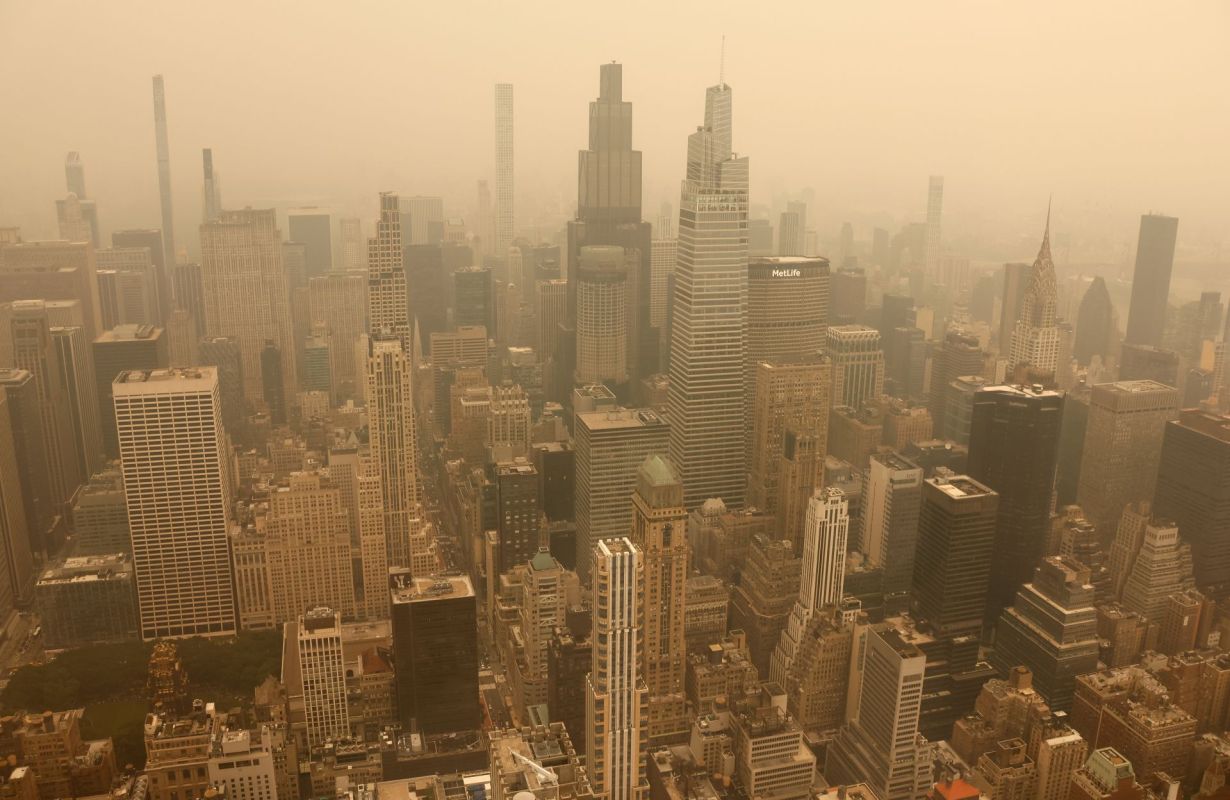
CNN described a summer in which smoke from Canadian wildfires gave major U.S. cities a sepia cast, while deadly flooding hit Texas and severe heat spread across much of the U.S. and Europe.
Climate scientist Michael Mann of the University of Pennsylvania, cited by CNN, says the convergence of these disasters reflects a "new abnormal."
What happened?
Rather than seeming like isolated events, this summer's extreme weather has piled up across multiple regions. At one point, at least 120 million Americans were under air quality alerts, while smoke from wildfires in Canada stretched from Washington, D.C., to Boston and briefly pushed Chicago and Detroit into the ranks of the world's worst cities for air quality.
In Texas, CNN reported that parts of Hill Country got nearly a year's worth of rain, sending rivers higher and trapping residents during a deadly storm so rare it would be classified as a 1,000-year rainfall event — the second such storm in two years.
At the same time, heat domes sent temperatures to record-breaking levels across the U.S. and Europe. The heat reached even relatively cool states such as Montana and Minnesota, and some areas of Montana rose into the 110s.
Zachary Labe, a climate scientist at Climate Central, warned: "Climate change is a present threat, and it will become even harder to ignore as the impacts grow."
TCD Picks » Quince Spotlight
💡These best-sellers from Quince deliver affordable, sustainable luxury for all




Why does it matter?
Climate-fueled disasters are no longer a distant threat confined to reports about 2050 or 2100. They are already affecting daily life now —from the air people breathe to the safety of homes, roads, and power systems. Worsening extreme weather disasters endanger lives and livelihoods in immediate ways.
Inhaling smoke can worsen asthma, heart disease, and other respiratory conditions. When there is flooding, it can destroy homes, businesses, and crops in a matter of hours. Being exposed to prolonged heat raises the risk of heat stroke, strains the electrical grid, and can make outdoor work dangerous or even impossible.
When these disasters overlap, it can also create economic damage. Families may be forced to pay for things like evacuation costs, medical bills, home repairs, and rising insurance premiums. Communities, in turn, can be left struggling with damaged infrastructure and overextended emergency services.
Labe said, "These overlapping hazards can lead to greater economic losses, more serious health impacts, added stress on infrastructure, and further damage to ecosystems."
What's being done?
CNN noted that a new National Academy of Sciences report found that researchers can now confidently connect heat waves and precipitation extremes to human-caused climate change.
Local communities can use that growing body of evidence to support stronger planning around wildfire prevention, flood resilience, cooling centers, and public health alerts. It also gives communities more data to justify investments in cleaner energy and stronger infrastructure.
For individuals, the most immediate steps you can take are to monitor air quality alerts and use high-quality masks or air purifiers during smoke events. During dangerous heat, you can also avoid outdoor exertion, and in the event of bad weather, know local evacuation or flood safety plans.
Polls suggest more Americans are making that connection. CNN reported that a 2025 Pew survey found that 74% of Americans reported experiencing at least one of five types of extreme weather in the past year, and most saw climate change as a contributing factor.
"We are indeed seeing the consequences of climate inaction," said Mann.
As Mann put it, "It's an ever-shifting baseline toward more extreme conditions as long as we continue to warm the planet with carbon pollution," adding, "I use the analogy sometimes of a dangerous highway we're going down, and we need to get off at the next possible exit before we crash."

Get TCD's free newsletters for easy tips, smart advice, and a chance to earn $5,000 toward home upgrades. To see more stories like this one, change your Google preferences here.