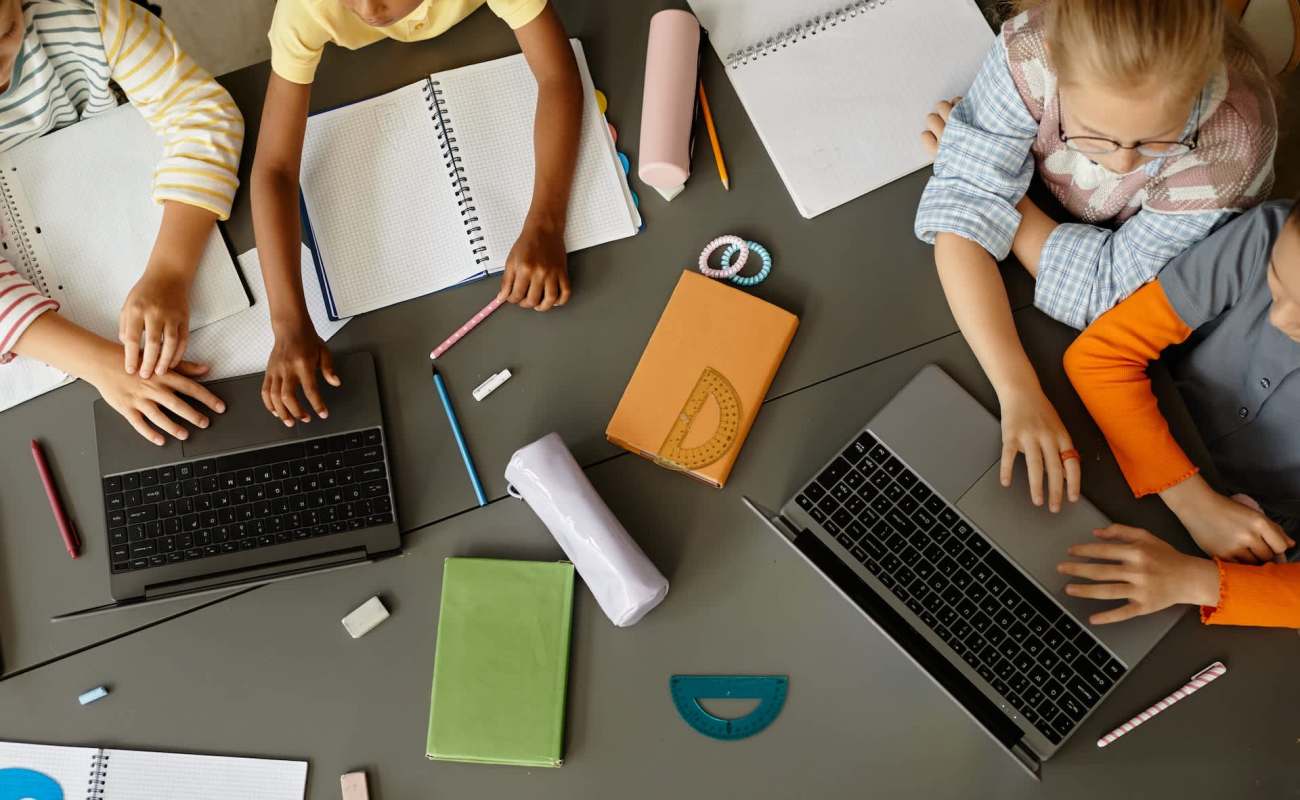
In many districts, the classroom screens that became routine are now being reevaluated.
Educators, parents, and lawmakers are increasingly questioning whether extensive device use is hurting academic performance and limiting the kinds of in-person social growth children need.
Here's what to know
With reading and math results still lagging, schools are facing rising pressure over the use of laptops and tablets in class, as more critics argue that screen-based learning can make education too isolated and individualized for students.
Fortune pointed to a Washington Post opinion piece by Sarah Schneider Kavanagh of Penn's Graduate School of Education and Katie A. Danielson of the University of Portland's School of Education. They argued that elementary school has long served purposes beyond academic instruction.
They said children also develop skills, such as listening to others, handling disagreement, explaining their ideas, and learning alongside peers.
They also argued that adaptive programs can deprive students of hearing how classmates think through the same question. In their view, that kind of shared learning becomes even more valuable in a future shaped by artificial intelligence, when distinctly human strengths will carry greater weight.
TCD Picks » Quince Spotlight
💡These best-sellers from Quince deliver affordable, sustainable luxury for all




Fortune also said that by July, lawmakers in at least 17 states had introduced or considered bills related to classroom screens or devices. In the Los Angeles Unified school district, officials had already banned in-school screen use for preschool through first grade and imposed stricter rules on older students.
More background
The issue has been building. Fortune said computers were already becoming common in schools before COVID-19, then they turned into essential tools during pandemic shutdowns. After schools reopened, that level of screen use largely stayed in place rather than receding with remote learning.
That has troubled many parents, teachers, and specialists, who see school as one of the few remaining settings where children can consistently practice direct conversation and sustained focus.
For many families, the worry is not limited to test scores. They also see screen-heavy classrooms as reducing opportunities for students to form strong classroom communities and to practice patience, empathy, and collaboration.
Fortune also referenced written Senate testimony from neuroscientist Jared Cooney Horvath, who said Gen Z is cognitively less capable than previous generations despite growing up with more technology than any cohort before it.
He linked declining standardized test scores with the increase in time students spend using computers at school.
What's being done?
Some districts are starting with limits rather than outright bans. One example is Los Angeles Unified, which has prohibited screen use for its youngest students in school while applying narrower restrictions to older children.
Meanwhile, proposals in at least 17 states show that lawmakers are examining more closely when classroom devices genuinely aid instruction and when they displace experiences software cannot replicate.
"Children don't need school to become more like the digital world," Kavanagh and Danielson said. "They are already immersed in that world for much of the time outside school hours. They need a place designed for other aims, such as conversation instead of consumption and collaboration instead of personalization. That isn't resisting the future; it's preparing children to be fully human in it."
Where can I learn more?
This debate is showing up in other corners of education, too. There are also concerns about AI-driven instruction, student frustration with mandatory devices, and the choices districts are making about where school money should go.
• Harms from AI in schools are reinforcing doubts about more classroom technology.
• At one school, mandatory technology actively hindered learning, echoing widespread frustrations with screen-heavy lessons.
• In New Bedford, schools chose geothermal wells and solar power while rethinking where education dollars go.
Across the country, it's clear that districts and lawmakers are taking a renewed look at what belongs in the classroom.

Get TCD's free newsletters for easy tips, smart advice, and a chance to earn $5,000 toward home upgrades. To see more stories like this one, change your Google preferences here.