


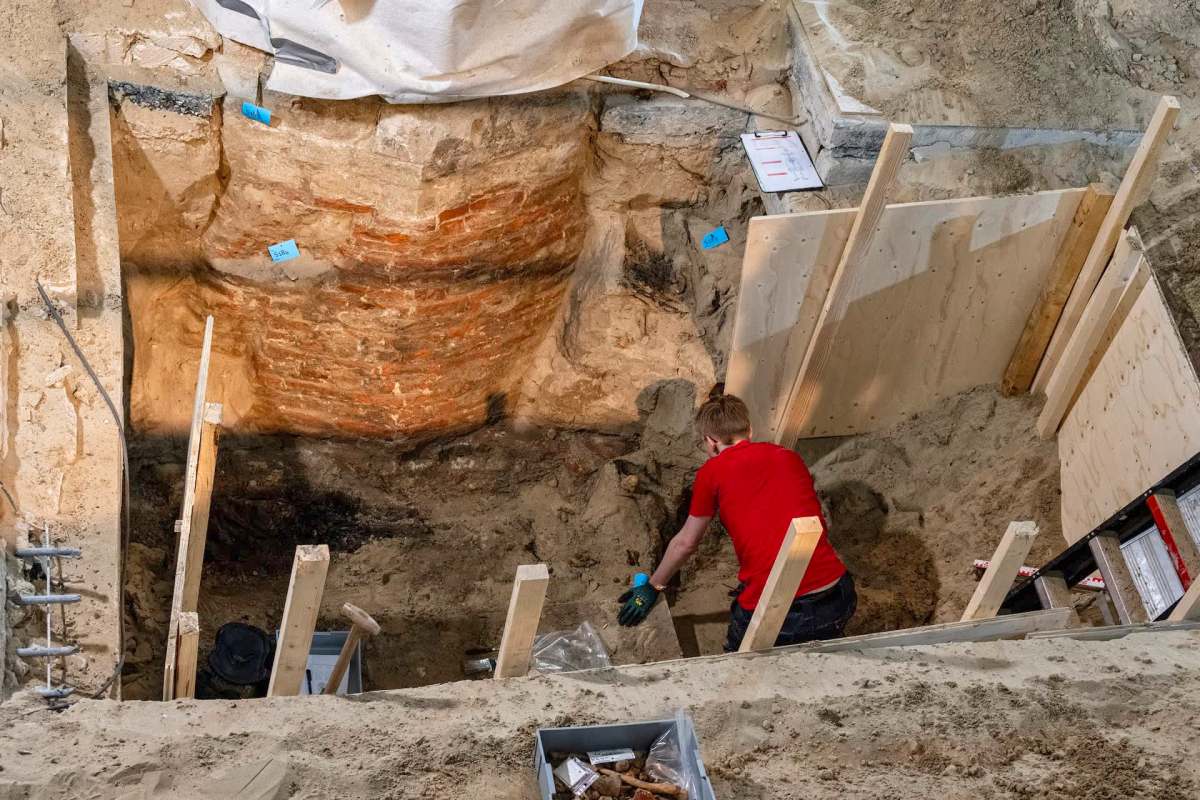
Beneath the stone floor of Dijon's Church of Saint-Philibert, repair work has revealed burials spanning several periods, from the late medieval era back to the transition from Roman rule to the Early Middle Ages.
Instead of merely stabilizing the structure, the project has become an archaeological window into how the site was used before the present church was built.
What happened?
Persistent damage at Saint-Philibert led researchers to investigate its foundations, and that work produced the discovery described by Popular Mechanics.
Part of the church's deterioration can be traced to its later history. Saint-Philibert served as a salt storehouse in the 18th and 19th centuries, and in the 1970s a heated concrete slab was installed above ground, still contaminated by salt. Heating those deposits contributed to cracking and weakening in the stone.
One excavation area in the transept exposed a late medieval burial chamber holding adults and children. Those interred there had been placed in plain shrouds, accompanied by only a few objects such as coins and rosaries.
The archaeological team, led by Clarisse Couderc and Carole Fossurier, also identified other layers of burial use, including slab graves from the 11th to 13th centuries and six sarcophagi from Late Antiquity and the Merovingian period. One of the stone coffins had a sculpted lid.
TCD Picks » Quince Spotlight
💡These best-sellers from Quince deliver affordable, sustainable luxury for all




Why does it matter?
The find shows that Saint-Philibert was more than a religious site. It also served as a funerary center across multiple periods of French history.
Although the current church was established in the second half of the 12th century and later expanded to include a porch, bell tower, spire, and side chapel, the remains below it indicate earlier construction on the site. Herringbone masonry beneath the central nave marks the northwest corner of an earlier church from around the 10th century.
The sarcophagi appear to be even older, likely from a time when they were originally placed inside another ancient structure.
What's being done?
The church is already undergoing a major rehabilitation effort. A public market notice outlined a project management mission to restore Saint-Philibert, with the first phase focusing on the pillars and the second on the bell tower and spire.
The notice listed March 26 as the bid deadline, estimated a June 1 start date, and set the duration at 120 months.
Structural repairs can be paired with careful excavation, documentation, and conservation. The project gives experts a chance to study buried remains before construction continues.
What started as an effort to stabilize damaged masonry has also exposed a long sequence of burials at Saint-Philibert, ranging from medieval shroud burials to sarcophagi from the beginning of the Middle Ages.

Get TCD's free newsletters for easy tips, smart advice, and a chance to earn $5,000 toward home upgrades. To see more stories like this one, change your Google preferences here.







