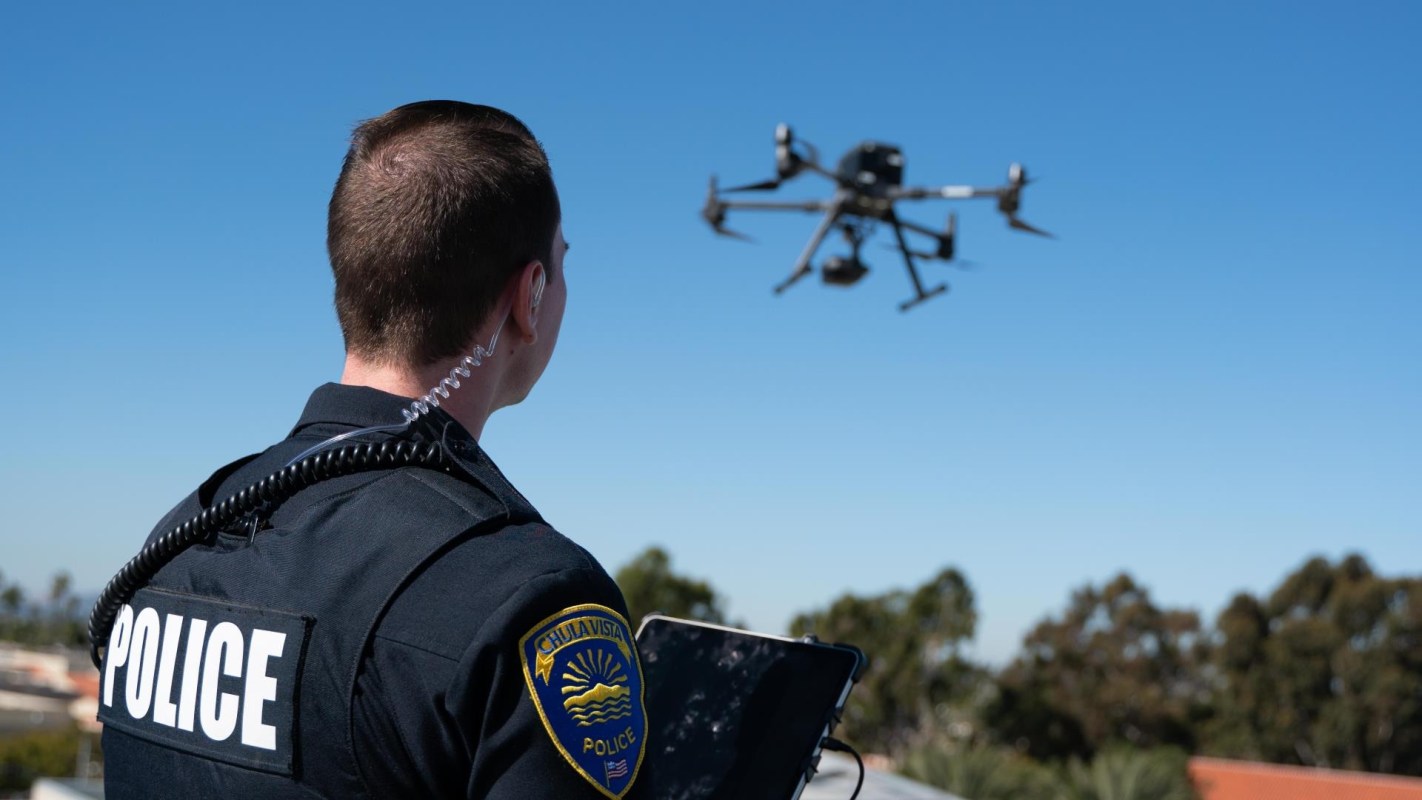
Officials in Chula Vista, California, say the city's closely watched first-responder police drone program could soon be shifted to Flock Safety — a company that has become a highlight in the national surveillance debate.
Here's what to know
According to inewsource, Flock's Aerodome platform would allow a drone to launch within moments of a 911 call, arrive in under three minutes, extend coverage across the city, and reduce the department's reliance on contracted remote pilots and visual observers. City officials have framed that shift as a major efficiency upgrade, and noted it was estimated to save $1.2 million a year.
Chula Vista began using drones in 2018 to respond to some 911 incidents ahead of officers, including crimes in progress, fires, traffic crashes, and other emergencies. Chula Vista police were also the first agency in the U.S. to win FAA approval to fly drones beyond visual line of sight for 911 calls across the city.
But the proposal has also raised concerns. Flock is already known for its large network of automatic license plate reader cameras, and privacy advocates have argued that those tools can enable widespread tracking of people not suspected of any crime.
Seth Hall, co-founder of the community group San Diego Privacy, said communities "are fundamentally changing the way we are thinking about what police do for the community, and how they do it, with this technology."
More background
City leaders have promoted Chula Vista's drone effort as a public safety success story and a template for updated emergency response. They have pointed to cases they say show the drones saving lives and helping defuse dangerous situations.
TCD Picks » Quince Spotlight
💡These best-sellers from Quince deliver affordable, sustainable luxury for all




Critics, however, say tying the program to Flock could deepen concerns about how much surveillance communities are being asked to accept in exchange for convenience.
For residents, those worries go beyond abstract privacy concerns. They can shape whether people feel safe calling for help, attending public events, or simply moving through public spaces without being tracked.
Those concerns are not hypothetical. As inewsource reported in a 2022 investigation, five of San Diego County's 10 law enforcement agencies were sharing license plate records with agencies outside California, even though state law requires the data to remain within the state.
What's being done?
The proposed agreement has not been finalized, with staff expected to eventually bring the contract to council members after a delay. However, no replacement date has been announced.
Spokesperson Caitlin Clark told inewsource the change would not alter the drone program's purpose or the policies that govern its use. She also said the department does not send drones out for indiscriminate surveillance or proactive patrol, and that flight records still undergo supervisory review and remain available through public transparency tools.
The proposed five-year deal would cost $400,000 in the first year — a figure the city says would be offset by ending its remote pilot contract, before rising to $700,000 annually in later years. Clark also said the transition would move the department closer to using drones that meet federal requirements while still allowing some of its current aircraft to remain in operation.
But opponents aren't buying it. "It's taking all of the problems that we have with that company, taking them off mounted poles, and launching them into the air."

Get TCD's free newsletters for easy tips, smart advice, and a chance to earn $5,000 toward home upgrades. To see more stories like this one, change your Google preferences here.