


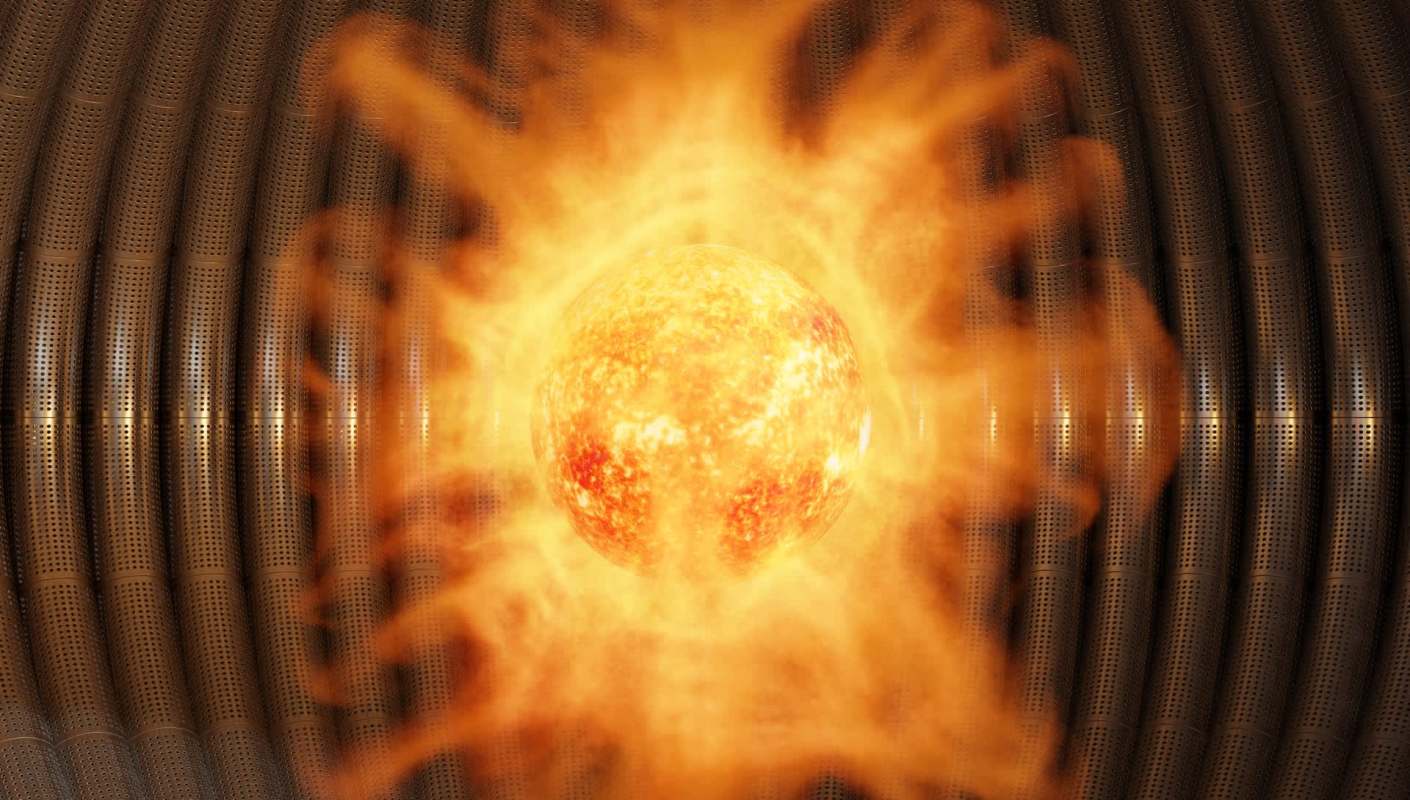
China's push into next-generation nuclear technology has reached a new milestone: ENN Group broke ground on the ENN Fusion Spherical Ring Hydrogen-Boron Plasma Platform, or Helong-2, which the company says could help it generate its first electricity from the reaction by 2030.
Here's what to know
The groundbreaking ceremony took place Sept. 15 at ENN's fusion R&D center in Hebei's Langfang Economic and Technological Development Zone, according to World Nuclear News.
ENN says the project is meant to create a "world-leading" hydrogen-boron fusion experimental platform built around more than 10 core systems; the Helong-2 complex will span about 120 acres.
If the schedule holds, experiments would start by the end of 2027 after construction and commissioning are finished, and the site should be ready for equipment installation by the end of June 2027.
Also called proton-boron fusion, the reaction pairs a hydrogen proton with boron-11 to produce helium nuclei and energy. ENN is targeting 2030 for the project's first electricity from hydrogen-boron fusion.
WNN reported that hydrogen-boron fusion does not release high-energy neutrons.
TCD Picks » Quince Spotlight
💡These best-sellers from Quince deliver affordable, sustainable luxury for all




Fusion has long been seen as a potential source of abundant, low-pollution power, but turning it into reliable commercial electricity has remained extraordinarily difficult.
More background
Fusion is often discussed alongside the greater nuclear industry, but it differs from the fission reactors operating today. In theory, fusion could provide large amounts of low-carbon electricity.
As WNN reported, ENN argues this approach is well suited to commercialization because the fuel is abundant and easy to obtain, projected costs are low, the reaction is safe and environmentally friendly, and energy conversion efficiency is higher.
What's being done?
Before Helong-2, ENN had already developed Xuanlong-50 and Xuanlong-50U, its first two hydrogen-boron fusion devices, and says it has spent five years shaping a three-step commercialization strategy.
Under that plan, ENN first wants Xuanlong-50U to achieve a hydrogen-boron fusion reaction in 2026, then aims to finish Helong-2 in 2027 and have it producing fusion power by 2030. The final phase targets low-cost electricity and a demonstration reactor before 2035, according to WNN.
Other private companies pursuing hydrogen-boron fusion include TAE Technologies in the United States and Marvel Fusion in Germany.
"Helong-2, as the third-generation fusion device built by ENN, is a key engineering platform for moving towards a fusion smart power plant," said Yu Jianchao, Chairman of ENN Group. "It carries the important mission of breaking through key technologies of hydrogen-boron fusion and exploring new paths for future energy. It is an important milestone in the commercialisation of hydrogen-boron fusion by ENN and an important step on the road to commercialisation of fusion energy in China."
Where can I learn more?
These stories cover China's advanced fission reactor projects, nuclear expansion plans, and broader debates over nuclear power.
• China has outlined a strategic nuclear expansion that could reshape its power grid by 2040.
• Nuclear power generates electricity through reactions inside the atom, but technologies vary widely.
• Historians say the anti-nuclear movement profoundly shaped energy policy and fossil fuel dependence.

Get TCD's free newsletters for easy tips, smart advice, and a chance to earn $5,000 toward home upgrades. To see more stories like this one, change your Google preferences here.






