


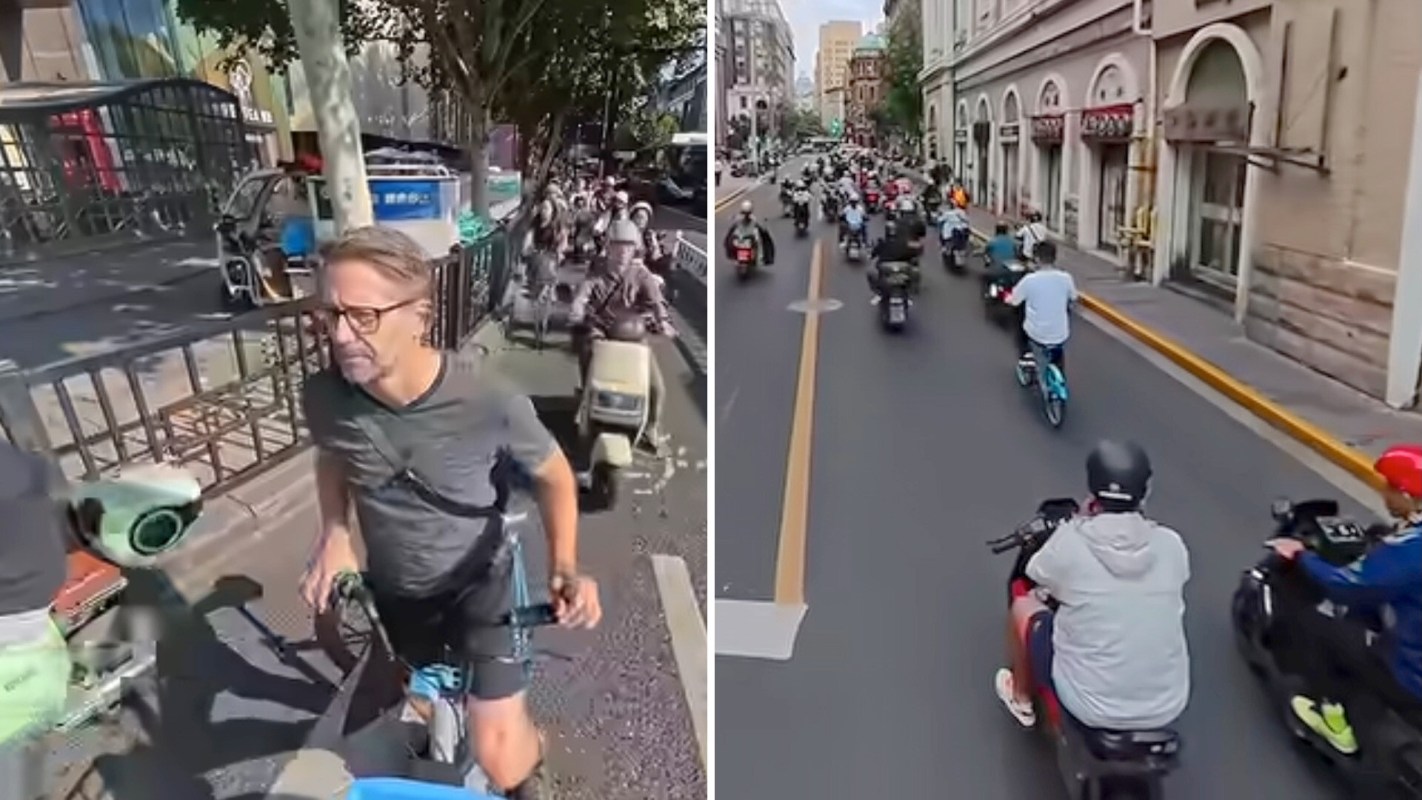
Crowded bike lanes in Hangzhou, China, carry a mix of bicycles and electric mopeds, challenging one visiting cyclist's assumptions about how the vehicles can share the road.
As cities debate restrictions on e-bikes, those busy lanes raise the question of whether better street design might be just as important as regulating riders.
Here's what to know
Content creator and cycling author Tom Babin said police formed bicycle squads in the 1890s to pursue fast-moving cyclists known as "scorchers." In a video for the Shifter YouTube channel (@Shifter_Cycling), he explores the parallels between that backlash and the e-bike debate.
According to Babin, the United States went from about 8,000 registered motor vehicles in 1900 to roughly 26 million in 1930, prompting cities to rebuild streets around cars. That growth overshadowed the earlier controversy over speeding cyclists.
Babin argued that governments are responding to e-bikes with rider restrictions rather than redesigning the streets where the vehicles must fit.
Electric cargo bikes, scooters, and other devices challenge established vehicle categories, and smaller, more affordable batteries have helped make them possible. The video noted lithium-ion battery pack costs fell 93% between 2010 and 2025, citing Bloomberg.
TCD Picks » Quince Spotlight
💡These best-sellers from Quince deliver affordable, sustainable luxury for all




"Personal transport is either about to get a lot cheaper and more accessible, or it's about to get a lot LOT more expensive and bureaucratic," a user commented.
More background
Alana is a Calgary cargo bike parent who organizes local children's rides. In the video, she described the route where she collided with an e-scooter as narrow and open to two-way traffic. She had been riding a conventional bicycle home from her birthday party.
She needed immediate surgery for compound fractures of her tibia and fibula caused by the collision, then another operation when the wound became infected. Her expected recovery was three to six months, and she described feeling uncomfortable cycling without an air cast.
Alana attributed the collision to the absence of a safe north-south route linking hillside communities with downtown, not to scooters themselves.
A commenter on the Shifter video shared that concern.
"It's immediately obvious that the route on which Alanna's collision happened is far too narrow for two-way traffic," they argued.
They added that there were four lanes of car traffic, and insinuated, if anything, the area would put more money into widening those lanes over increasing the size of the bike path.
What's being done?
Extensive bike lane networks remain in Hangzhou and neighboring Shanghai from China's bicycle-heavy transportation system of the 1970s and 1980s. Babin found a different approach to shared streets there.
Babin described conventional bicycles and large numbers of bike-share riders using the same lanes as electric mopeds. That shared use developed as transportation choices changed and laws evolved to regulate electric vehicles.
Back in Calgary, Alana continues to organize children's rides to seek improved cycling routes.
Babin argued that street layouts are not permanent limits, and they are what is making people brand e-bikes as "dangerous."
"The crisis over e-bikes isn't about the machines themselves," he asserted. "It's about the pressure to conform to the status quo, and that status quo is pretty narrow. Basically, if it's not a car that looks like this, it doesn't fit."
While it can be easy to think that way, the truth is that things can change.
"But being in China made me realize there is so much more that we could be doing," Babin concluded.

Get TCD's free newsletters for easy tips, smart advice, and a chance to earn $5,000 toward home upgrades. To see more stories like this one, change your Google preferences here.






