


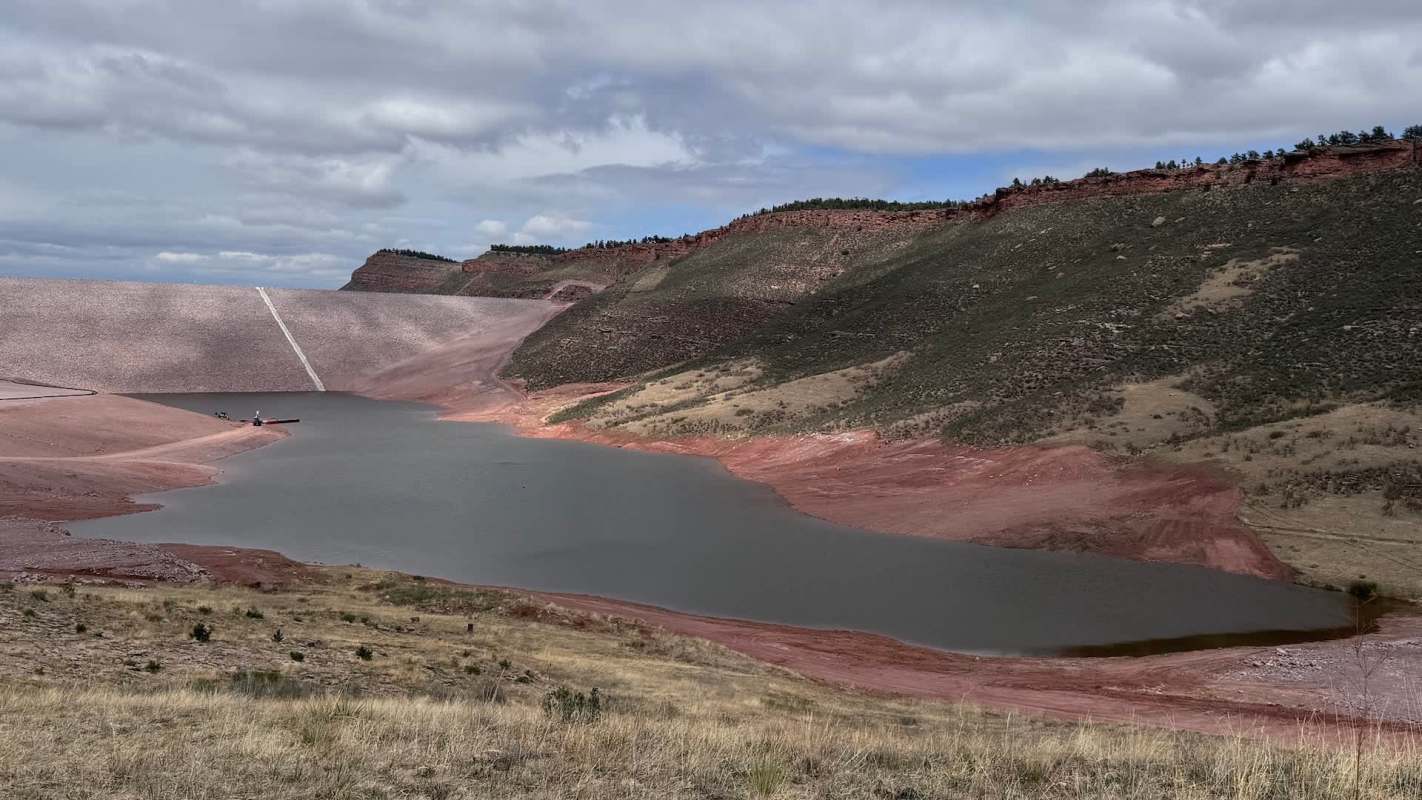
A major new reservoir in Northern Colorado that is intended to help secure water for nearly 1 million people has hit an alarming snag before it has even gotten underway.
Chimney Hollow Reservoir began filling this spring, but the process was abruptly halted after officials discovered uranium in some of the rock used to build the dam, NPR's KUNC News reported.
What happened?
The reservoir is designed to hold Colorado River water for 12 growing Front Range communities, including Broomfield and Greeley.
But after just 12 days of filling, operations stopped following the discovery of radioactive uranium. The reservoir has a capacity of roughly 29 billion gallons and is only about 2% full. Now, Northern Water is investigating how much naturally occurring uranium may be leaching into the water from the dam rock.
"None of that water will be leaving until we've got that uranium figured out," Northern Water spokesperson Rachel Stevens told KUNC.
Crews are collecting water samples each week and sending them to a lab for testing. One possible fix is to lower the small pool to flush out the uranium, but officials want more test results before deciding on the next step.
TCD Picks » Quince Spotlight
💡These best-sellers from Quince deliver affordable, sustainable luxury for all




For now, the issue has delayed the project by at least a year, and a clearer timeline remains uncertain.
Why does it matter?
Chimney Hollow was expected to help buffer residents against dry years in a region where water demand continues to grow. Any delay means less certainty for families, cities, and businesses already dealing with drought and shrinking snowpack.
The region is already grappling with how to stretch limited water supplies further.
Environmental advocates say Chimney Hollow could add to pressure on the Colorado River, particularly in Grand County near the river's headwaters. Because the reservoir depends on a junior water right, there is also uncertainty about how useful it will be if drought worsens and future cuts become necessary.

Get TCD's free newsletters for easy tips, smart advice, and a chance to earn $5,000 toward home upgrades. To see more stories like this one, change your Google preferences here.






