


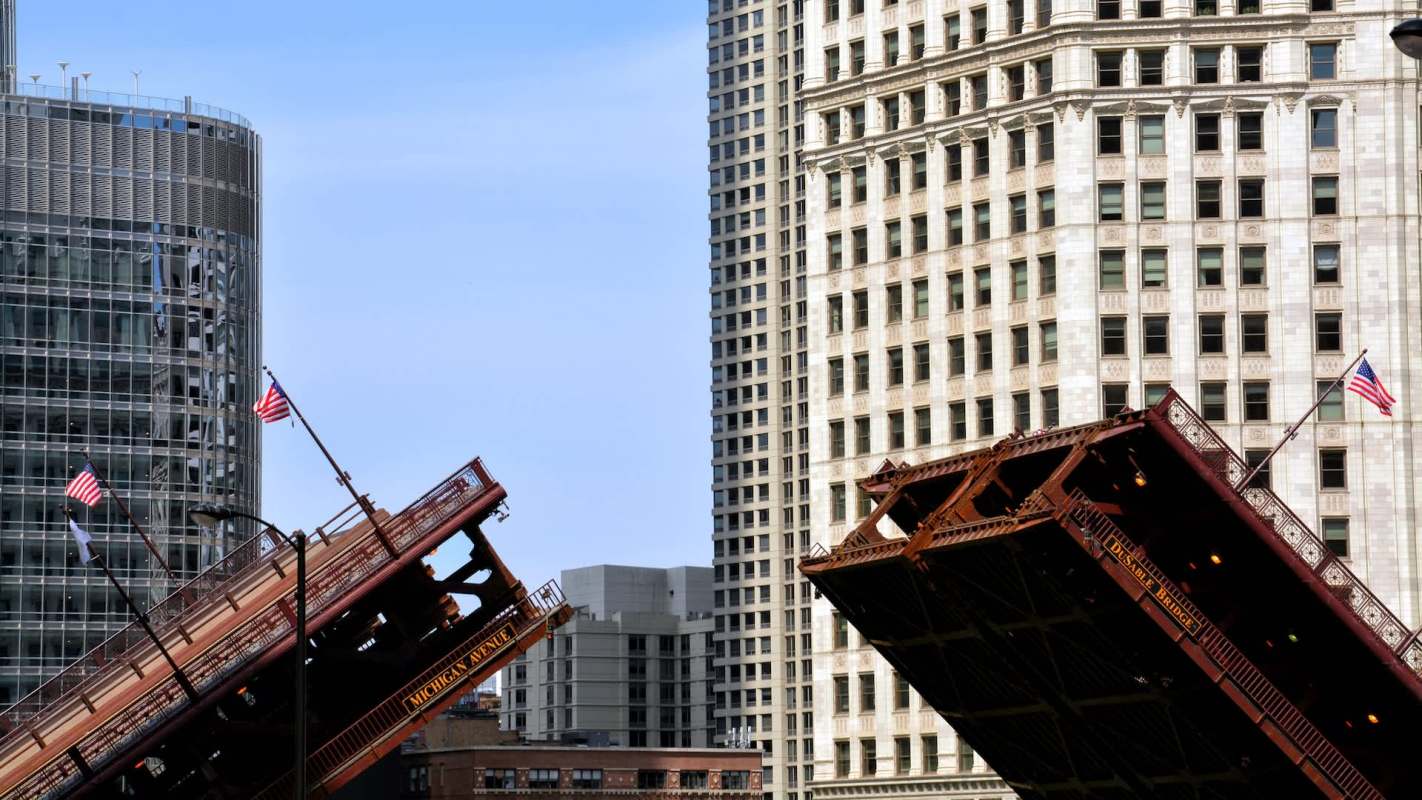
Heat on September 2 left Chicago commuters dealing with two separate drawbridge failures within a matter of hours, as spans in different parts of the city were stuck in the raised position and created backups for drivers, cyclists, and pedestrians.
The outages involved the DuSable Lake Shore Drive bridge and the Torrence Avenue Bridge, the Chicago Sun-Times reported, while city crews labored in sweltering weather to restore both crossings.
Here's what to know
Traffic on DuSable Lake Shore Drive did not resume until shortly after 2:30 p.m., more than four hours after trouble began around 10 a.m. The bridge over the Chicago River had been raised for the Spirit of Chicago — a dining yacht that can carry 600 passengers — during a routine lift, but it would not fully close afterward.
A second malfunction followed on the Far South Side. Around 4:30 p.m., the Torrence Avenue Bridge over the Calumet River jammed open for more than an hour, prompting the city's Office of Emergency Management and Communications to direct drivers to alternate routes before the bridge reopened by 5:30 p.m.
According to Erica Schroeder, director of public affairs for the Chicago Department of Transportation, high temperatures were behind both incidents.
"Thermal expansion caused by the high temperatures affected the bridge's operation," Schroeder explained.
TCD Picks » Quince Spotlight
💡These best-sellers from Quince deliver affordable, sustainable luxury for all




Crews responding at the DuSable Bridge were joined by a Chicago Fire Department boat, which sprayed the structure in what appeared to be an attempt to cool it enough to bring it back into place.
More background
Hotter days can strain aging systems, damage transportation networks, and create cascading public safety issues, especially in major cities, where traffic congestion and limited detours can quickly magnify disruptions. Extreme heat is also a major public health threat, increasing the risk of dehydration, heat exhaustion, and other serious illnesses.
Inspection data list the DuSable Lake Shore Drive bridge as carrying a "poor" rating. The same span was closed for more than a day in 2019 after city inspectors found cracked beam joints, and in April, roughly one in six Chicago bridges carries that same "poor" designation.
Chicago has seen bridges get stuck before for other reasons. The Michigan Avenue Bridge was held open for about two hours in 2015 because of an electrical problem.
What's being done?
To get traffic moving again, city agencies issued alerts, dispatched crews to the bridges, and used cooling efforts as workers tried to restore normal operations. The Office of Emergency Management and Communications directed drivers to alternate routes, while transportation workers worked to restore each bridge to its normal position.
Preventive maintenance, regular inspections, and upgrades designed for higher temperatures can help reduce the chances that a single hot day will trigger hours of disruption.
Real-time alerts and visible signage can make a major difference when a key route suddenly becomes unusable.
For people caught up in the delays, the frustration was immediate.
"If there was a sign, that would have been nice," said cyclist Pilbin Im, who had been heading Downtown for a meeting.
Where can I learn more?
Chicago's bridge breakdowns are part of a broader strain that extreme heat is putting on roads, bridges, and other public systems. The same sweltering conditions can jam traffic, make city streets more dangerous, and raise real health risks.
• In New York City, bridge malfunctions under scorching heat left drivers facing major delays.
• Across the US, public infrastructure crumbles under extreme weather, forcing costly repairs.
• On hot city blocks, urban heat is burning residents long after traffic clears.
A bridge stuck open can become a much bigger problem when temperatures spike, rippling into commutes, emergency response, and everyday safety. That's why heat resilience now matters across transportation planning as much as it does for the people trying to get through a dangerously hot day.

Get TCD's free newsletters for easy tips, smart advice, and a chance to earn $5,000 toward home upgrades. To see more stories like this one, change your Google preferences here.






