


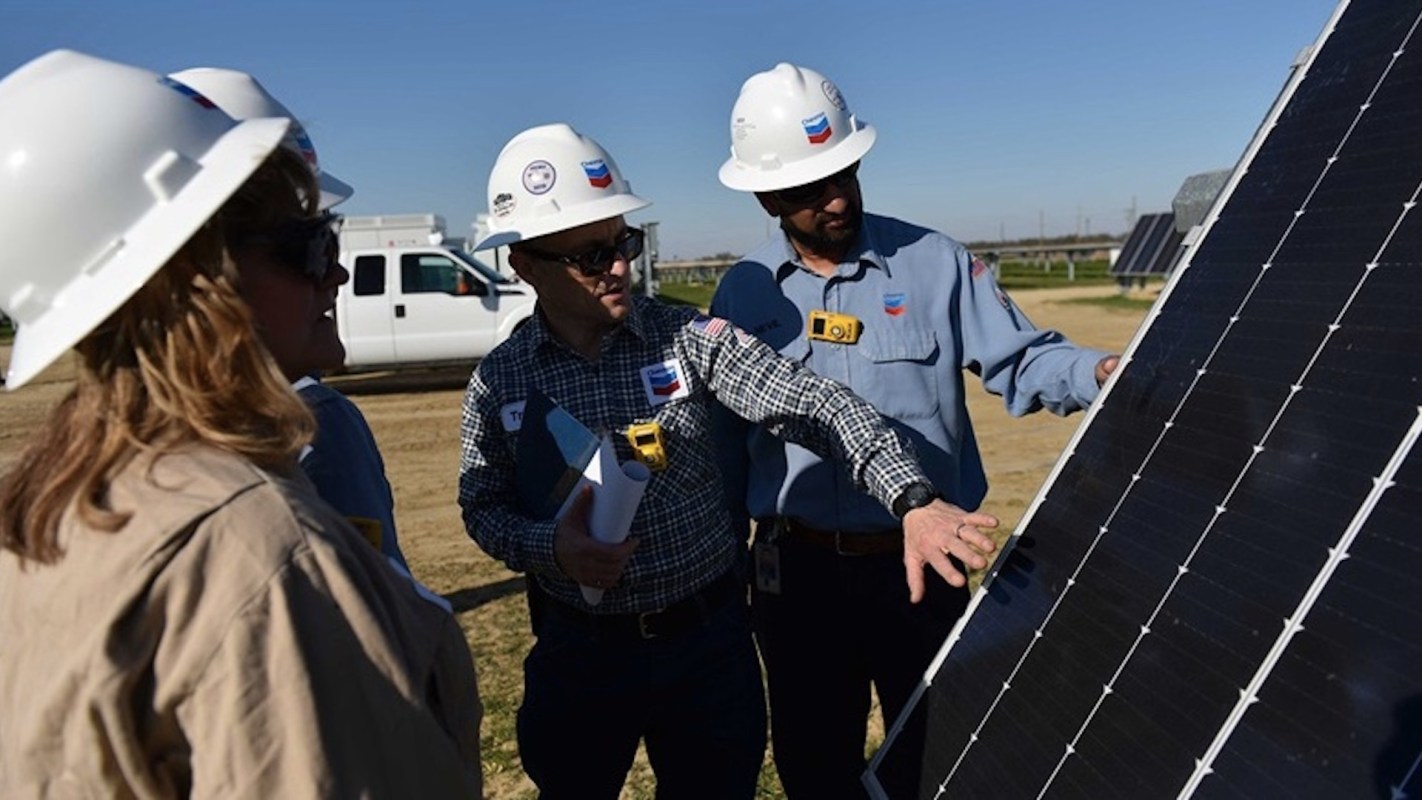
Chevron is powering some of its California oil production with clean electricity from a solar farm.
The company planned to get around 80% of the electricity for its Lost Hills oil field from the installation.
Here's what to know
The 29-megawatt installation occupies about 220 acres beside the oil field and contains roughly 65,000 panels. SunPower, a solar company, built it for Chevron, and it began delivering power in 2020, BGR reported.
At the field, crews pump water back underground to keep pressure from dropping as oil comes out, an energy-intensive process in its own right. Crews also raise crude out of the well, then separate and treat it. Lost Hills has been in production since 1910.
Per BGR, the installation supplies power on-site and sends any extra it generates during the day back to the grid. It has replaced much of the field's utility power, which previously supplied all its electricity.
More background
While solar power can reduce the pollution associated with supplying electricity to the field, it also supports ongoing oil production.
TCD Picks » Quince Spotlight
💡These best-sellers from Quince deliver affordable, sustainable luxury for all




Some of the utility electricity the on-site solar now offsets had come from gas-fired power plants and other sources, per BGR.
Chevron has also installed a solar farm to power an oil and gas facility in Colorado.
What's being done?
Offshore, energy company Equinor is taking a similar approach with wind power. Its Hywind Tampen wind farm sends electricity to five offshore oil and gas platforms in Norway's Snorre and Gullfaks fields, per BGR.
The wind farm has 11 turbines, each sitting on a floating concrete base held in place by mooring lines, as BGR detailed. Standard offshore wind farms anchor their turbines directly to the seabed, but this floating setup lets them operate in deeper water.
BGR puts Hywind Tampen's total capacity at 94.6 megawatts and its estimated contribution at around 35% of the five platforms' yearly electricity needs.
Cutting back on gas-fired turbines this way could prevent roughly 220,000 U.S. tons of carbon dioxide pollution annually, according to BGR.
The wind farm started supplying the Gullfaks A platform in 2022. The remaining turbines came online over the following months, and by August 2023, all 11 were feeding power into the offshore grid shared by the Snorre and Gullfaks platforms, BGR reported.

Get TCD's free newsletters for easy tips, smart advice, and a chance to earn $5,000 toward home upgrades. To see more stories like this one, change your Google preferences here.






