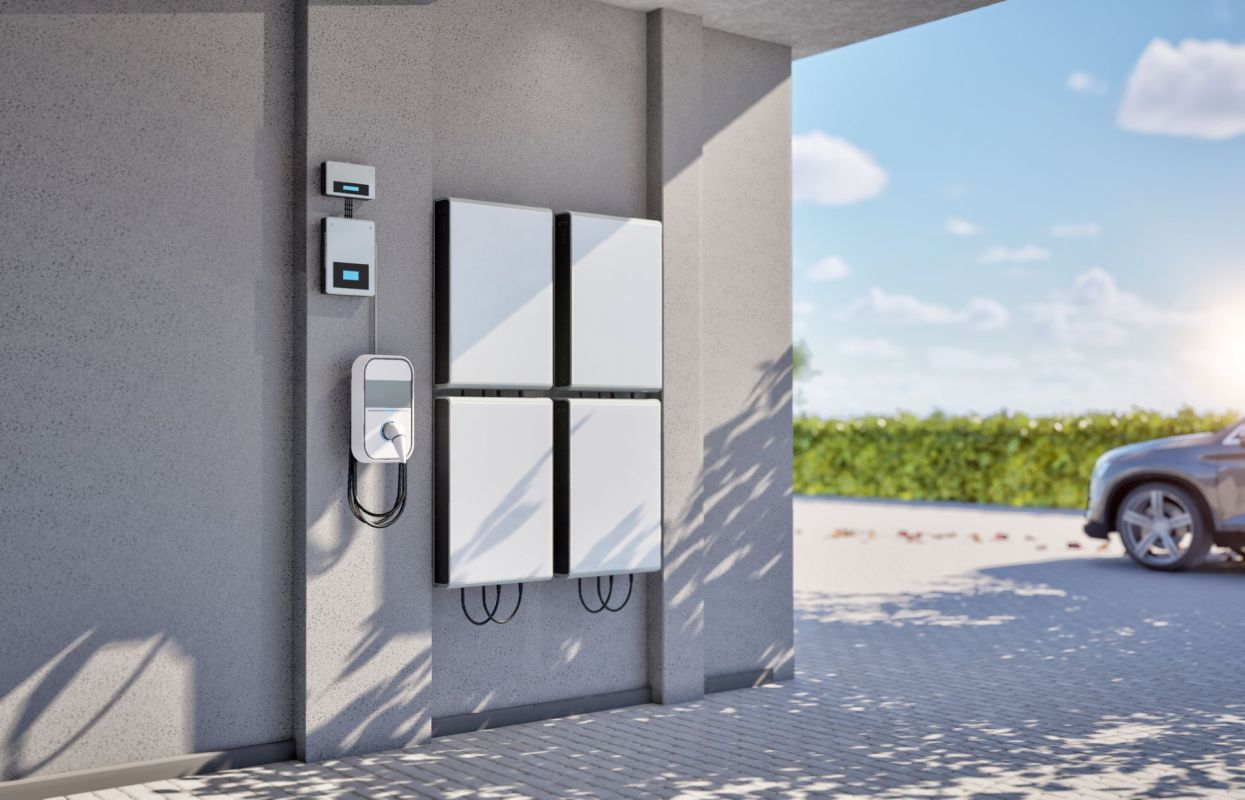
For homeowners, a battery system can serve several purposes at once: keeping power on during outages, trimming energy expenses, and supporting a more self-sufficient setup.
Now, home battery systems are becoming a more realistic option for households.
What's happening?
In an interview with Yale Climate Connections, Enphase Energy chief products officer Raghu Belur discussed how consumers are transforming into "prosumers" — producing their own energy and making money by selling it back to the grid.
He pointed to battery storage as a crucial part of decentralized energy distribution, in which consumers are empowered to make upgrades that can trim bills and boost home resilience.
"Historically, all the power production or generation of energy has been centralized – you've got big hydroelectric plants, nuclear plants, gas-powered plants, coal plants, and large-scale solar, large-scale wind," Belur said. "What we are seeing now is this decentralization or distribution of energy, where the home is becoming the unit of intelligence."
As energy bills continue to rise, the emergence of increasingly affordable home batteries is one reason this is possible, with Belur estimating a payback period of as little as four to five years, depending on location and the type of energy system.
Why does it matter?
Home battery storage is becoming more important as extreme weather, rising electricity demand, and higher utility rates put more pressure on the grid.
Belur summed up that reality plainly, telling Yale Climate Connections, "We are living in times where 100-year storms are the norm now."
Save $10,000 on solar panels without even sharing your phone number Want to go solar but not sure who to trust? EnergySage has your back with free and transparent quotes from fully vetted providers in your area. To get started, just answer a few questions about your home — no phone number required. Within a day or two, EnergySage will email you the best options for your needs, and their expert advisers can help you compare quotes and pick a winner. Solar panels can save you more than $50k over their 25-year lifespan, and EnergySage can help you save as much as $10k on installation. Which begs the question — isn't that worth an email or two? |

Battery storage can make off-grid living more realistic, protecting a home during blackouts and reducing energy costs. When paired with solar panels, batteries can also help families ride out multiday outages.
If you want to compare your options, consider using EnergySage's free tools to learn about home battery storage, including competitive installation estimates.
EnergySage has teamed up with the electrification brand Qmerit to guarantee you get the best price on home battery storage solutions.
What happens next?
The technology is already spreading beyond standard rooftop solar systems.
Belur suggested to Yale Climate Connections that electric vehicles could become a major entry point for home battery storage, as bidirectional chargers allow drivers to use their cars to send power back to their homes. Eventually, they could help support the grid when needed.
That shift could contribute to a more decentralized energy system, with homes storing, using, and exporting electricity when it is most valuable.
For people who want backup power without committing to a whole-home system, Pila is another option. Its plug-and-play batteries cost a fraction of what a whole-home backup system would.
As Belur put it, "I think it makes absolute sense that people should deploy their own energy system within their home."

Get TCD's free newsletters for easy tips, smart advice, and a chance to earn $5,000 toward home upgrades. To see more stories like this one, change your Google preferences here.