


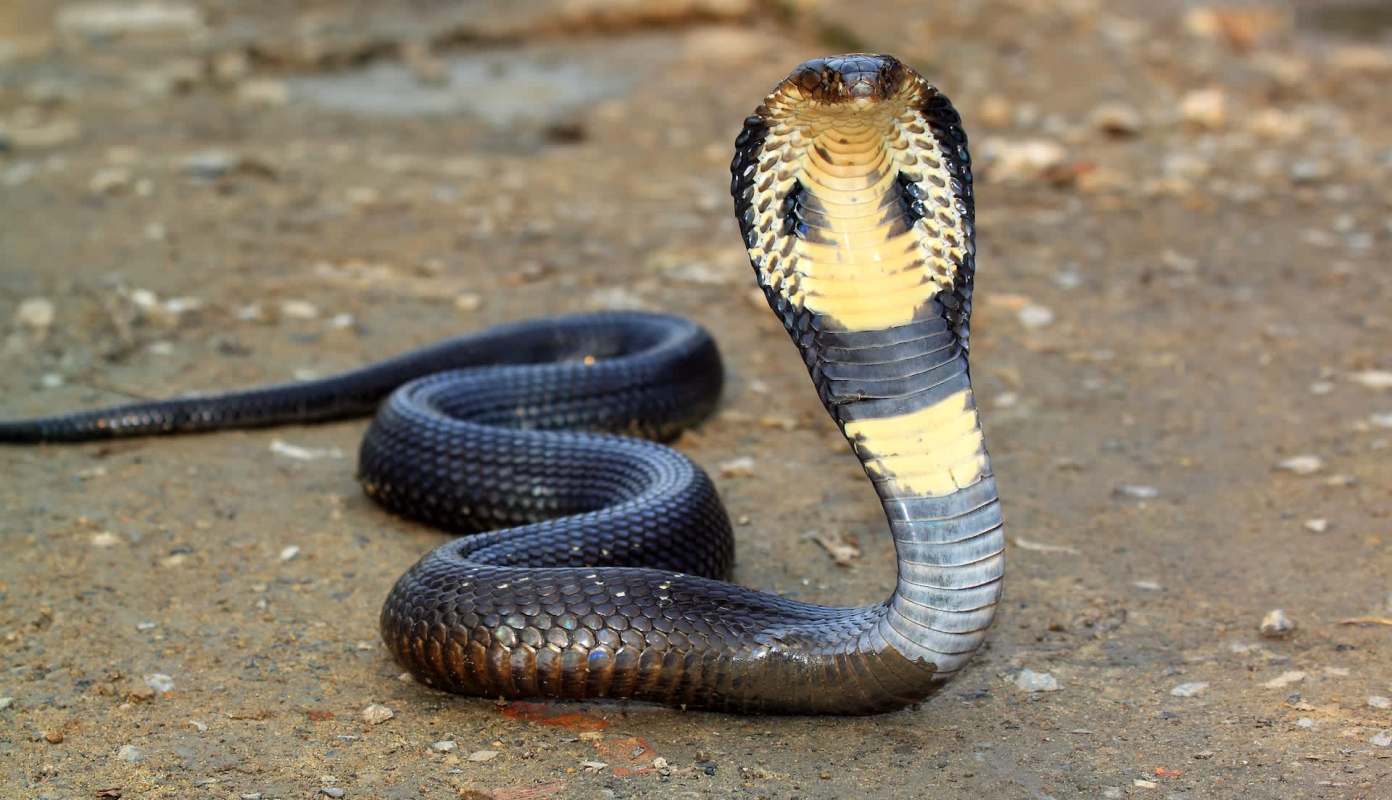
A venomous snake from Central Asia has been tied to a deadly new public health threat in the Indian Himalayas.
Researchers documented what they described as the first known deaths in India linked to bites by the Caspian cobra, also called the Central Asian cobra, after two men died in Himachal Pradesh's Chamba district.
Here's what to know
As The Tribune reported, the two cases appeared in a peer-reviewed study published in Epidemiology International.
Dr. Omesh Kumar Bharti, Kangra's chief medical officer and a Padma Shri recipient, led the study. He also heads the state's Zero Snakebite Deaths Initiative, a project funded by the Indian Council of Medical Research.
Genetic testing had already confirmed the presence of Naja oxiana in Chamba in 2019, the outlet noted.
The researchers noted that the cobra has been moving east from its home range in Central Asia into the northwestern Himalayas. They also cited local reports suggesting the snake could be turning up at lower altitudes.
TCD Picks » Quince Spotlight
💡These best-sellers from Quince deliver affordable, sustainable luxury for all




On July 6, 2020, a 40-year-old man was spraying an apple orchard near Ullansa village, in the Holi area, when he stepped on a snake, according to The Tribune. He was wearing open footwear and was bitten twice on the leg.
He was taken to a faith healer and then to Civil Hospital Bharmour, where he was pronounced dead.
The second man was 62 and from Bhanjraru village in Churah Valley. On July 7, 2021, he stepped on a snake on his way to work, per The Tribune.
He was bitten on his left leg. Within 30 minutes, he collapsed on the way to a health facility, and he was pronounced dead at Civil Hospital Tissa.
More background
Both bites happened during the day while the men went about ordinary activities.
In Chamba, the cobra has mostly turned up at elevations of 6,600 feet or higher, on open, rocky ground. "However, local reports cited by the researchers indicate that its range is gradually extending towards lower elevations," The Tribune stated.
If it moves down the slopes, farmers, laborers, and other residents could cross paths with it more often.
Such encounters may be more likely where orchards, paths, and other human areas overlap with wildlife habitat, a pattern that has shown up in other cobra encounters in India.
Snakebites can become more deadly when medical care is hard to reach, as it is in remote terrain.
What's being done?
By confirming these deaths and identifying the species involved, researchers are giving health officials information about a changing threat in Himachal Pradesh.
Bharti and his co-authors documented the cases through snakebite research funded by the ICMR.
Records such as these can help authorities see where the cobra is turning up and which communities are most exposed.
Wearing protective footwear in areas where dangerous snakes are known to live is one practical precaution. The researchers also urged people to get medical care right after a suspected snakebite, as any delay could be deadly.
Where can I learn more?
These stories explore how changing climates and human activity are driving dangerous cobra encounters.
• Across multiple regions, a rising snakebite threat could reach billions as venomous species shift ranges.
• Globally, mass spread of venomous snakes is forecast as warming reshapes habitat boundaries.
• In India, troubling changes observed in deadly snakes are raising fears of more bites.
• On Uzbekistan's steppe, deadly venom may hold clues that could aid cancer research.
• In Delhi, snakes invade local communities as monsoon conditions drive more encounters.

Get TCD's free newsletters for easy tips, smart advice, and a chance to earn $5,000 toward home upgrades. To see more stories like this one, change your Google preferences here.






