A discovery at the Alamo is giving history fans a rare physical link to one of the most famous battles in Texas history.
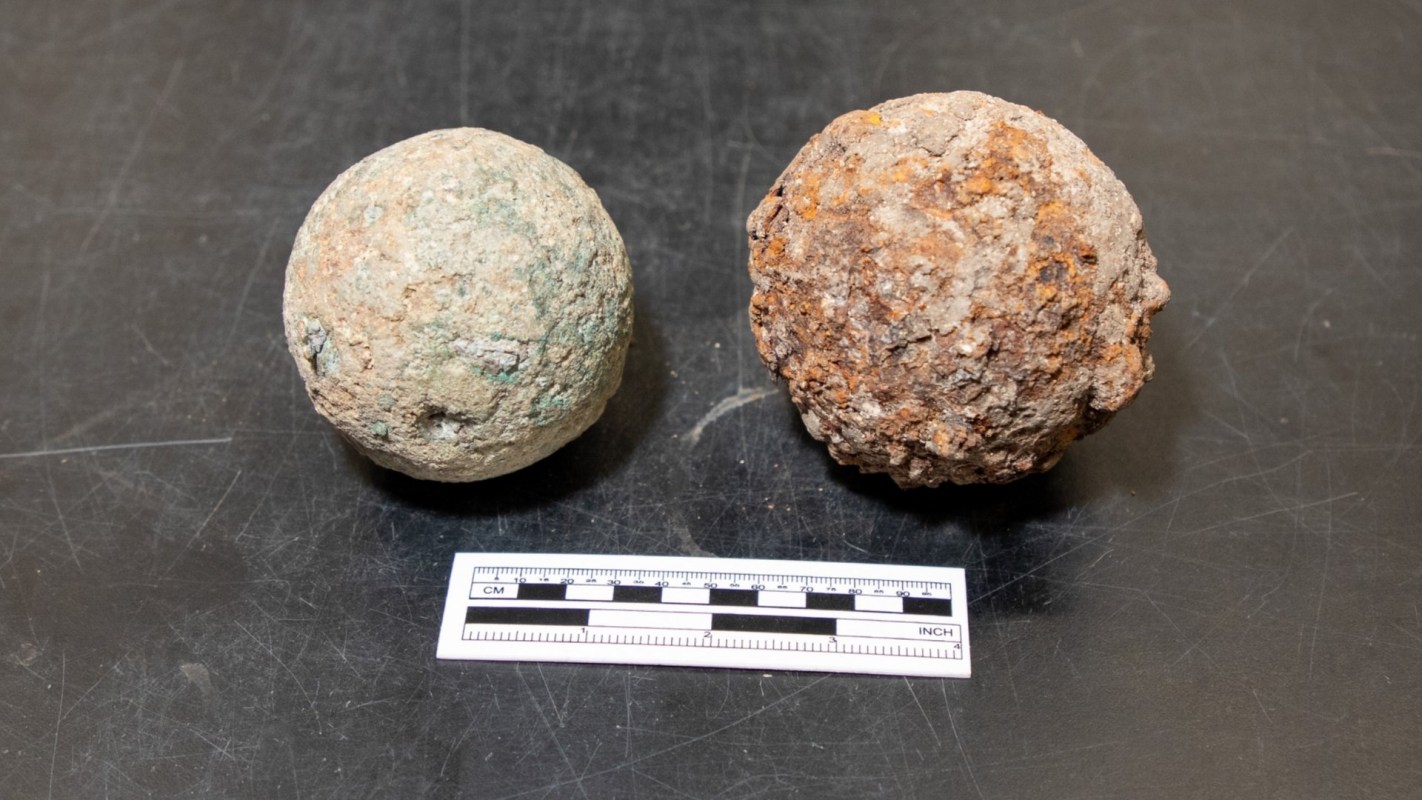
Archaeologists have unearthed a second cannonball that had likely remained where it first landed during the 1836 siege until now, as News 4 San Antonio reported.
What happened?
The cannonball discovery at the historical site in San Antonio was close to the spot where a bronze projectile was uncovered in March. The two objects were found near the northeast corner of the Alamo Church, and experts said they are similar in both size and weight.
Archaeologists located the newer projectile in undisturbed soil next to the first discovery. Because of that, the iron cannonball could have remained there since the spring of 1836, when fighting between Mexican forces led by Antonio López de Santa Anna and Texan defenders led by James Bowie and William B. Travis occurred, according to News 4 San Antonio.
The materials involved have also led researchers to think the finds may reflect the two opposing armies. Their assessment is that the bronze cannonball was probably used by the Mexican Army, while the iron one may have belonged to the Texans.
Why does it matter?
The Battle of the Alamo has long been a defining episode in Texas history, but objects found in place — rather than collected later or moved into archives — can offer a clearer picture of what happened on the ground.
TCD Picks » Good Store Spotlight
Get 10% off your next purchase with code TCD10




The Alamo sits in the middle of a modern city, yet archaeologists are still uncovering evidence that may have been hidden there for almost 200 years.
The Texans lost at the Alamo, but about a month later, they defeated Santa Anna at the Battle of San Jacinto, helping bring the Texas Revolution to a close and leading to the Republic of Texas.
What are people saying?
Tiffany Lindley, The Alamo's archaeology director, commented on the cannonballs' condition and location.
"So, whenever they were dropped, the very first time, possibly in 1836, they haven't been touched since," Lindley told the publication.
"The first one we found, I thought, there's no way in the world we just found a cannonball from 190 years ago," said Kolby Lanham, the Alamo's senior researcher and historian. "And then fast forward just a couple of months, and we found a second one. It's just a huge kind of once-in-a-lifetime deal — but obviously it's happened twice."

Get TCD's free newsletters for easy tips, smart advice, and a chance to earn $5,000 toward home upgrades. To see more stories like this one, change your Google preferences here.