


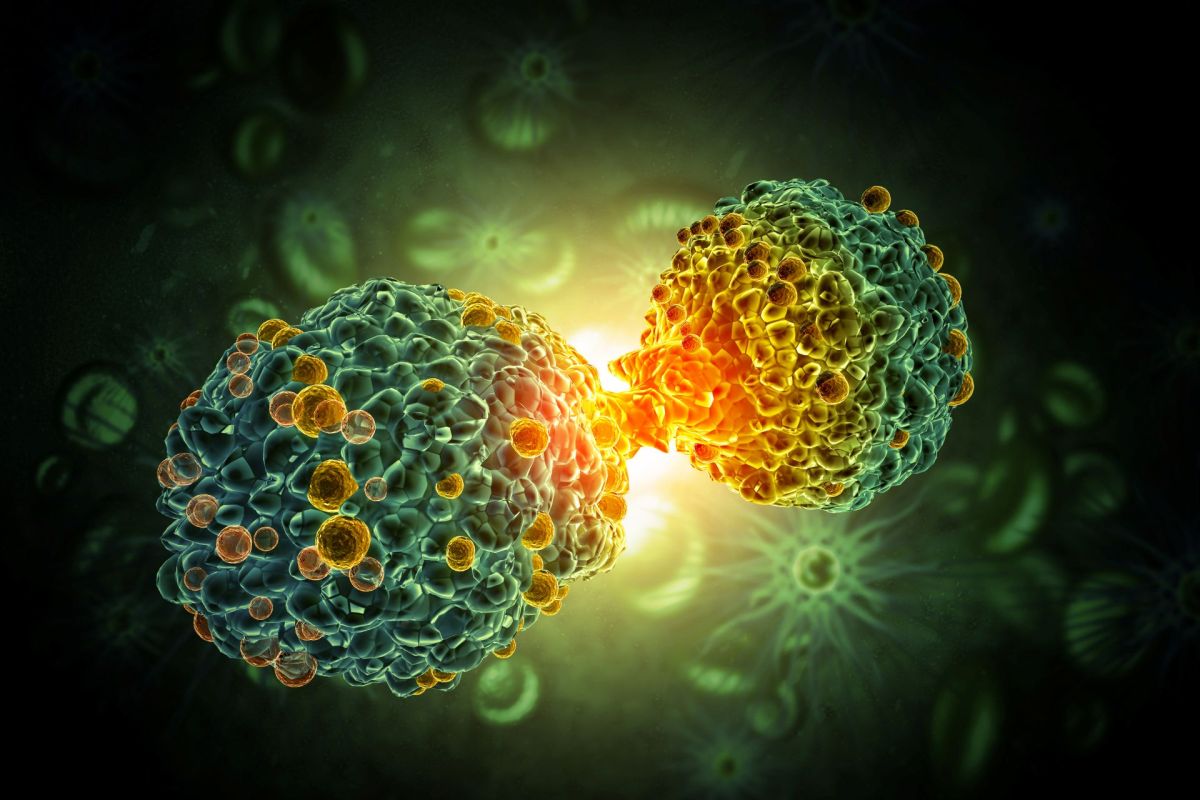
Many cancer therapies are designed to eliminate rapidly dividing cells. Yet certain tumors seem able to endure by reverting to a more primitive, stem-cell-like condition.
Because of that flexibility, researchers are exploring ways to keep cancer cells in a less harmful state rather than relying solely on attempts to eradicate them.
Here's what to know
In tests using lab-grown mammary tumor organoids made from human breast cancer cells, along with mouse experiments, researchers found that an ultra-low dose of THC — cannabis' best-known compound — may help keep those cells in a less threatening state. According to ScienceAlert, the treated cells appeared less invasive and less prone to fueling aggressive tumor growth.
Published in Communications Biology, the study examines cancer cell plasticity — the ability of some cells to move from a differentiated identity back toward a less mature one. When cancer cells take on that stem-cell-like state, they can contribute to tumors that are more varied, tougher to treat, and more prone to spreading.
After four days of low-dose THC exposure, the tumor organoids showed reduced self-renewal, invasiveness, and tumor-initiating ability. The results pointed more strongly to CB2R than to CB1R.
CB2R is associated with inflammatory responses, whereas CB1R is more tied to cannabis' psychoactive effects.
TCD Picks » Quince Spotlight
💡These best-sellers from Quince deliver affordable, sustainable luxury for all




In a separate mouse experiment, cells treated with THC formed fewer cancer-cell clusters in the lungs. That suggests the shift was not limited to a short-term effect in the lab.
More background
The work supports an approach that aims to change how tumors behave, rather than eliminate tumor cells outright. Chemotherapy and radiation are still central to cancer care, but scientists have also been studying how such treatments can sometimes leave behind the hardiest cancer cells and give them an advantage.
Here, the change appeared to last. Organoids that had been exposed to THC still showed the effect after being transferred into cancer-prone mice, where it persisted for up to 100 days. Compared with control animals, these mice developed tumors later, grew them more slowly, and showed less aggressive lesions.
That does not mean people should attempt to treat cancer on their own with cannabis products.
It also underscores how even subtle biological shifts may durably reshape cancer cell identity, an issue researchers are watching closely as they look for ways around treatment resistance.
What's being done?
To probe the mechanism, the researchers focused on the body's endocannabinoid system, which helps govern signaling pathways involved in development and possibly cancer progression. They used compounds that increased or decreased CB1R and CB2R activity to see which receptor pathway was most relevant.
SR2, a CB2R inverse agonist, appeared to reproduce THC's tumor-calming effect, while SR1, a CB1R inverse agonist, did not. Organoids from mice engineered to lack CB2R still underwent similar changes, suggesting that the receptor's baseline activity may be especially important.
If so, researchers may have multiple options for steering cancer cell plasticity. As the study authors explained, controlling the process could help "differentiated cells [to] occupy space and resources that would otherwise be used for tumor expansion."
The next challenge will be translating those findings into therapies proven safe and effective in people.
"This view is consistent with the concept that tumor cell populations occupy continuous and dynamic state landscapes, where relatively small perturbations can trigger large-scale and self-reinforcing transitions in collective behavior," the researchers concluded.
Where can I learn more?
The THC study also sits within a broader cancer story: researchers are looking both at what turns up inside tumors and at outside exposures that may raise risk.
Findings on microplastics in colorectal cancer tissue and possible environmental drivers behind rising cancer cases help fill in that bigger picture of how cancers start, evolve, and become harder to control.
• In colorectal cancer tissues, microplastics found in tumors are sharpening concerns about environmental exposures.
• Across the U.S., rising colon cancer rates in younger adults are sharpening environmental questions.
These stories widen the frame beyond any one treatment approach. That context matters as scientists work to understand what influences tumors and how to prevent them from becoming harder to treat.

Get TCD's free newsletters for easy tips, smart advice, and a chance to earn $5,000 toward home upgrades. To see more stories like this one, change your Google preferences here.






