


Scientists in California say they may have found a cleaner way to make one of modern life's most important materials: graphite.
Their process turns waste carbon dioxide into solid carbon rather than relying on material extracted from the ground, a shift that could one day help supply batteries, electronics, and power equipment.
What's happening?
In work published in Nature Communications and cited by Phys.org, researchers at Lawrence Berkeley National Laboratory, UC Berkeley, and Estonia's National Institute of Chemical Physics and Biophysics showed that carbon dioxide can be converted into carbon materials in a pool of hot molten salts.
Best known for its role in pencils, graphite is also a key ingredient in batteries, smartphones, laptops, and industrial energy systems. Most of it still comes from mining and processing, and the United States gets much of its supply from abroad.
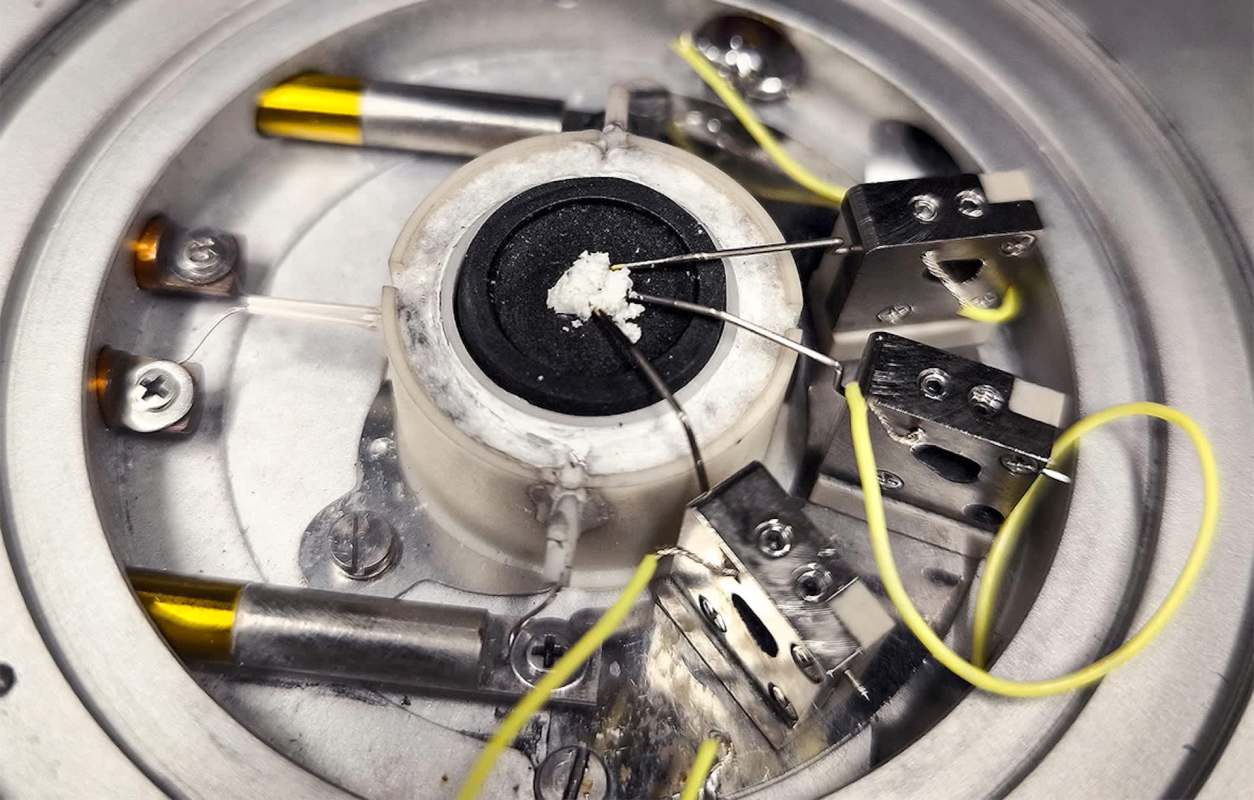
To better understand molten-salt electrolysis, a reaction scientists have studied for years, the team built a custom microscope that could watch the chemistry live in a corrosive environment heated to about 932 degrees Fahrenheit. With that instrument, the researchers were able to directly observe carbon dioxide turning into solid carbon under those extreme operating conditions.
Their measurements indicated that the conversion happens through a surprising two-stage sequence, and that the core chemistry stayed consistent even when the scientists changed the salts and the electrode materials.
TCD Picks » Quince Spotlight
💡These best-sellers from Quince deliver affordable, sustainable luxury for all




Because those choices affect the type of carbon that forms, the process may be tunable to produce several carbon structures, including the battery-grade graphite the team hopes to make.
Why does it matter?
Graphite plays a major role in technologies people rely on every day, from phones and laptops to electric vehicles and grid-scale batteries. If scientists can make it from captured carbon instead of mining it, that could eventually ease supply-chain pressure while creating a more local source of a material the clean energy economy urgently needs.
The potential benefits could be more reliable battery supply chains that can help support cheaper and more widely available energy storage for homes, businesses, and cities.
Those backup systems can help keep the lights on during blackouts, support emergency services during extreme weather, and help utilities manage spikes in demand more effectively.
There is also a climate benefit. Pulling carbon from the air and turning it into something useful could give industries another tool for cutting pollution while producing valuable materials.
Rather than treating carbon dioxide only as a waste product, researchers are exploring how it could become part of a manufacturing solution.
The discovery does not mean mining will disappear overnight, but it does point to a future in which critical materials could be made with more flexibility and potentially closer to where batteries are assembled and used.
What's being done?
From here, the focus is on refining the process. Researchers still need to identify the most effective combination of molten salts, electrodes, temperatures, and voltages to produce graphite reliably and efficiently.
They must also move the method beyond a lab-scale demonstration and up to industrial output. If that happens, companies could eventually gain access to a new source of graphite for batteries and other equipment.
The custom microscope system may also help accelerate research that reaches beyond this one study.
Because molten salts are extremely hot and corrosive, they have long been hard to examine directly, so a tool that lets scientists watch the chemistry as it happens could also aid work on other critical materials.
"This is a major win in a larger effort to synthesize critical materials and battery materials using molten salts," said Mike Whittaker, a Berkeley Lab scientist who worked on the project, per the article on Phys.org. "If you could run this process at low temperatures with really cheap salts, you could have it in a lot of places, and you could generate enough graphite that you could feed into battery supply chains."

Get TCD's free newsletters for easy tips, smart advice, and a chance to earn $5,000 toward home upgrades. To see more stories like this one, change your Google preferences here.






