


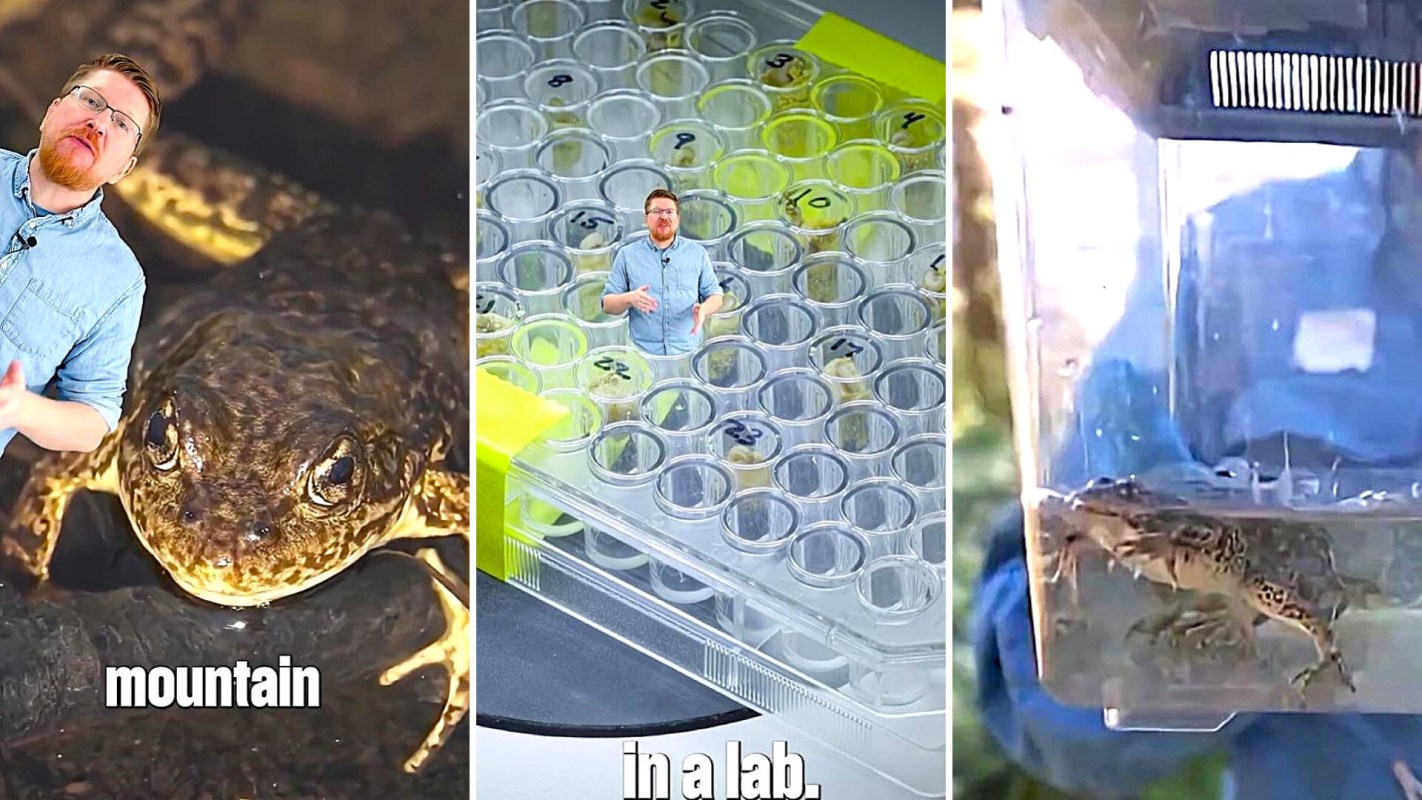
Scientists have released 653 captive-raised mountain yellow-legged frogs into California's San Gabriel Mountains, marking the largest release yet for a species that nearly disappeared from Southern California.
Here's what to know
Host Justin Pack described the southern mountain yellow-legged frog as a once-common resident of Southern California's mountains in an EcoBit video on YouTube.
Conservationists turned to captive breeding as the frogs' numbers fell. Habitat loss, droughts, wildfires, and invasive predators had left the once-familiar mountain species endangered.
Chytrid, a fungus that attacks their skin, is also a major threat to the frogs. A chytrid infection can ultimately cause a frog's heart to stop by disrupting the skin functions it relies on to absorb water and breathe.
Chytrid has been associated with population declines in more than 500 amphibian species. Pack explained that scientists believe the international frog trade helped carry the fungus around the world.
To control the spread of Chytrid and keep frog populations stable, conservationists began raising the mountain yellow-legged frogs in captivity. "Basically, a frog daycare for an entire species," Pack joked.
TCD Picks » Quince Spotlight
💡These best-sellers from Quince deliver affordable, sustainable luxury for all




"This summer, researchers released 653 frogs into the San Gabriel Mountains, which is the largest release of this species so far," Pack explained.
He continued, " Releasing the frogs is the easy part. Now researchers have to track whether they survive, grow, breed, and eventually build a population that doesn't need us anymore. That means monitoring their survival and growth, along with the crucial question of whether they breed.
"If it works, one of California's most endangered amphibians could actually make a comeback," Pack said.
Where can I learn more?
Like the teams releasing these frogs, wildlife rehabilitators work to return animals to the wild.
• In California, 11 rescued snowy plovers returned to the beach wearing high-tech tracking devices.
• In California, a great horned owl returned to the wild after a baseball-bat attack.
• A California coyote regained his fur and freedom after two months of mange treatment.
• In Florida, two young sea turtles braved 10-foot seas heading home, including one rescued twice.
• In Florida, six rehabilitated sea turtles and a pelican returned to the wild, though one washed ashore.

Get TCD's free newsletters for easy tips, smart advice, and a chance to earn $5,000 toward home upgrades. To see more stories like this one, change your Google preferences here.






