


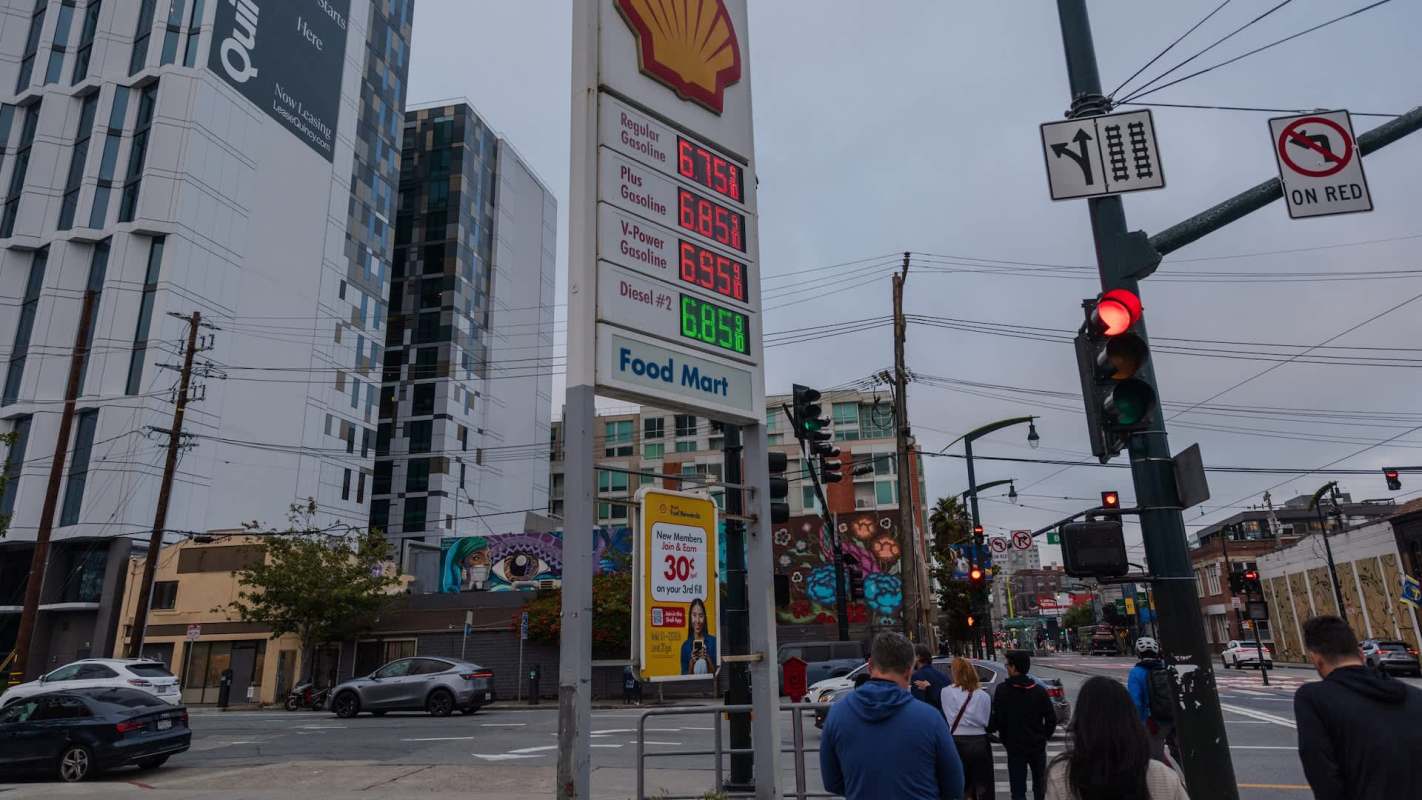
For California drivers, the current price of an electric vehicle can put relief from high gasoline costs out of reach.
Here's what to know
The Ceres Courier reported that California recorded nearly 87,000 new zero-emission vehicle sales in the second quarter of 2026, according to California Energy Commission figures.
Fully electric vehicles accounted for about 17% of California's new car purchases, compared with 6% nationally.
Some electric models are being built in smaller numbers — or not at all — in the United States, according to Gil Tal, director of UC Davis's Electric Vehicle Research Center.
"Our market is very limited on affordable cars — any affordable cars — in the U.S.," Tal observed, per the Ceres Courier. "If you drive one country to the north or one country to the south, you will find many affordable EVs that are not offered here."
The limited selection is particularly challenging for drivers seeking inexpensive vehicles or seven-seaters.
For households considering home charging, residential solar can slash electric bills, and $0-up-front solar leases can save households hundreds of dollars monthly. EasyHome's free explorer tool helps you estimate your potential savings and find vetted local installers.
More background
Renters made up around 44% of Californians in 2024, the Public Policy Institute of California reported.
Crushed by your bills? See instant solar savings from vetted installers in just a few clicks With energy prices through the roof, there's never been a better time to go solar — and EasyHome can help you find the best prices from the best installers in your area. EasyHome takes the guesswork and headaches out of energy upgrades by showing you estimated savings from a network of vetted local partners. To get started, just enter your ZIP and share a few details about your home — seeing your estimate is really that easy. |

For apartment residents, charging prices are inconsistent, as Dahlia Garas, who directs research programs at UC Davis's Electric Vehicle Research Center, explained.
Residents without access to chargers may have little choice but to rely on costly public stations.
"That pushes people out to public charging and particularly DC fast charging, which is the least economical way to charge a vehicle," Garas told the outlet. "That puts EVs at a financial operation cost disadvantage."
Meanwhile, drivers are weighing whether gasoline prices will stay high enough to justify replacing their cars.
At an East Sacramento station, Lillian Schmidt spent $70 filling her Volkswagen Golf.
She plans to keep driving the car and consider a hybrid or EV when she needs to replace it, per the Ceres Courier.
What's being done?
California's MyFirstEV program, run by CARB, offers eligible buyers purchasing their first zero-emission vehicle up to $3,500 for a new model or $1,750 for an eligible used vehicle.
State funding and automaker contributions provide roughly $271 million in incentives.
Andrew Campbell, who leads the UC Berkeley Haas Energy Institute, suggested pairing higher fixed monthly charges with lower per-kilowatt-hour rates to reduce charging costs, per the Ceres Courier.
For households looking for ways to manage charging expenses, EasyHome also offers battery storage comparison options. Pairing solar with batteries can help manage electricity costs by storing cheaper power for later use while providing backup electricity during outages.
CARB communications director Lindsay Buckley noted that the state is also urging EV owners to recharge during off-peak hours to reduce pressure on the grid, per the Ceres Courier.
Mark Haw, who commutes from Elk Grove in a Honda CR-V, admitted that rising fuel costs have left him with less money for food.
"It costs me about $20 a week more in gas for me to commute to and from my job," he said, according to the Ceres Courier. "And so it makes for smaller meals."
Where can I learn more?
For California drivers facing high gas prices, switching to an EV comes with questions about cost and charging. These stories cover fuel bills, limited used EV choices, and local test drives.
• California buyers pursuing a used EV rebate found 31 of 32 cars were Ford Mach-Es.
• California drivers face $5.62 a gallon of gasoline as a city's monthly fuel bill nears $94,000.
• In Santa Barbara, EV test drives help drivers explore cost, charging, and range concerns.

Get TCD's free newsletters for easy tips, smart advice, and a chance to earn $5,000 toward home upgrades. To see more stories like this one, change your Google preferences here.






