


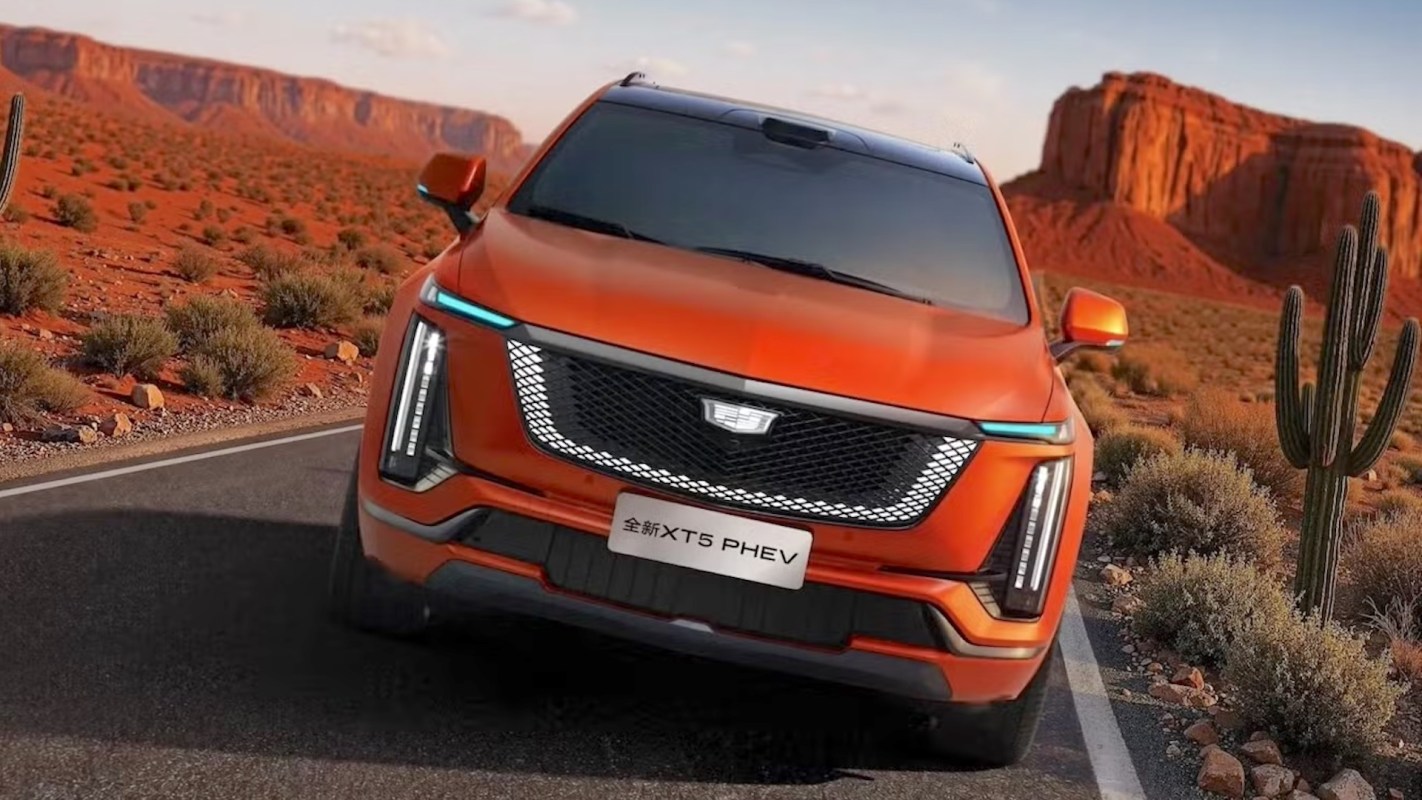
Cadillac has unveiled its first-ever plug-in hybrid crossover, and on paper, it looks like exactly the kind of bridge vehicle many drivers say they want between conventional gas cars and all-electric EVs.
American shoppers won't be getting it, though: the 2027 Cadillac XT5 PHEV is bound for China only, despite an estimated 96 miles of electric range that would eclipse every plug-in hybrid sold in the United States.
Here's what to know
According to Autoblog, the company is launching the XT5 PHEV in China as a luxury SUV, and the model opens new territory for Cadillac.
Cadillac said, as reported by the outlet, the XT5 PHEV also introduces an EV architecture developed entirely by the company's engineering team in China. At the same time, it becomes the first crossover in the brand's lineup to get a plug-in hybrid powertrain.
Power comes from a two-motor electrified setup rated at 362 horsepower, paired with a lithium-ion battery. Cadillac says the pack supports ultra-fast charging, which should allow the SUV to rely more on electric driving than many plug-in hybrids on the market, according to Autoblog.
Cadillac estimates up to 96 miles of electric driving before the gas engine is needed. That would put the XT5 PHEV ahead of every plug-in hybrid sold in the U.S., where many rivals provide much shorter battery-only operation.
TCD Picks » Quince Spotlight
💡These best-sellers from Quince deliver affordable, sustainable luxury for all




Cadillac is also fitting the crossover with the Momenta R7 assisted-driving system, built around a LiDAR sensor mounted on the roof, Autoblog reported.
More background
The debut hints that GM's product strategy is broadening again. Even after years of talking about an all-electric transition, the company seems to see a larger role for hybrids, including long-range plug-in models wearing Cadillac badges.
Plug-in hybrids can offer some of the benefits of EV ownership without requiring drivers to give up a gas backup. For commuters who can charge regularly, a model like this could cover many daily trips on electricity alone, cutting fuel costs and tailpipe pollution.
The XT5 PHEV also points to a widening divide between features available in China and those offered in North America. Automakers increasingly use China to debut newer batteries, charging advances, and driver-assistance tech, while many U.S. luxury buyers are still waiting for more up-to-date electrified choices.
More electric miles usually mean less money spent at the pump. For drivers who go fully electric, routine maintenance is often reduced as well, since EVs do not require oil changes and generally have fewer moving parts to service.
In general, EVs can save drivers money on fuel, and fully electric models can also cut routine maintenance costs over time.
For people not ready to go fully electric, plug-in hybrids can still offer meaningful savings if they are charged consistently and used for shorter daily drives. The biggest benefit comes when drivers actually use the battery rather than treating the vehicle like a standard gas SUV.
On the industry side, launches like this may also increase pressure on automakers to bring better hybrid and EV options to more markets. When one region gets longer-range batteries and newer tech first, shoppers elsewhere tend to notice.
The XT5 PHEV shows how quickly electrified vehicles are improving — and how a model that could save drivers money on gas may never make it to U.S. showrooms.

Get TCD's free newsletters for easy tips, smart advice, and a chance to earn $5,000 toward home upgrades. To see more stories like this one, change your Google preferences here.






