


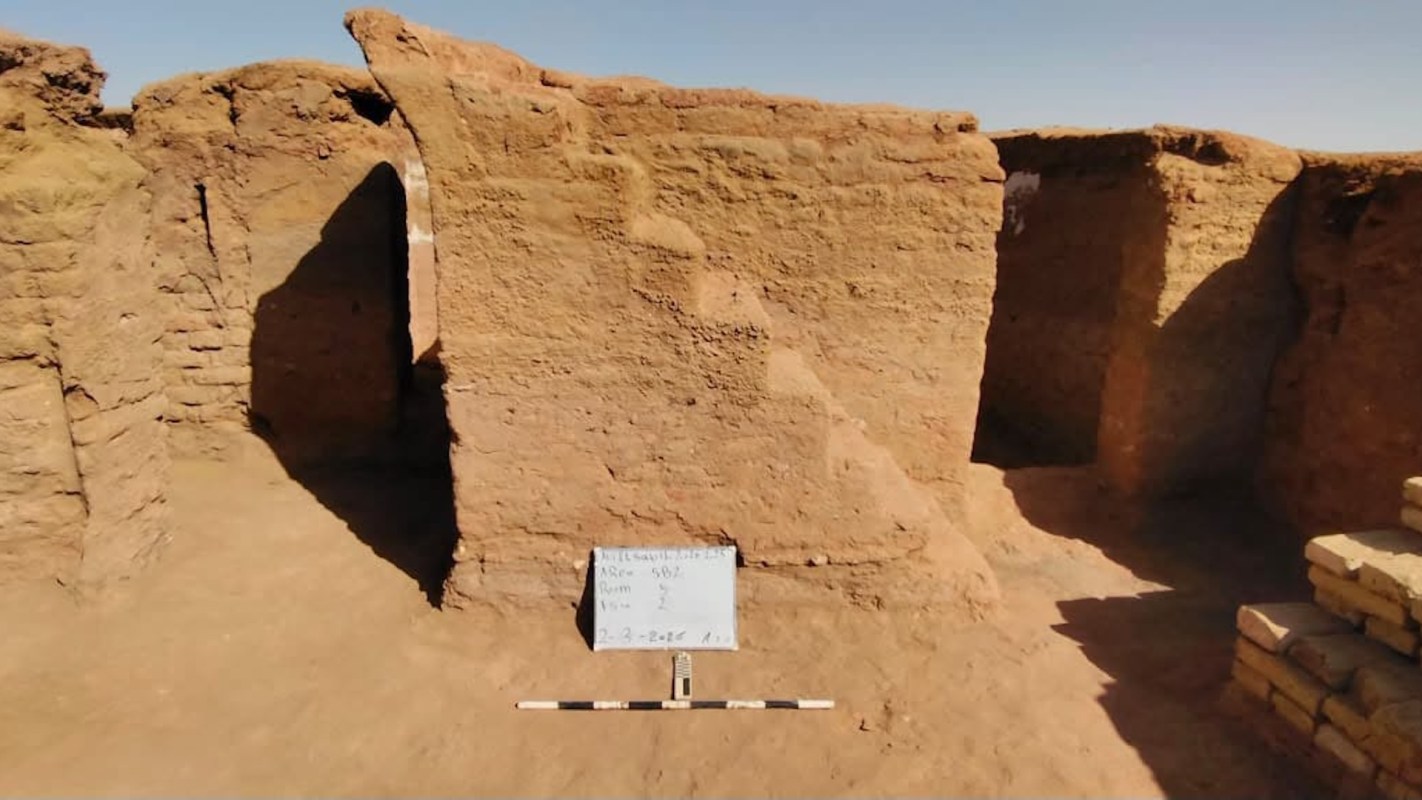
A Byzantine city in Egypt's Dakhla Oasis has been found in striking condition, opening a rare window onto life in a desert community — including where residents worshipped, how they traded, how they baked bread, and the letters they left behind.
What happened?
According to the Greek Reporter, the discovery was made at Ain Al-Sabil in the New Valley Governorate by an Egyptian archaeological mission, which uncovered homes, churches, defensive works, coins, and about 200 inscribed pottery fragments.
The site was excavated by a team from Egypt's Supreme Council of Antiquities, which describes it as one of the most complete urban sites in the Western Desert from the Byzantine period.
Although the city was built entirely of mudbrick, it appears to have been laid out intentionally rather than to have grown gradually without a clear plan.
Dr. Diaa Zahran, head of the Islamic, Coptic and Jewish Antiquities Sector at the Supreme Council of Antiquities, said the settlement was organized around broad north-south streets crossed by smaller east-west roads, forming courtyards and open squares. A basilica-style church stood along one of the main streets, pointing to the importance of religion in everyday life.
Dr. Mahmoud Masoud, director general of Dakhla Antiquities and head of the archaeological mission, said the excavation also revealed two watchtowers, a heavily fortified building with thick walls and houses equipped with vaulted ceilings, kitchens, bread ovens and tools used to grind grain.
TCD Picks » Quince Spotlight
💡These best-sellers from Quince deliver affordable, sustainable luxury for all




Among the most notable discoveries were the house of Tisus, a church deacon, and the house of Tapibos, which may have served as a place of worship in a private home before the larger basilica was built.
Why does it matter?
Rather than uncovering only scattered artifacts, archaeologists found a fuller picture of a functioning community — how its streets were organized, where people gathered to worship, and what tools they relied on to cook, store goods and carry out daily tasks.
Dr. Hisham El-Leithy, secretary-general of the Supreme Council of Antiquities, said the excavation is giving researchers a clearer sense of the site's layout, social structure and economic life. That level of detail could reshape historians' understanding of life in Egypt's oases during the Byzantine period.
Especially significant are the roughly 200 ostraca, pottery pieces inscribed in Coptic and Greek. Dr. Zahran Mahdi, director of the Excavations Department at the Islamic and Coptic Antiquities Sector, said they preserve records of business dealings, personal letters and other traces of ordinary life.
In a desert setting, every building material, food-preparation tool, and storage vessel offers a glimpse of planning, resilience, and survival.
What's being done?
Egyptian officials are continuing excavation and analysis at the site, and the newly uncovered city is expected to add to the archaeological significance of the New Valley Governorate, according to the Greek Reporter.
Egypt's Minister of Tourism and Antiquities, Sherif Fathy, said the discovery meaningfully adds to Egypt's archaeological record.
Researchers are also studying the city's coins and inscriptions to better understand its economic and administrative ties to the wider Byzantine Empire. The mission uncovered bronze coins bearing portraits of Byzantine emperors, Latin text and Christian imagery, along with gold pieces from the era of Emperor Constantius II, whose reign lasted from A.D. 337 to 361.
That work could eventually help museums, scholars, and visitors better interpret how remote communities remained connected to larger political and commercial systems.

Get TCD's free newsletters for easy tips, smart advice, and a chance to earn $5,000 toward home upgrades. To see more stories like this one, change your Google preferences here.






