


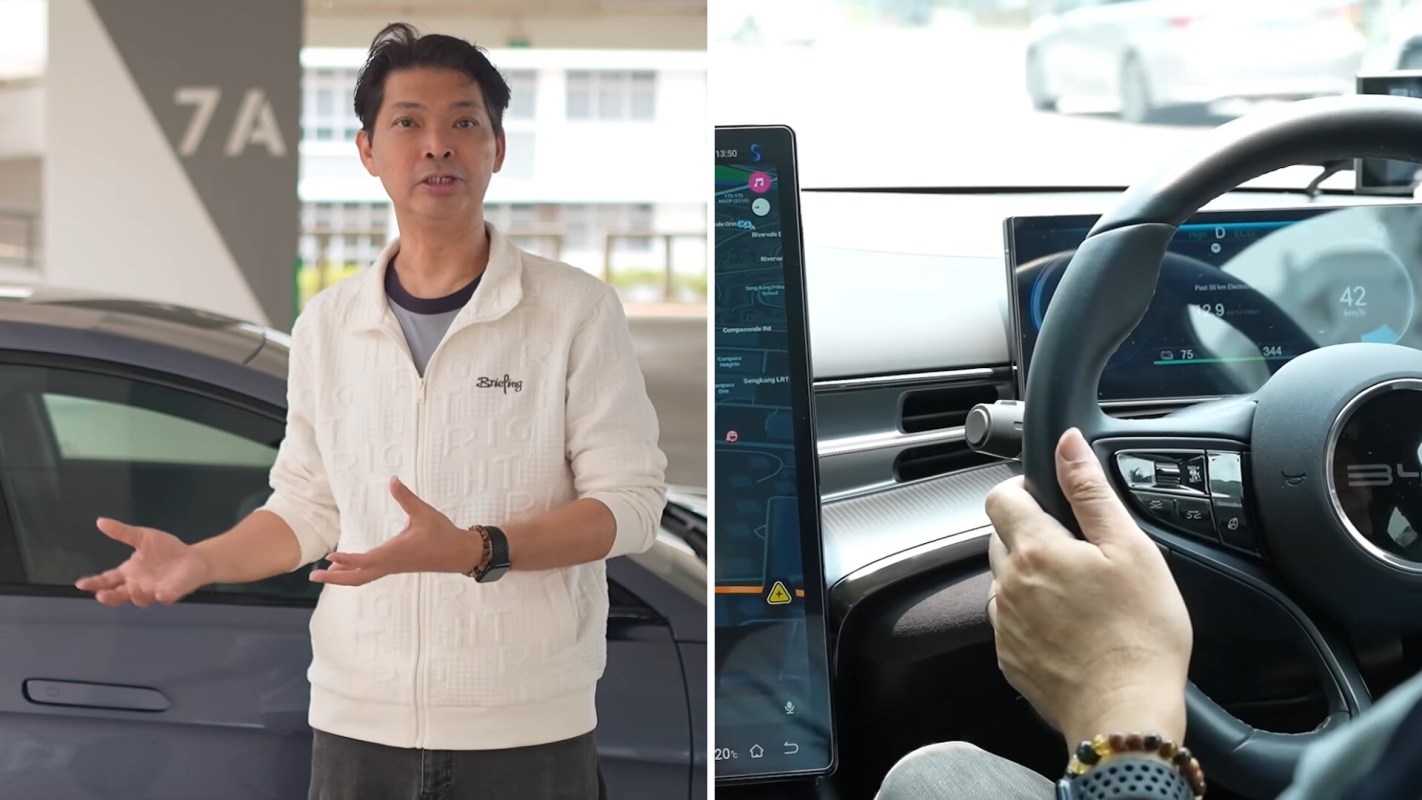
Two years into owning a BYD Seal in Singapore, one driver says the car remains rust-free, countering the criticism often directed at the quality of Chinese vehicles.
Here's what to know
After 16,800 miles (27,000 km), YouTube creator Colin (@LearnsMarketing) said the main signs of age on his BYD Seal Dynamic were minor chips and scratches.
In a YouTube review, he said the headlamps, taillamps, electric seats, pop-up handles, and rotating screen were still functioning, and he found no visible rust at the welds or on the underside.
Over those two years, he said, software changed the car as much as anything mechanical, with "three to four major updates" adding widgets, extra apps, and built-in navigational support.
He also brought the Seal to a workshop for a battery state-of-health check, responding to the often-repeated claim that Chinese EV packs deteriorate within three to five years.
Colin also said BYD covered the video's production cost and that he is working with the company on future features, while adding that BYD "didn't even tell me what to do" after he shared his plan.
TCD Picks » Quince Spotlight
💡These best-sellers from Quince deliver affordable, sustainable luxury for all




More background
The 40,000 Singapore dollar ($31,226) EV rebate and growing age-related issues with his Mercedes GLC 250 Coupe were key reasons Colin said he moved to the Seal. He also expected that charging would "definitely be cheaper" than fueling the GLC, which he said returned about 19 miles per gallon.
Because the COE alone cost 90,000 Singapore dollars ($70,260), Colin said he bought the car expecting it to last eight years, which was the same length as its battery warranty.
He said real-world efficiency from the Seal's 61-kWh battery has come close to the car's 286-mile (460-km) WLTP claim, and added that his wife can achieve "11+ kWh per 100 km" without turning off the air-conditioning.
Software updates were among the biggest day-to-day improvements. Colin said the 15.4-inch rotating display became more useful once Google Maps and Waze worked natively instead of through Apple CarPlay, and that over-the-air updates also brought a refreshed interface, widgets, and games.
The comments also added nuance. One viewer from North America cautioned that road "salt will cause rust and corrosion under the cars after 5 years," noting that colder road conditions can reveal durability issues later.
Another viewer wrote, "I have been a BYD Seal owner for 2 and half years. Mileage exceeds 50,000km [~31,000 miles]. Problems? So far nil."
What's being done?
According to Colin, the car has been serviced on the same schedule as other BYD owners in Singapore. During one workshop visit, staff checked the battery's health and fixed a broken seat-control piece by pushing it back into place.
He also used the review to discuss the battery warranty length, update support, service access, and how the car has held up in everyday use. Colin said his Seal had no paint protection film and was usually cleaned at gas station kiosks or with contactless washes about once a month.
To show breakdowns aren't exclusive to Chinese EVs, Colin listed problems he had with several earlier gas-powered vehicles.
After two years, Colin's verdict was effusive: "this BYD is seriously among the best in many areas." He also argued that "when things are alright, no one bothers to tell their story."
Where can I learn more?
Colin's two-year Seal update taps into bigger questions about how BYD cars age, how shoppers judge their quality, and how the batteries hold up.
• One BYD Seal owner drove with the blacked-out dashboard until service sorted the fault.
• In Ontario, BYD's Dolphin drew tin-can quality criticism from shoppers weighing it against Chevrolet's Bolt.
• BYD fast-charged a showroom sedan 350 times in nine days before checking battery wear.

Get TCD's free newsletters for easy tips, smart advice, and a chance to earn $5,000 toward home upgrades. To see more stories like this one, change your Google preferences here.






