


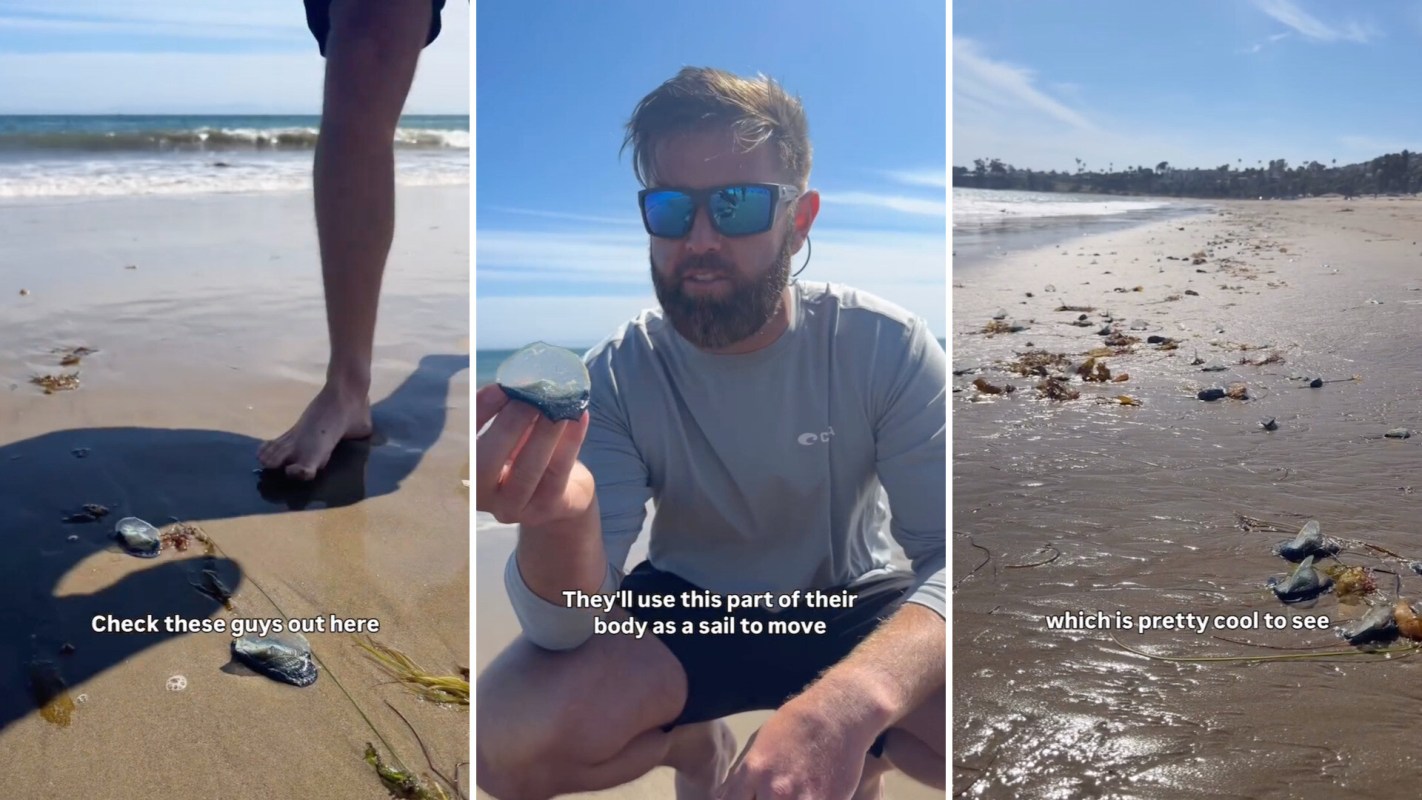
Beachgoers in Santa Barbara got a surreal surprise when the shoreline turned blue with tens of thousands of tiny, sail-powered sea creatures.
Discovery host and outdoor biologist Forrest Galante (@forrest.galante) showed a beach covered with by-the-wind sailors, an unusual ocean drifter that looks part jellyfish and part translucent toy boat.
What happened?
Galante's post racked up thousands of likes and more than 123,000 plays after he documented the mass wash-up on a Santa Barbara beach.
Galante says the animals travel by letting a sail-like part of the body catch the wind, with small stinging tentacles underneath used to snag plankton and other prey. He also tells viewers the beach is "covered in these beautiful by-the-wind sailor's jellyfish" and estimates there are "tens of thousands" of them.
He describes the sight as rare locally, saying he had not seen them on a Santa Barbara beach in "nearly 10 years" and suggesting the scale of the wash-up means "the winds have changed this year."
Other commenters said they had spotted the creatures in places including Pacifica, Pismo, and South Africa.
TCD Picks » Quince Spotlight
💡These best-sellers from Quince deliver affordable, sustainable luxury for all




Why does it matter?
By-the-wind sailors are a natural part of marine ecosystems, and mass strandings can reflect shifts in offshore wind and currents.
Because these animals rely on wind and currents, changes in weather patterns can suddenly push huge numbers onto beaches. This year the wind is taking them to West Coast beaches, as Smithsonian Mag detailed.
A single wash-up can't be attributed entirely to the changing climate, but unusual events like this can coincide with oceans behaving in less predictable ways, or a warmer winter. That can mean more beach cleanups and more wildlife encounters.
While by-the-wind sailors are not considered as dangerous as some jellyfish relatives, their tentacles can still irritate sensitive skin, Smithsonian Mag noted.
Galante's documentation of this washup is another example of citizen science, which can help drive awareness to unusual creatures and aid scientists through platforms like iNaturalist.
What are people saying?
Commenters reacted with curiosity to the sight of the creatures.
"Good to know you could touch these!" one viewer wrote. "I thought they would sting."
Others said the sight was familiar in their own coastal areas.
"I just saw copious amounts of these on every beach I visited in Northern California!" another commenter revealed.
"We get those along the Texas coast," a viewer shared. "Except ours…. yeah, they don't like to be touched."

Get TCD's free newsletters for easy tips, smart advice, and a chance to earn $5,000 toward home upgrades. To see more stories like this one, change your Google preferences here.






