


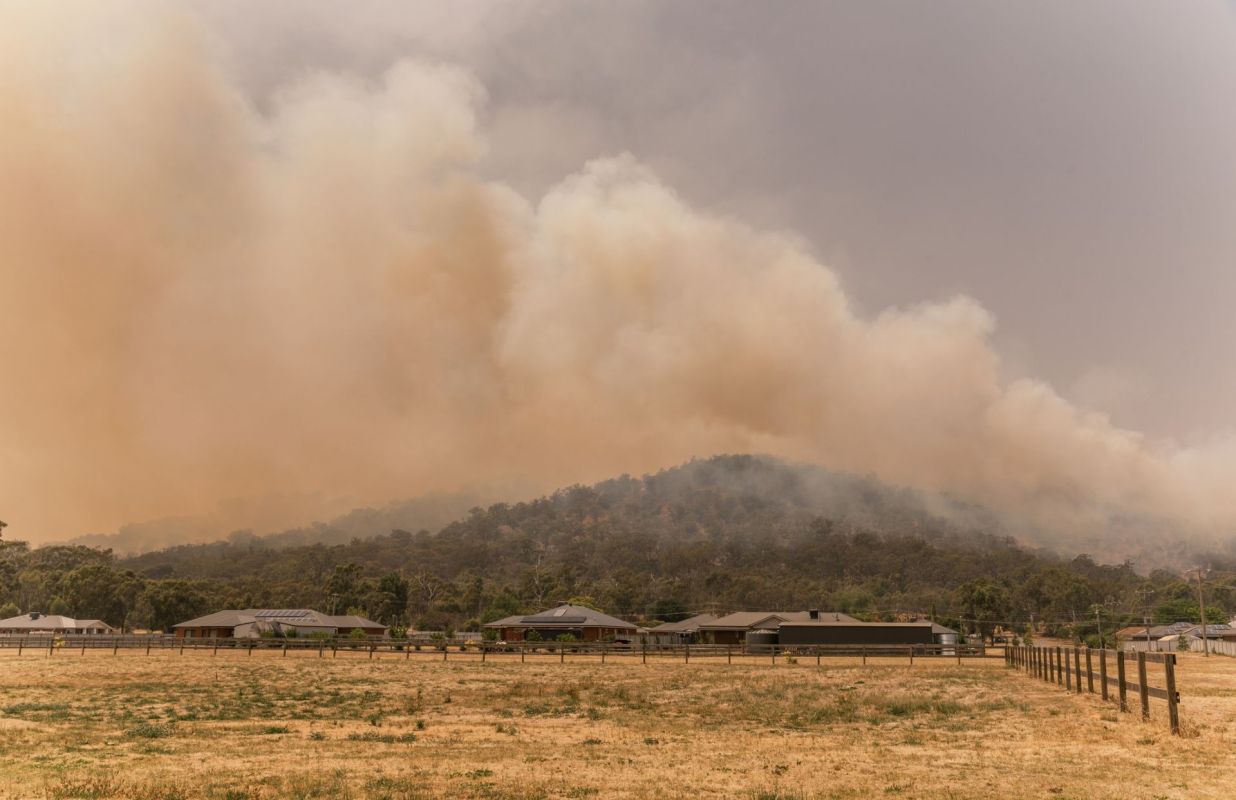
On January 9, 2026, as catastrophic fire conditions hit central Victoria, Castlemaine resident Fiannuala Morgan found several lifelines failing at once. Beyond the blackout, her emergency app froze, texts stopped going through, the National Broadband Network dropped out, and the broadcasting tower at Mount Alexander burned.
While a fast-moving grassfire in nearby Harcourt was advancing toward what would become 66 destroyed dwellings, Morgan tried to piece together life-or-death updates by going to a hilltop and phoning her brother in Melbourne.
Here's what to know
Speaking to ABC News, Morgan, who teaches publishing and communications at the University of Melbourne, said the January fire day across Castlemaine and Harcourt showed how quickly several communication systems can fail at once.
"I was aware of this catastrophic rating but did not have an integrated sense of what that actually meant. Because when the fire started, it really went from zero to 100 in a matter of seconds," she said.
Reliable updates were hard to come by. The blackout knocked out both her air conditioning and the NBN, her phone service was intermittent, and she could not reliably call or text her parents. By the time she tried the car radio for emergency broadcasts, the Mount Alexander tower had already burned.
Morgan said the episode showed her how exposed Australia is after a series of telecom changes, warning that the nation's networks "have not been adequately strengthened" as copper landlines have been phased out, the NBN has expanded, and the 3G network has shut down.
TCD Picks » Quince Spotlight
💡These best-sellers from Quince deliver affordable, sustainable luxury for all




More background
Wider inquiries have underscored the problem. ABC News reported that the royal commission into the 2019-20 Black Summer fires examined widespread telecommunications failures driven largely by power outages, and the 2024 Regional Telecommunications Review found that resilient networks are lifesaving and need greater support across regional Australia.
Australian Communications and Media Authority data showed that from December 19, 2019, to January 31, 2020, bushfires affected 1,390 telecommunications facilities. Half experienced outages lasting four hours or more, the median outage was 1.6 days, and just 1% of incidents were caused directly by fire damage.
In Shoalhaven, after the Currowan fire, former naval aviator Vince Di Pietro witnessed similar breakdowns: people were stranded on highways, ATMs were down so they couldn't buy petrol, and flat or intermittent phones left them unable to reach relatives.
What's being done?
Di Pietro helped lead a Shoalhaven City Council effort to establish 26 community information hubs inside existing council buildings. Built with a $2 million state and federal grant, the hubs rely on solar power, batteries, and generators, and they include indoor and outdoor screens as well as satellite voice-over-IP phones.
During an emergency, the screens can switch to "red mode" and display local instructions from emergency officials and council staff. Local Emergency Management Officer Richard Hart said the information can be conveyed "almost instantaneously." However, he noted that the buildings are not evacuation centers and would be opened on a case-by-case basis, according to ABC News.
Other responses include plans by one additional NSW council to copy the system, federal programs supporting satellite internet at evacuation centers, and resilience upgrades for infrastructure such as mobile towers.
Even so, critics argue that voluntary and piecemeal solutions are not enough. Independent MP Helen Haines has called for 24 hours of backup power at high-risk mobile towers and greater transparency around coverage exemptions.
Haines said: "We need to build these obligations into primary legislation. So, it's a must, not a hope."
Where can I learn more?
These stories offer a closer look at how communities are preparing for outages and wildfire risk.
• Officials in Canada now rely on amateur radio operators as backups when extreme weather knocks communications offline.
• In Calistoga, California, backup power systems are being overhauled after repeated wildfire-related shutdowns.
• In Idaho, fire agencies are gaining unprecedented wildfire intelligence from satellites built to spot ignitions early.

Get TCD's free newsletters for easy tips, smart advice, and a chance to earn $5,000 toward home upgrades. To see more stories like this one, change your Google preferences here.






