


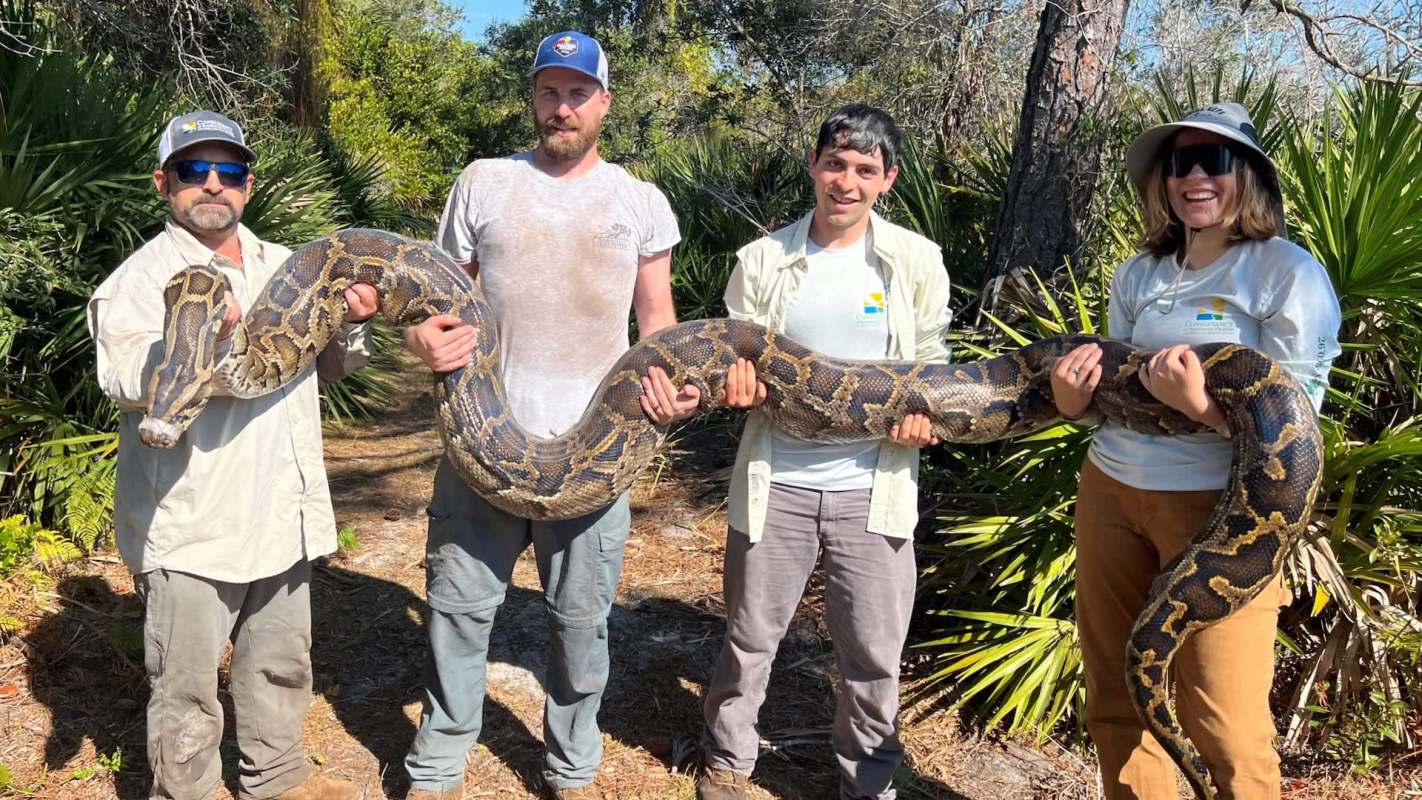
As Florida gets ready for its annual Python Challenge in the Everglades, a less publicized effort by field biologists is also highlighting how extensive the Burmese python invasion has become.
One major concern is that Burmese pythons are appearing farther north, and their numbers don't appear to be dwindling despite ongoing removal efforts.
What happened?
Florida's Python Challenge returns July 10 through July 19, offering cash prizes to amateur and professional hunters who remove invasive Burmese pythons from South Florida. Separately, as Florida Phoenix reported, four biologists with the Conservancy of Southwest Florida recently removed 177 pythons, weighing a combined 8,080 pounds.
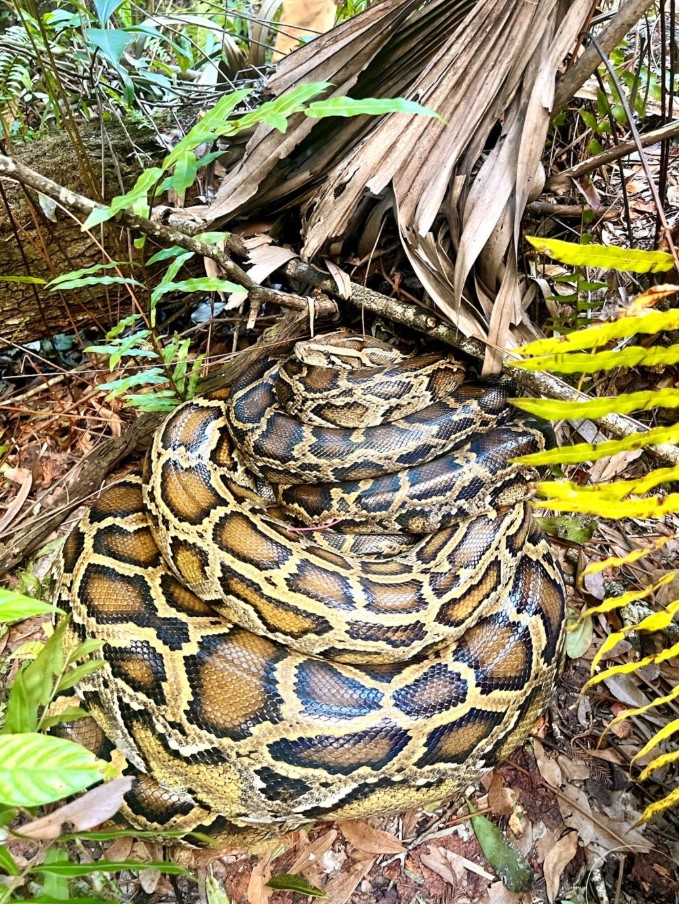
WINK-TV reported that the total was about 2,000 pounds higher than the team's previous season. "This was our first four-ton removal season," said Ian Bartoszek, wildlife biologist and science manager for the Conservancy of Southwest Florida.
Last year's challenge drew 934 entrants from 30 states plus Canada, and participants collected 294 pythons. Naples social media personality Taylor Stanberry took the $10,000 top prize by catching 60 snakes.
Bartoszek said the spread is no longer confined to the southern part of the state. "This is a South Florida problem that is rapidly turning into a Central Florida problem," he told Florida Phoenix.
TCD Picks » Quince Spotlight
💡These best-sellers from Quince deliver affordable, sustainable luxury for all




Why does it matter?
These are aggressive, invasive predators capable of disrupting entire ecosystems, putting native wildlife and ongoing restoration efforts at risk.
Necropsies have helped show how broad the snakes' impact can be. "We've documented 57 species of birds and 28 species of mammals," Bartoszek said. Florida Phoenix also cited a 2012 study that found steep declines in mammal populations where pythons became established, including raccoons down by 99%, opossums by 98%, white-tailed deer by 94%, and bobcats by 87%.
Healthy wetlands and functioning wildlife systems are tied to water quality, biodiversity, and outdoor recreation in Florida communities. Disrupted food webs can slow restoration efforts.
Signs of the expansion are appearing outside the Everglades as well. Bartoszek said environmental DNA monitoring is detecting pythons "well north of Lake Okeechobee."
What's being done?
Florida is still relying heavily on human removal, including the annual public challenge and the use of paid professional hunters. At the same time, scientists have developed a more targeted method using so-called scout snakes.
The Conservancy has fitted pythons with tracking devices and released them during mating season. The tagged snakes then lead biologists to fertile females, helping researchers locate breeding groups — or mating balls — that might otherwise remain hidden. Over the years, Bartoszek's team has tagged 40 of these scout snakes.
The strategy is producing some of the state's biggest captures, including record-setting snakes and multi-snake breeding groups. It also shows how difficult it is to detect the animals without specialized tools and tightly coordinated fieldwork.
Despite all these efforts, Bartoszek explained that he hasn't seen the number of massive pythons decline, and he hopes those totals eventually begin to fall: "I've been doing this a long time. I'd like to see those numbers drop."

Get TCD's free newsletters for easy tips, smart advice, and a chance to earn $5,000 toward home upgrades. To see more stories like this one, change your Google preferences here.






