


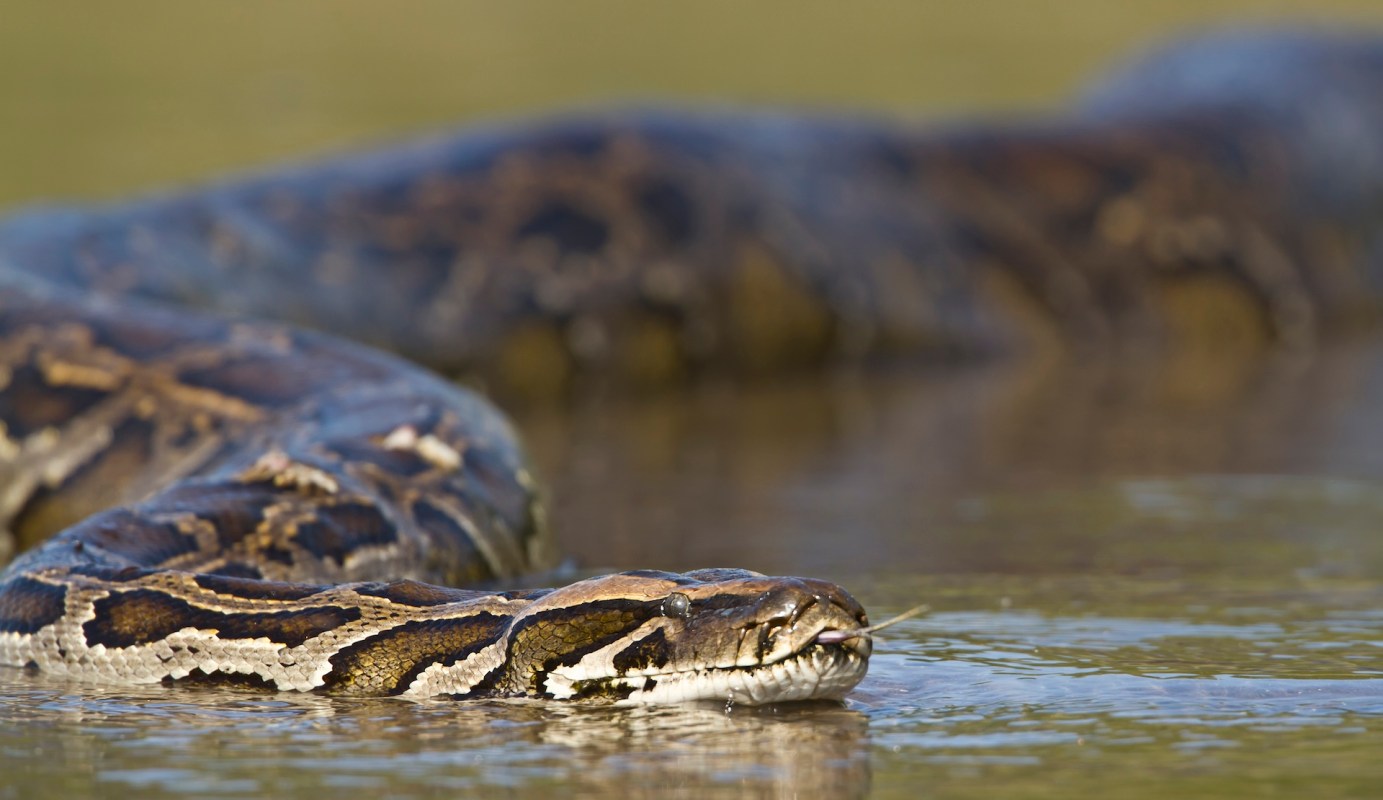
A large python slithering through a Hong Kong shopping district turned an otherwise ordinary late-night street scene into a viral reminder that wildlife and city life can collide in unexpected ways.
The sighting also underscored a human-driven reality: When storms, dense development, and shrinking habitat overlap, animals can wind up on sidewalks instead of in the places they would normally call home.
What happened?
Near 11 p.m., a jogger recorded a snake moving along Victoria Park Road by the Jardine Noonday Gun in Causeway Bay, the South China Morning Post reported. In the footage, the animal looked to be about two to three meters long, or roughly 6.6 to 9.8 feet.
Online reaction was heavy, with the clip receiving about 850 comments.
Using the snake's geometric markings and its mix of light and dark brown, black, and white coloring, Kadoorie Farm and Botanic Garden identified it as a Burmese python.
Victor Wong Long-yin, head of the education department at Cheung Chau Animal Care, told the South China Morning Post that downpours may have inundated the reptile's habitat, leaving it to seek out another area.
TCD Picks » Quince Spotlight
💡These best-sellers from Quince deliver affordable, sustainable luxury for all




Why does it matter?
A python appearing in a dense commercial district is striking in itself and illustrates how extreme weather and human-built environments can reshape animal behavior.
When natural areas flood, wildlife has fewer safe places to retreat. In cities, roads, seawalls, buildings, and constant foot traffic can funnel animals into highly visible — and dangerous — spaces. That can create stress for the animal while also causing surprise or fear for residents not expecting to encounter a large reptile near a shopping district.
As BBC Future has reported, closer contact between humans and wild animals often points to habitat pressure and environmental disruption, not random aggression.
Urban wildlife sightings may become more common during or after severe weather. Even when no one is hurt, these encounters can raise safety concerns for pedestrians, drivers, pets, and the animals themselves.
What's being done?
By identifying the animal as a Burmese python, Kadoorie Farm and Botanic Garden provided the public with clearer information about the sighting.
Wong pointed to flooding and habitat disruption as the likely explanation, two factors that can drive wildlife into areas dominated by people.
A python on a busy Causeway Bay sidewalk may seem like a strange viral moment, but it also reflects a changing relationship among people, weather, and wildlife. When animals lose safe ground, they can end up in the middle of ours.

Get TCD's free newsletters for easy tips, smart advice, and a chance to earn $5,000 toward home upgrades. To see more stories like this one, change your Google preferences here.






