


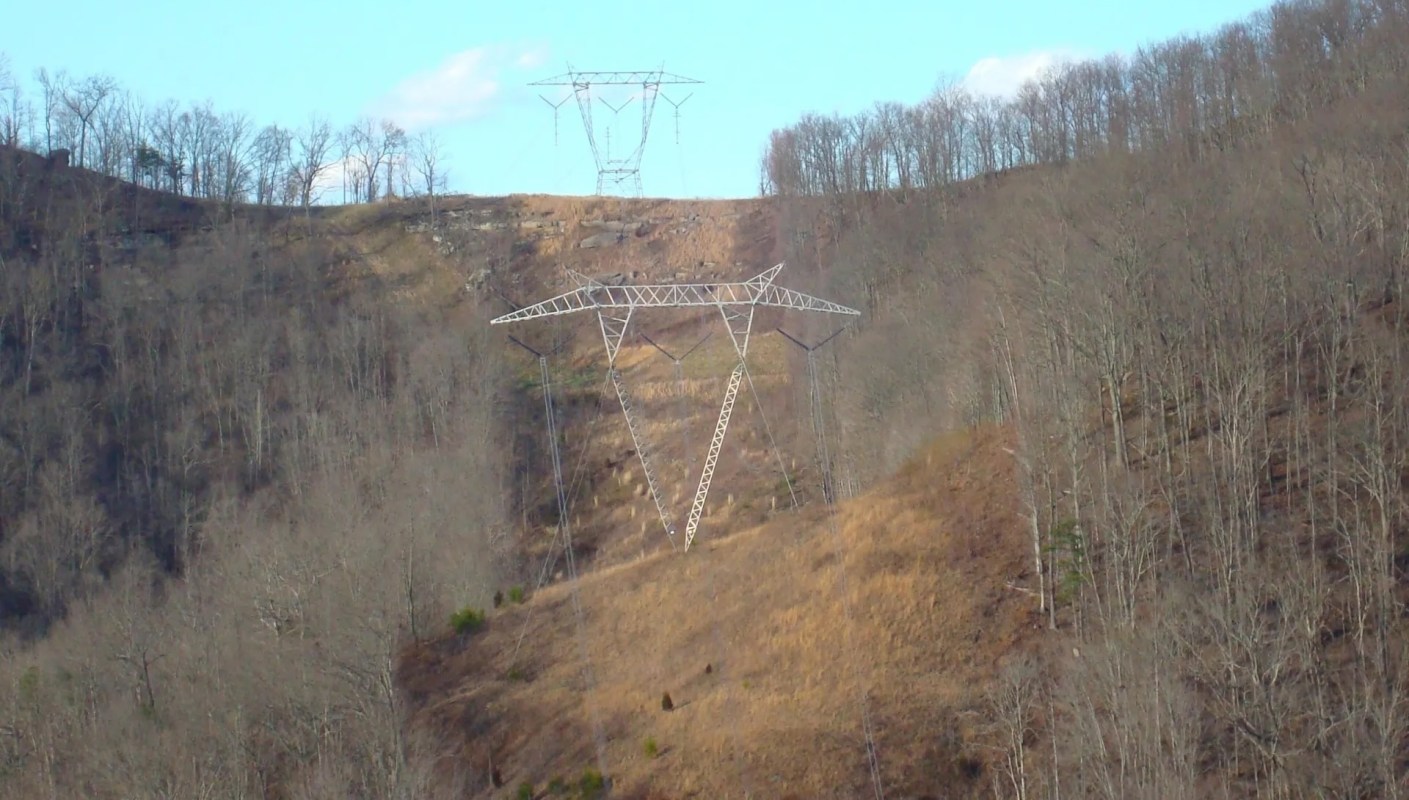
A massive new transmission line planned for Virginia would run farther through Buckingham County than any other county in the state — even though Buckingham has no data center built or proposed.
That disconnect is raising difficult questions about who benefits, who pays, and who is left to live with the consequences.
Here's what to know
No Virginia county would contain a longer segment of the Joshua Falls to Yeat project than Buckingham. Tommy N. Turner, an independent researcher who studies Virginia data centers and energy governance, calculated that the shortest route under consideration would place 31.4 miles there, or about 27% of the line's Virginia mileage. Louisa, Orange, and Culpeper would each host less, according to Cardinal News.
Its footprint would be extensive. The project would clear a 200-foot-wide corridor across 763 acres and 91 privately owned parcels. Turner said those properties would remain privately owned through easements, but owners would lose control over what can happen within the corridor, and condemnation could be pursued if negotiations break down.
For Buckingham, the line would function mostly as a pass-through. The electricity is not being built for local use, and the county is not slated to receive a substation, leaving it with the most transmission mileage but less leverage than counties that do host major project facilities.
More background
Turner also tested a common suspicion: that the route may have been pushed away from counties benefiting from data center expansion. After comparing the published path with 2,000 randomly drawn corridors of the same length, he found the actual route passes through more data center counties than a random line would be expected to cross.
TCD Picks » Quince Spotlight
💡These best-sellers from Quince deliver affordable, sustainable luxury for all




According to Cardinal News, Turner said, "Nobody aimed this at Buckingham. Nobody aimed it anywhere."
He added, "That is worse than being singled out, not better."
Funding responsibility for the project was set at the Federal Energy Regulatory Commission through a 13-state cost-sharing formula. One half is assigned based on electricity use, and the other half on estimated power flows, which leaves Dominion's zone carrying about 45% of the cost. Because that method is based on regional calculations rather than tower locations, a community can take on major land use impacts without gaining meaningful power over the project.
A cleaner, more reliable grid will require new transmission, but public support becomes much harder to sustain when rural communities are asked to give up land, views, and control without clear local benefits.
What's being done?
Virginia has made one change on the broader question of data center power costs. The State Corporation Commission ordered Dominion to develop a policy that would charge data centers directly for the substations and related lines needed to connect them to the grid.
But Turner argued that the change does not reach this project. The Joshua Falls to Yeat line is a regional backbone line, not a direct hook-up to a specific data center, so neither the SCC nor the General Assembly can reopen the federal cost allocation.
That leaves Buckingham officials with limited options. The county has set aside up to $250,000 for legal help, but that largely allows it to contest routing rather than challenge who should bear the burden. Counties that receive substations have more influence because those facilities require local zoning approval.
Communities are more likely to resist essential grid upgrades when the process treats them as corridors rather than partners.
Turner said, "Where the line lands is simply not a question the system asks, and Buckingham is what happens when nothing asks."
Where can I learn more?
This fight in Virginia is part of a much wider debate over how data centers are reshaping local infrastructure, from small town power concerns to statewide grid policy. Other communities are also dealing with the land, water, noise, and cost pressures that come with rising electricity demand.
• Strasburg residents packed a public forum as water, power, and noise fears grew.
• Virginia lawmakers moved to expand energy storage capacity as grid reliability pressures kept rising.
• Maryland farm families warned another AI-linked transmission line could financially devastate them.
What runs through all of these stories is the same basic tension: big infrastructure projects may serve a region, but the disruption lands in specific places. When communities do not see a fair share of the benefits, support for the grid upgrades the region says it needs gets much harder to win.

Get TCD's free newsletters for easy tips, smart advice, and a chance to earn $5,000 toward home upgrades. To see more stories like this one, change your Google preferences here.






