


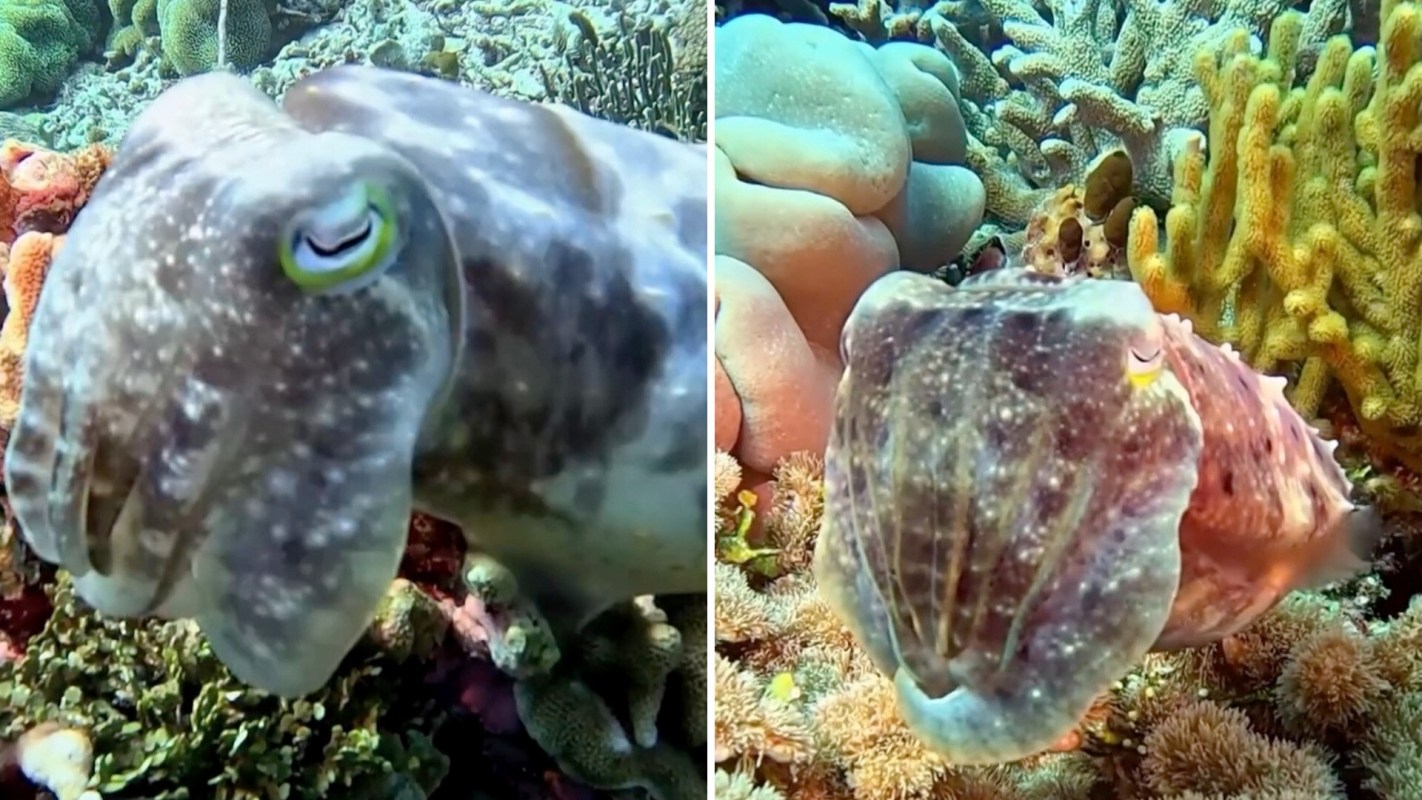
Some animals have camouflaging abilities that can seem too good to be true.
One ocean conservation group has now shared footage of the broadclub cuttlefish, showcasing the "master of disguise" and its ability to change its colors and patterns at will.
What happened?
In footage shared by Oceana, a broadclub cuttlefish rapidly cycles through changes in color and pattern, showcasing a behavior the nonprofit accurately described as "mesmerizing."
The clip made it immediately clear why the animal has a reputation for camouflage, showing it repeatedly transforming its appearance underwater. Its colors quickly changed as it moved across the ocean floor, cycling through gray, red, blue, and black.
According to the post's caption, those visual shifts serve multiple functions. "They use this ability to ward off predators, blend into their environment, confuse prey, or attract a mate," the caption read.
Oceana went on to explain that broadclub cuttlefish "have been observed displaying 13 different patterns."
TCD Picks » Quince Spotlight
💡These best-sellers from Quince deliver affordable, sustainable luxury for all




These animals have roughly 10 million color cells within their skin, per PBS, allowing them to quickly and expertly control their color, texture, and pattern. PBS explains that these millions of cells can be used in various ways.
The network wrote in a fact sheet that "Linked to their brain, thousands of pigment cells expand and contract on their skin."
PBS then provided evidence of at least one example of this, stating, "One cuttlefish has been spotted simultaneously wooing a female mate by flashing courtship colors on one flank and disguising itself as a female on the other flank to trick a male rival."
What are people saying?
Commenters were stunned by the behavior of the cuttlefish.
One person simply wrote "mindblowing," while another added that "nature amaze[s] you everyday."
Others seemed confused about exactly what cuttlefish are.
A commenter asked, "So, octopus related?" Oceana responded, "Yes, cuttlefish are related to octopuses! Both belong to a group of mollusks known as cephalopods."
Another commenter summed up the internet's reaction to the animal, saying, "Cuttlefish never disappoint."

Get TCD's free newsletters for easy tips, smart advice, and a chance to earn $5,000 toward home upgrades. To see more stories like this one, change your Google preferences here.







